


Running effective meetings in hospitality is not about adding more meetings. It’s about making the right ones actually work.
In a restaurant environment, time is scarce and pressure is constant. Pre-shift huddles, line checks, and quick floor updates are part of daily service. But this guide is not about those fast, on-the-floor touchpoints.
This article focuses on manager and leadership meetings in hospitality: the weekly or monthly conversations where owners, general managers, chefs, and department leads align on operations, staffing, costs, and strategy. When these meetings are poorly run, they drain time and create confusion. When they are done well, they become a powerful tool for clarity, accountability, and growth.
Key Pillars Of Effective Meetings
Below is a quick rundown of the four foundational elements that turn routine gatherings into focused, action-driven sessions.
| Pillar | Description | Impact |
|---|---|---|
| Purpose Definition | Clarify objectives and desired outcomes | Focused discussions |
| Role Assignments | Appoint facilitator, scribe, timekeeper | Shared ownership |
| Structured Agenda | Timeboxed topics laid out in order | Reduced overrun |
| Follow-Up Actions | Assign tasks, set deadlines, recap clearly | Accountability boost |
Think of this table as your cheat sheet for anything from a quick shift huddle to a full-team briefing. Apply these pillars consistently to cut through noise and get everyone aligned.
Quick Tips For Immediate Impact
- Time-box agenda items. When people know there is a limit, conversations stay sharper.
- Assign ownership, not bureaucracy. One person leads the meeting and makes sure decisions are captured. This does not need to be formal roles, just clear responsibility.
- Recap decisions clearly. A short written summary with action items and owners goes a long way toward preventing confusion later.
- Keep follow-ups in one place. Whether it is a shared doc, a manager log, or your internal system, consistency matters more than the tool itself.
Understanding Meeting Purpose And Agenda
In hospitality, meetings only work when everyone knows exactly why they’re there. Manager and leadership meetings are not the place for vague updates or open-ended conversations. Time is tight, and every minute spent in a meeting should lead to clearer decisions and smoother service.
That starts with a single, clear purpose. Before you schedule the meeting, ask yourself: What needs to be decided or aligned by the end of this conversation? If the answer is unclear, the meeting probably isn’t necessary.
A simple agenda keeps the discussion focused and respects your team’s time. It acts as a guardrail, preventing side conversations and ensuring the meeting moves toward real outcomes, not just updates.
When meetings have a purpose and a timeline, they become action sessions instead of status updates.
Crafting Timeboxed Agendas
Start with the most operationally critical topics first, such as safety issues, service challenges, or staffing adjustments. Assign a rough time limit to each item to keep things moving and avoid overruns.
A strong agenda should include:
-
Outcome Statement: One sentence defining success (for example, “By the end of this meeting, we’ll agree on menu changes and assign prep responsibilities.”)
-
Time Blocks: Short, realistic segments.
-
Action Ownership: Who is responsible for follow-up
For recurring leadership meetings, sharing the agenda ahead of time helps managers come prepared with key numbers or observations, without turning prep into busywork.
Reducing Off-Topic Chatter
Even in well-run meetings, side topics will surface. The goal is not to shut them down, but to manage them. Use a simple “parking lot” to capture nonurgent issues and revisit them later if needed.
When manager meetings have a clear purpose, realistic timing, and defined outcomes, they stop feeling like interruptions and start becoming a leadership tool. Managers leave aligned, priorities are clear, and the operation benefits long before the next shift begins.
Assigning Roles And Engaging Participants
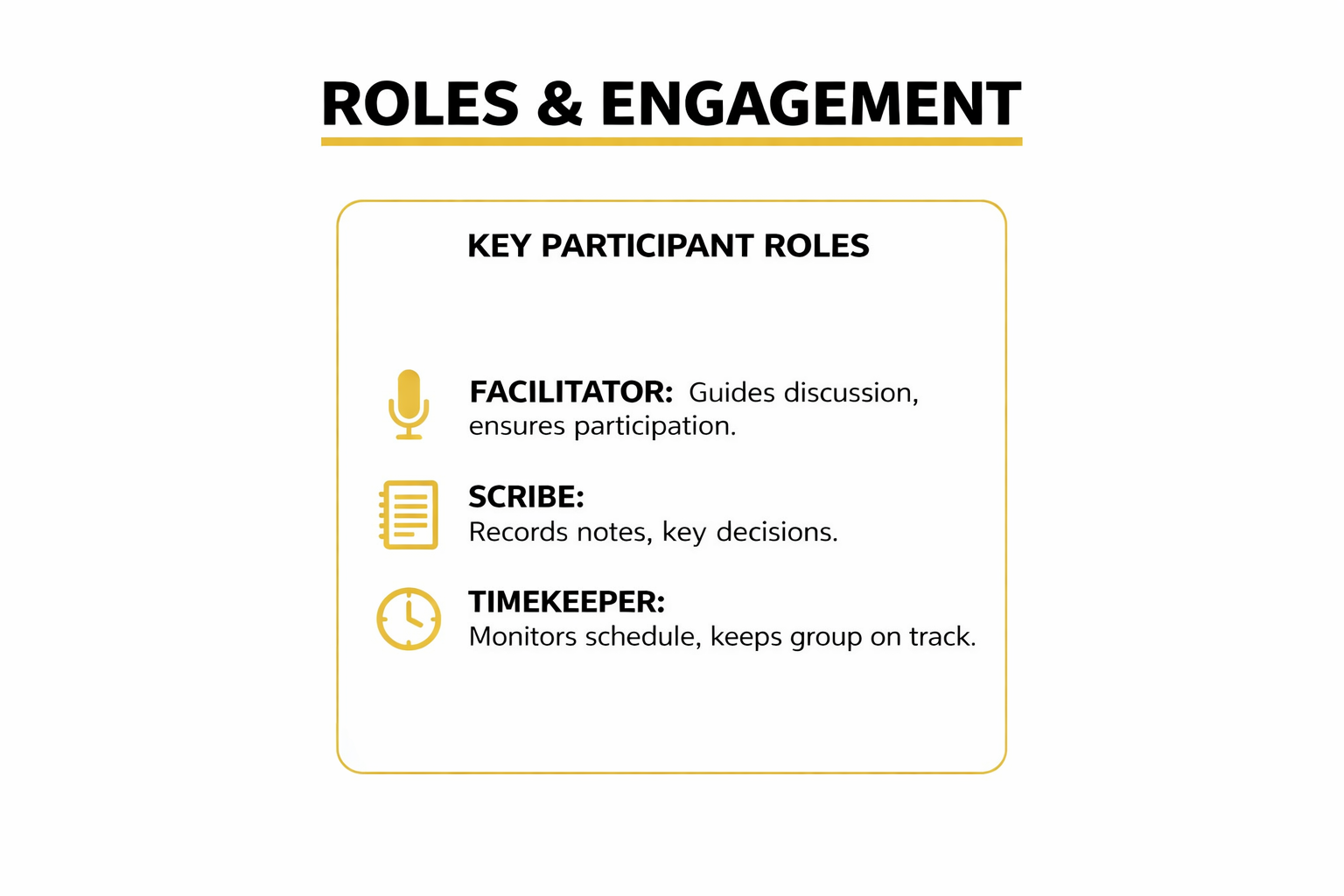
Ever sat through a meeting wondering who’s steering the conversation? Handing out clear roles—facilitator, scribe, timekeeper—changes everything.
With responsibilities rotating, everyone leans in. Suddenly, no one can hide in the background.
- Facilitator sets the tone, asks the right questions, and guides the agenda.
- Scribe captures decisions, action items, and parking lot topics.
- Timekeeper so discussions do not drag past what the operation allows
Swap these roles each week to keep people curious, build new skills, and make ownership part of your team culture. This straightforward framework is at the heart of running effective meetings in any hospitality setting.
Facilitator, Scribe, And Timekeeper Roles
The facilitator kicks things off by framing the goals and encouraging input: What challenge are we tackling today? Questions like this get the room talking.
Meanwhile, the scribe makes bullet-point notes on a whiteboard or shared doc, names, deadlines, and follow-ups. That live record ramps up accountability and makes post-meeting follow-up painless.
The timekeeper is your guardian of the agenda. When there’s a 2-minute warning, they give a subtle signal. When a segment ends, they nudge everyone to move on. No more five-minute detours on side topics.
Icebreakers And Check-Ins
You do not need elaborate icebreakers. A few focused opening questions can quickly align the room and surface real issues:
-
Which menu item or station caused the most friction last week?
-
Where do we expect pressure during the next busy service?
-
Who deserves recognition for stepping up?
These questions ground the conversation in real operations and help managers shift from service mode into problem-solving mode.
Keeping Focus and Participation High
Manager meetings work best when everyone contributes. Encourage phones down and attention on the conversation. Ask direct, practical questions to pull voices into the room:
-
“What are we missing here?”
-
“Who sees this differently?”
-
“What would make this easier for the team on the floor?”
This keeps meetings interactive and prevents one or two voices from dominating.
Continual Improvement And Feedback
Close each meeting with a fast check:
-
What worked?
-
What dragged?
-
One thing to improve next time
These small adjustments compound quickly. When managers see meetings becoming clearer, shorter, and more useful, engagement naturally increases.
Strong meetings are not about structure for structure’s sake. They are about creating clarity, accountability, and momentum—without losing sight of the realities of restaurant life.
Sample Meeting Agendas for Hospitality Teams
Not all meetings serve the same purpose, and in hospitality, time is always tight. The key is matching the meeting format to the moment, so you get clarity and alignment without slowing service down. Below are two realistic meeting examples managers actually use in restaurants to keep teams focused and operations running smoothly.
Daily Pre-Shift Huddle (5–15 minutes)
This is the most common and most valuable meeting in hospitality. A short, focused huddle before service sets expectations and prevents surprises.
What to cover:
-
Menu specials and 86’d items
-
Allergy alerts and safety reminders
-
Staffing pressure points or large reservations
-
One clear service priority for the shift
Keep it fast and interactive. The goal is alignment, not discussion. Everyone should walk away knowing exactly what to watch for during service.
Weekly Manager Meeting (60–90 minutes)
This meeting is where leadership teams step out of reaction mode and look at the bigger picture. It usually happens during slower hours and focuses on trends, not tasks.
Common agenda areas:
-
Sales and cost highlights vs. targets
-
Labor efficiency and scheduling challenges
-
Inventory or purchasing issues
-
Guest feedback and service patterns
-
Staffing updates, training needs, or retention concerns
End the meeting by assigning clear action items with owners and deadlines. If nothing changes after the meeting, it was just a conversation, not a tool.
Frequently Asked Questions
What’s the ideal meeting length for shift-based teams?
Short and focused always wins in hospitality.
-
Pre-shift huddles: 5 to 15 minutes max
-
Weekly manager meetings: 60 to 90 minutes
-
Monthly reviews: Up to 60 minutes if you’re reviewing trends, labor, and performance
If a meeting regularly runs long, it usually needs a clearer agenda, not more time.
How many participants ensure fast decisions?
You’ll move faster with 5–7 key decision-makers around the table.
If you need a specialist’s input, bring them in just for their slice of the agenda.
- Invite only those with decision authority or essential insights
- Rotate seats now and then to shake up perspectives
What’s the best way to engage late-shift staff?
Keep it fast, relevant, and grounded in service reality.
-
Start with a quick debrief from the previous shift
-
Focus on tonight’s priorities, not long explanations
-
Rotate leadership between FOH and BOH leads
Late-shift teams respond best when meetings respect their energy and time.
What’s the ideal meeting frequency?
Consistency beats volume.
-
Daily pre-shift huddles for immediate execution
-
Weekly manager meetings for planning and alignment
-
Monthly reviews for trends, performance, and development
When teams know the rhythm, they come prepared, and meetings stop feeling disruptive.
Ready to master how to run effective team meetings? Join MAJC✨ for access to proven templates, live workshops, and a community of hospitality operators driving results. Get started at majc.ai