

If you want to improve your restaurant’s culture, you have to start with a clear-eyed look at where you stand right now. It is a direct investment in your team’s success, but you cannot fix what you have not measured. The first move is always to gather honest, unfiltered feedback from your people.
Diagnosing Your Current Workplace Culture
Before you can build a better culture, you need a blueprint of the one you already have. Guesswork and assumptions will not get you there. This is all about collecting real data on what your team members actually experience day in and day out. A solid diagnosis is the foundation for any change that is going to stick.
Gathering Honest Feedback
To get meaningful feedback, your team needs to feel safe telling the truth. Anonymity and trust are critical. Using more than one method will give you a clearer, more accurate picture of your workplace culture.
Here are a few effective approaches:
-
Anonymous surveys: Tools like Google Forms or specialized platforms help gather direct feedback on job satisfaction, leadership, communication, and recognition.
-
Confidential focus groups: Small, diverse group discussions can surface issues that surveys often miss.
-
One-on-one “stay” interviews: Instead of waiting for exit interviews, ask your best employees why they stay. This proactive approach highlights what’s working and what truly matters to your team.
The quality of your questions matters. Skip vague prompts like “Are you happy here?” and ask something specific, such as:
“What’s one change we could make tomorrow that would improve your workday?”
This leads to actionable insights, not just yes-or-no answers.
Analyzing the Data for Themes
Once you have collected all that feedback, the real work starts. It is time to sift through it all and look for patterns. At first, the raw data might feel a bit scattered, but as you start grouping comments and scores, themes will absolutely emerge.
Spotting these core issues is critical because they have a direct line to morale and retention. When your team feels unheard or like their work does not matter, they are much more likely to walk, a problem you can tackle once you know how to reduce staff turnover.
You will probably see a few common themes pop up:
- Lack of Recognition: People feel like their hard work is invisible.
- Unclear Communication: Information gets stuck at the top and never makes it to the front line.
- Poor Work-Life Balance: The team feels constantly overworked and underappreciated.
- Limited Growth Opportunities: Staff do not see a future for themselves at the company.
This initial assessment becomes your roadmap. It gives you the evidence you need to stop guessing and start building targeted strategies that solve the real problems your team is facing. By taking this data-driven approach, you make sure your efforts are focused where they will have the biggest impact.
Building a Foundation of Psychological Safety
Forget the ping-pong tables and free snacks. The core of a strong workplace culture is psychological safety: the shared belief that people can speak up, make mistakes, and be themselves without fear of embarrassment or punishment.
When psychological safety exists, collaboration improves, creativity increases, and teams focus their energy on solving problems instead of protecting themselves. Without it, communication shuts down and innovation stalls. If you want to improve your workplace culture, this is where leaders must start. Psychological safety is the invisible structure that supports engaged, resilient, high-performing teams.
Model Vulnerability from the Top
Culture flows downhill. If you want honesty and accountability from your team, leadership has to model it first. That means admitting mistakes, acknowledging challenges, and being transparent when things do not go as planned.
For example, a kitchen manager who owns a prep mistake after a rough service and focuses on fixing the system, not assigning blame, sends a powerful message: mistakes are learning opportunities, not personal failures.
When leaders show humility, they build trust faster than any formal team-building effort. They also give their team permission to speak openly, take ownership, and grow.
Encourage Constructive Feedback
Psychological safety depends on feedback flowing in both directions. Team members need to feel they can challenge ideas or raise concerns without fear of negative consequences.
This starts with asking better questions and responding with curiosity instead of defensiveness. Rather than ending meetings with a vague “Any questions?”, invite meaningful input:
-
“What’s a potential risk you see with this plan?”
-
“What’s another perspective we should consider?”
Equally important is closing the loop. Even when you don’t act on a suggestion, acknowledging it shows that feedback is taken seriously.
When leaders respond to input with respect and openness, communication becomes a dialogue, not a monologue, and trust naturally follows.
Champion Wellbeing to Combat Burnout
Psychological safety also means showing your team that you care about them as people, not just as workers. This is especially critical in high-pressure industries like hospitality, where burnout is widespread. According to research from WorkJoy, about 45% of hospitality workers report feeling burned out or chronically stressed on the job, a reality that directly impacts retention, engagement, and performance.
The fallout is real: organizations with high burnout see about 23% more absenteeism and higher healthcare costs.
On the flip side, research indicates that a large majority of workers in psychologically safe environments report higher levels of motivation, a greater willingness to take initiative, and more confidence in sharing ideas, outcomes that contribute to better teamwork and performance, according to recent workplace data from Wifitalents.
In practice, this means training managers to recognize signs of stress and giving them the tools to support their teams more effectively. It means setting realistic expectations for hours, actually encouraging staff to use their PTO, and having open conversations about mental health.
When your team knows you have their back, they are more willing to go the extra mile when things get tough.
At the end of the day, psychological safety is not some “soft” skill; it is a strategic imperative. Model vulnerability, encourage open feedback, and genuinely support your team’s health. Do that, and you will create the conditions for a thriving culture where everyone feels empowered to do their best work.
Designing Recognition Programs That Resonate
Feeling valued is a core driver of engagement, not just a nice perk. When recognition feels genuine and tied to real contributions, it strengthens motivation, loyalty, and alignment with your culture. The problem is that many recognition programs become performative, checking a box instead of creating a meaningful connection.
A generic “employee of the month” award often feels disconnected from the realities of daily work. To truly support your culture, recognition needs to reinforce your values and spotlight the behaviors you want to see more often.
Beyond the Employee of the Month
Effective recognition isn’t a single award; it’s a system embedded into everyday operations. The most impactful programs create multiple ways for appreciation to happen consistently and in the moment, not just from the top down.
Here are a few practical ways to build a more meaningful approach:
-
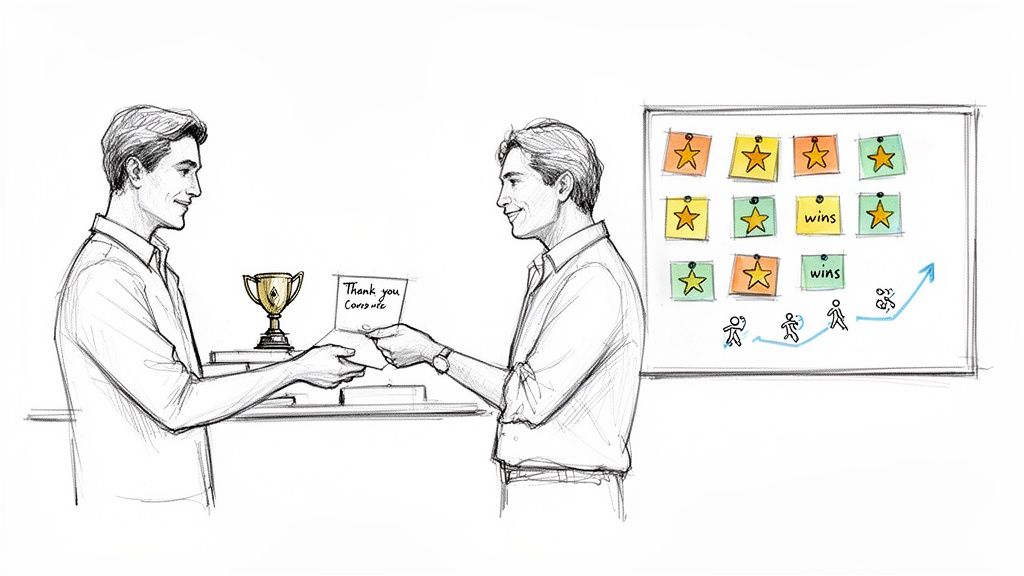
Enable peer-to-peer recognition: Praise from coworkers who see the effort firsthand often feels more authentic. Simple tools like a shared shout-out channel or a visible kudos board make recognition easy and immediate.
-
Train managers on specific feedback: Generic praise fades fast. Teaching leaders to recognize specific actions, like handling a difficult guest with professionalism, makes appreciation more memorable and reinforces the right behaviors.
-
Celebrate small wins publicly: Recognition doesn’t need to wait for major milestones. Calling out consistent effort during pre-shift huddles or team meetings helps normalize positive behaviors and encourages others to follow suit.
When recognition is timely, specific, and aligned with your values, it stops feeling corporate and starts becoming part of how your team works every day.
Connecting Recognition to Growth and Retention
Recognition is more than a pat on the back. It signals that an employee’s work matters and that their contributions are connected to something bigger. When recognition is consistent and meaningful, it reinforces a sense of progress and belonging.
One of the fastest ways teams disengage is by feeling stuck or invisible. Making recognition part of your daily culture helps counter that by showing people their efforts are noticed, valued, and tied to growth.
When recognition is intentional rather than sporadic, it stops being a nice extra and becomes a strategic tool for building a team that wants to stay and improve.
Impact of Recognition on Key Business Metrics
| Metric | Without Effective Recognition | With Consistent Recognition |
|---|---|---|
| Employee Engagement | Low morale, minimal discretionary effort, higher absenteeism. | Increased motivation, proactive problem-solving, and stronger team cohesion. |
| Retention & Turnover | Higher turnover rates, increased hiring and training costs. | Improved loyalty, lower voluntary turnover, and stronger institutional knowledge. |
| Performance & Productivity | Inconsistent performance, lack of alignment with company goals. | Higher individual and team output, clear reinforcement of desired behaviors. |
The numbers do not lie. Investing in a structured, genuine recognition program pays for itself through a more stable, productive, and engaged workforce.
For instance, when a line cook consistently demonstrates leadership during busy shifts, recognize that publicly. Then, follow it up with a private conversation about a potential sous chef track. This links their excellent performance directly to a tangible growth opportunity, giving them a clear reason to stay and build with you.
This approach creates a powerful feedback loop: employees feel valued, they see a clear path for advancement, and they become more invested in the company’s success. This is how you transform recognition from a simple morale booster into a strategic lever that builds a resilient, high-performing team.
Building a Culture of Growth: Flexible Work and Real Career Paths
In hospitality, autonomy and growth are not just trendy perks anymore; they are core expectations. If you want to build a culture that attracts and keeps great people, you have to move past the old nine-to-five mindset and vague promises of “moving up.”
It is time to build systems that offer your team genuine flexibility and a career path they can actually see. This is not just about making schedules work. It is about proving you trust your people and are invested in their future, not just their output on tonight’s shift.
Give Your Team Flexibility and Autonomy
Flexibility does not mean the same thing for every restaurant. For a corporate team, it might be a hybrid schedule. But for your line cooks and servers, it could look like a four-day workweek, compressed hours, or just more predictable scheduling that lets them have a life outside the restaurant.
Whatever it looks like, the secret ingredient is trust. When you build a system based on clear communication and shared goals, you are sending a powerful message: “We trust you to get the job done.” That sense of ownership is a game-changer for engagement.
Create Career Paths People Can Actually See
While flexibility makes the now better, a clear career path gives people a reason to stick around for the future. No one wants to feel like they are in a dead-end job. Making growth opportunities transparent and achievable is one of the most powerful moves you can make.
Forget the vague assurances. People need to see a real, tangible ladder they can climb. Start by mapping out the roles and responsibilities at every level. Then, get specific about the skills, experience, and competencies required to move from one to the next. What does it really take to go from line cook to sous chef in your kitchen? Write it down.
Invest in Upskilling and Reskilling Your Crew
Once you have drawn the map, you have to give your team the tools to navigate it. That is where upskilling and reskilling come in. Investing in your team’s professional development is not just a benefit; it is how you build a capable, loyal workforce that can grow with you.
Here is how to build programs people will actually use:
- Offer a Mix of Learning Options: Combine hands-on, on-the-job training with informal mentorship from experienced team members, cross-training across FOH and BOH roles, and access to practical online courses or certifications relevant to hospitality operations.
- Make it Relevant: Do not guess what they want. Ask your team about their career goals and what skills they want to learn. Tailoring your offerings makes the investment count.
- Support Formal Certifications: For many in hospitality, certifications are a clear way to build expertise. Supporting your team in pursuing relevant hospitality industry certifications provides a structured path for them to advance.
When people feel like they are growing, they are far less likely to leave. It is that simple.
Creating Your Rollout and Measurement Plan
Lasting cultural change is a marathon, not a sprint. A grand vision is a great start, but real, sustainable improvement comes from a thoughtful, phased rollout and a clear plan to measure what is actually working.
If you try to launch too many initiatives at once, you will just overwhelm your team and dilute your impact. Instead, a structured approach turns your cultural goals into a manageable project with tangible outcomes. This is where you connect your big-picture ideas to the day-to-day realities of your restaurant.
Starting with High-Impact Wins
The key to a successful rollout is to build momentum. You want to start with changes that are relatively low-effort but deliver a high, visible impact. These early wins show your team you are serious about making things better, which helps build the trust and buy-in you will need for the bigger, long-term shifts.
Go back to the feedback you gathered during your diagnosis. What were the consistent pain points that you could address quickly?
- Quick Win Example: If communication was a recurring pain point, start by formalizing a short, consistent pre-shift huddle. Even restaurants that already “do a huddle” often lack structure or consistency. A focused daily check-in to share priorities, updates, and quick recognition is a low-cost, high-visibility change that immediately improves alignment and connection.
Focusing on these initial victories creates a positive feedback loop. Your team sees tangible improvements, feels heard, and becomes more engaged in the process. That goodwill is pure gold when it comes to tackling the more complex cultural challenges down the road.
Creating a Phased Timeline
Once you have nailed down a few quick wins, it is time to map out a more comprehensive timeline. A phased approach prevents change fatigue and allows your team to adapt gradually. Breaking your plan into distinct phases, like 30, 60, and 90-day goals, makes the whole process feel less daunting.
Here is a sample structure you can adapt:
- Phase One (First 30 Days): Focus on foundational, high-visibility actions. This is your chance to launch that new peer recognition program, formalize communication routines, or train managers on giving better feedback. The goal here is to establish new habits.
- Phase Two (30–90 Days): Now you can introduce more substantial initiatives. This might involve rolling out a new flexible scheduling system, launching the first stage of your career pathing program, or hosting leadership development workshops.
- Phase Three (90+ Days): This is all about embedding the changes and refining your approach. At this stage, you will be gathering data, analyzing what is working, and making adjustments. This is how your new cultural norms become a permanent part of how you operate.
This infographic shows how building trust and offering flexibility are foundational steps toward employee growth.
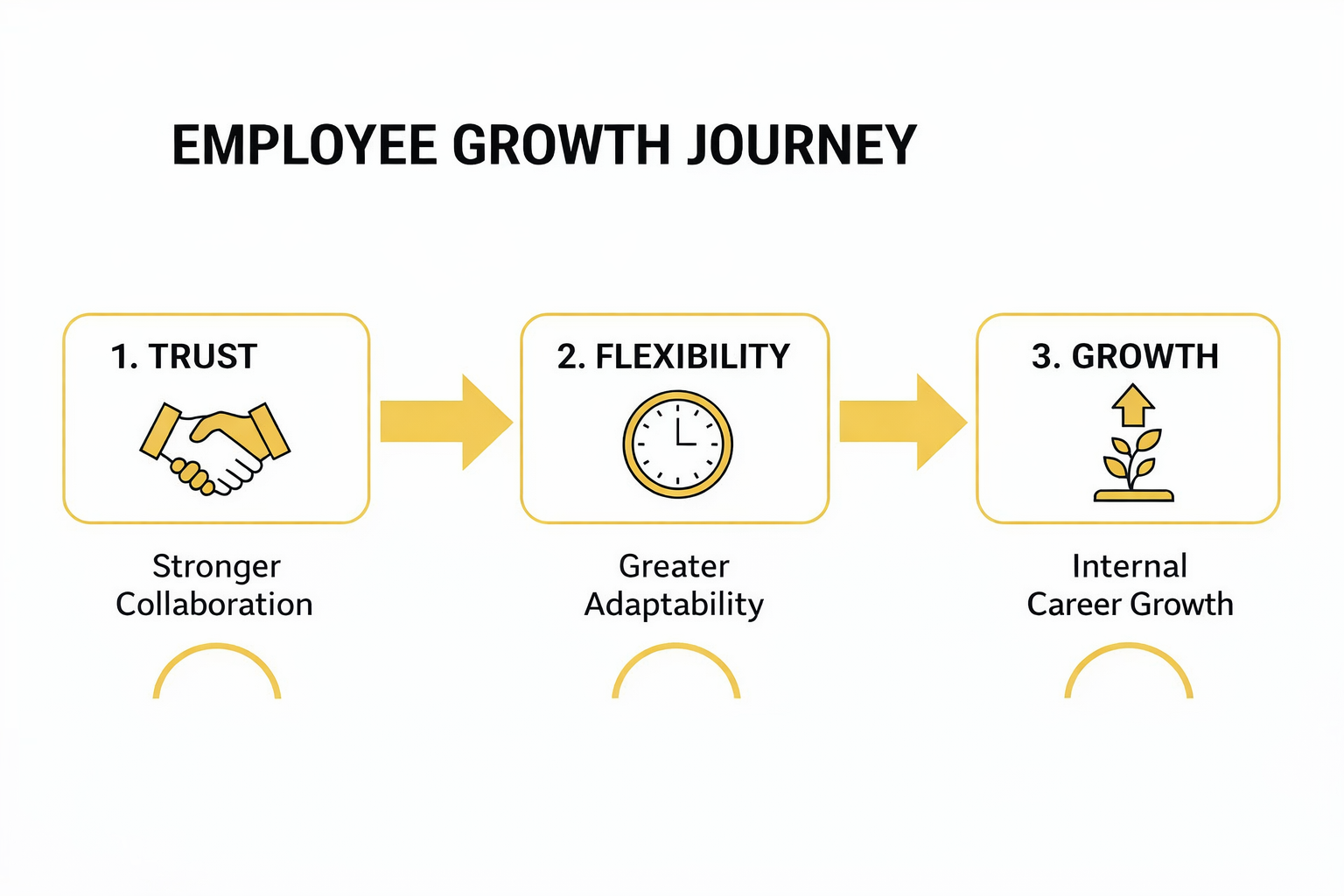
When you invest in trust and autonomy first, you create a clear pathway for professional development that makes people want to stick around.
Measuring What Matters Most
You cannot improve what you do not measure. To understand if your efforts are truly making a difference, you need to track the right key performance indicators (KPIs). These metrics give you objective data on the health of your workplace culture, moving you beyond gut feelings and anecdotes.
Start by establishing a baseline for each KPI before you begin your rollout. Then, track them consistently over time to see the trends.
Here are a few essential KPIs to monitor:
- Employee Net Promoter Score (eNPS): This simple metric asks employees how likely they are to recommend your company as a great place to work. It is a powerful, direct pulse check on overall sentiment and loyalty.
- Voluntary Turnover Rate: One of the clearest indicators of cultural health is whether people are choosing to stay. A declining turnover rate is a strong signal that your initiatives are working.
- Absenteeism: Tracking unscheduled absences can reveal underlying issues with stress, burnout, or disengagement. A reduction in absenteeism often correlates with higher morale and a healthier work environment.
By combining a phased rollout with consistent measurement, you create a powerful engine for change. You will be able to celebrate real progress, pivot when something is not working, and demonstrate the tangible value of investing in a workplace where people truly want to be.
Got Questions About Culture Change? We’ve Got Answers.
Even with a killer plan, changing your workplace culture is going to bring up some tough questions. That is normal. Tackling these head-on is how you keep things moving and prevent your hard work from fizzling out. Here is what leaders usually ask.
How long does this actually take?
Let’s be real: you will see small, encouraging wins within a few months, but a true cultural shift is a marathon, not a sprint. To get to the point where the new way of doing things is just “how we do things here,” you are looking at 18 to 24 months of consistent effort.
This is not a quick fix. Think of it as an evolution. The key is to celebrate the small victories, a jump in your eNPS score, great feedback on the new pre-shift routine, to keep everyone energized for the long haul.
What if some of my best people hate the new plan?
Resistance is part of the deal. It is a totally human reaction. When you get pushback, do not just push harder. Get curious. Pull that person aside and try to understand what is really going on.
Sometimes, it is not about the change itself. It is usually one of these things:
- Fear of the Unknown: The old way might be broken, but at least it is familiar.
- “Here We Go Again”: If they have seen other initiatives fail, they are going to be skeptical.
- No Say in the Matter: People resist what is done to them. They get behind what they help create.
Ask them for their ideas. Show them exactly how these changes will make their shift better, their job easier, or their career path clearer. When you do that, you can turn your biggest critics into your most powerful champions.
If you could only focus on one thing, what would it be?
If I had to boil it all down, it comes back to leadership commitment. Full stop. Your culture initiatives will only go as far as you and your leadership team are willing to walk the walk. If managers are not modeling the behavior, celebrating the wins, and holding themselves accountable, the whole thing falls apart.
Real commitment means being the most passionate person in the room about this work. It means owning your mistakes, shouting out others’ successes, and constantly connecting daily actions back to the values you have all agreed on. That is the fuel that makes culture change stick.
Ready to build a workplace culture that attracts top talent and makes them want to stay? MAJC✨ provides the tools, training, and community support to help hospitality leaders like you run smarter, retain longer, and create a team that thrives. Discover how MAJC can transform your restaurant’s future.