

Building a top-tier hospitality team is not about luck. It is the result of a deliberate process: hiring for culture, training with intention, and leading in a way that supports and develops people every day. When those elements align, teams do more than survive pressure. They deliver consistent, memorable guest experiences that build a strong reputation.
What High-Performing Hospitality Teams Actually Look Like
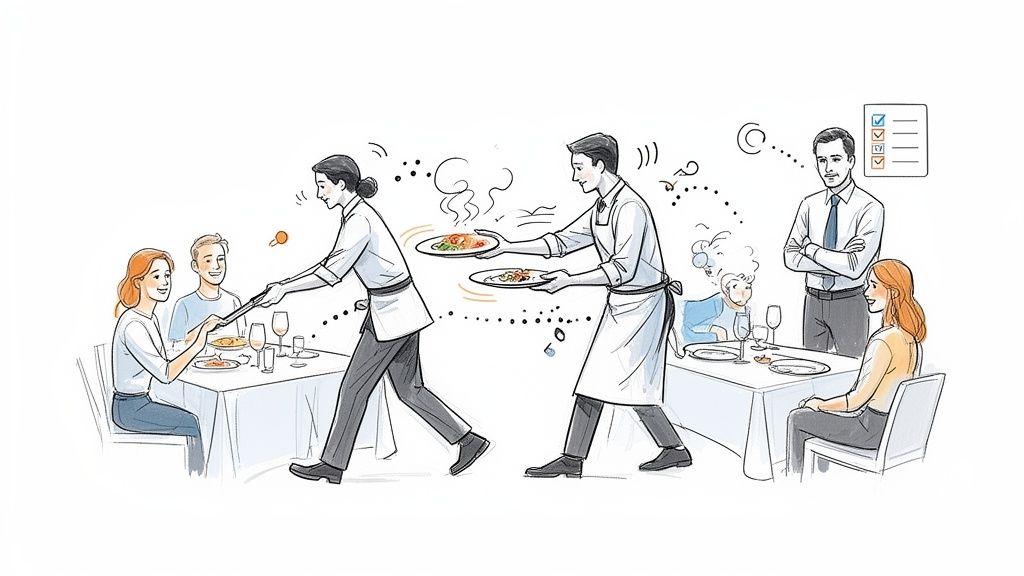
Let’s move past the buzzwords. A high-performing team is not just fast or efficient. It is resilient, intuitive, and deeply aligned around the guest experience.
Picture a sudden dinner rush. An average team scrambles. A high-performing one communicates effortlessly, anticipates problems before they escalate, and turns pressure into smooth service. That ability is not accidental. It is built.
The Foundation of Excellence
Exceptional teams are created through systems, not luck or “rockstar” hires. The strongest operations focus on three fundamentals:
-
Strategic Hiring: Bringing in people who align with your culture and service mindset, not just their resumes.
-
Intentional Training: Structured, role-specific training that builds confidence, not just compliance.
-
Supportive Culture: A psychologically safe environment where people feel respected, trusted, and motivated to grow.
When these elements click into place, your team’s performance becomes the central pillar of your profitability and reputation. And the numbers do not lie. Highly engaged teams show a 23% greater profitability than their disengaged counterparts, a powerful statistic you can dig into in this Gallup workplace report.
Building Your Team with Strategic Recruitment
The best teams are built long before anyone clocks in for their first shift. It all starts with strategic recruitment, a mindset shift away from just filling a vacancy and toward carefully selecting people who will actively elevate your culture and guest experience.
This process begins by looking past the resume. Skills can be taught on the job, but innate qualities like empathy, proactive problem-solving, and a genuine collaborative spirit are much harder to instill. These are the traits that separate a decent employee from a true team player.
Identifying Your Ideal Team Player
Before you post a job opening, you need a crystal-clear picture of who you are actually looking for. Go beyond the standard list of duties and think about the human qualities that make someone thrive in your specific environment.
Start by asking yourself and your current top performers some real questions:
- What makes our best people so effective during a chaotic Saturday night service?
- How do they handle an unexpected guest complaint or a last-minute menu change?
- What personality traits contribute most to our positive team dynamic?
The answers help you build a profile of your ideal candidate that values character just as much as capability. This becomes the foundation for everything that follows, from the job description to the final interview questions. For more detailed guidance, check out our guide on how to write a job description that attracts the right kind of talent.
A resume tells you what someone has done. A well-designed interview process tells you who they are. Focus on discovering their natural approach to collaboration, pressure, and problem-solving.
Crafting a Better Interview Process
With that clear profile in hand, you can design an interview that reveals character, not just a rehearsed script. It is time to ditch the generic questions like “What are your weaknesses?” and instead use situational or behavioral questions that show you how a candidate thinks on their feet.
For instance, instead of asking if they are a team player, try this: “Tell me about a time you noticed a coworker was overwhelmed. What did you do?” The story they tell is far more revealing than a simple “yes.” This approach gives you a glimpse into their real-world instincts and their genuine capacity for teamwork.
Turning New Hires into Valued Team Players
Once you have hired a promising candidate, the real work begins. The first few weeks on the job are a critical window; a chance to turn that initial potential into genuine, long-term performance.
A rushed orientation or a “figure it out as you go” approach is a recipe for disengagement and early turnover. Building a high-performing team requires a far more intentional process.
This is where a structured onboarding and training program becomes your most powerful tool. It is not just about showing someone where the break room is; it is about systematically building their confidence, competence, and connection to your team. A great program makes a new hire feel supported, valued, and equipped to succeed from day one.
Designing an Impactful Onboarding Experience
A well-designed onboarding plan should map out a new hire’s first 30 days, providing a clear path from newcomer to confident contributor. This is not a rigid script but a flexible framework that ensures all the essential bases are covered.
Think of it as a guided journey. The goal is to gradually layer skills and responsibilities in a way that feels empowering, not overwhelming. This is where you translate your operational standards into practical, digestible training modules. For detailed guidance on formalizing your processes, explore our article on how to create standard operating procedures that your team can actually use.
A strong 30-day plan usually breaks down like this:
- Week One: Focus on the fundamentals. This means introductions to the entire team, a deep dive into your brand’s mission, and hands-on walkthroughs of essential safety protocols and workplace systems.
- Week Two: Begin skill-specific training. Pair the new hire with an experienced mentor or trainer to shadow and then practice core job functions in a low-pressure environment.
- Weeks Three and Four: Gradually increase autonomy. The new team member starts taking on more independent responsibilities, with regular check-ins from their manager to offer feedback and answer questions.
The objective of onboarding is not just to teach tasks. It is to integrate a person into the culture of your team, making them feel like they truly belong and that their contribution matters.
Beyond the Basics: Role-Based Training
To build a truly high-performing team, training has to go beyond the technical aspects of the job. It needs to equip employees with the soft skills to handle the dynamic, often unpredictable nature of hospitality. This means creating training scenarios that reflect the real world.
For example, a training module for a new server should not just cover menu knowledge. A truly effective program would include role-playing exercises focused on navigating challenging guest interactions, like learning to de-escalate a complaint with empathy and turning a negative experience into a positive one.
This type of comprehensive training builds psychological safety, where employees feel safe to take risks, ask questions, and learn from mistakes without fear of punishment. This concept is a proven driver of elite performance.
This focus on human skills is even more critical as 75% of restaurants recognize the value of AI and automation for tasks like demand forecasting, freeing up staff to elevate the guest experience. You can discover more insights about these hospitality industry trends on escoffier.edu.
The Power of Mentorship and Consistent Check-Ins
Pairing a new hire with a seasoned team member is one of the most effective ways to accelerate their integration. A good mentor provides a go-to resource for practical questions, offers encouragement, and models the behaviors you want to see.
Regular check-ins with a manager are just as important. These brief, consistent conversations create a feedback loop that builds trust and allows you to address small issues before they become bigger problems.
Keep these meetings simple and supportive:
- Celebrate a recent win. Start by acknowledging something they have done well.
- Ask about challenges. Create a safe space for them to share what they are struggling with.
- Offer specific guidance. Provide actionable advice and resources to help them improve.
This structured yet human-centered approach to onboarding and training is an investment that pays off exponentially. It shrinks the learning curve, boosts morale, and ensures your new team members are not just prepared, but truly set up to thrive.
Fostering Excellence Through Daily Leadership
A high-performing team is not something you build once. It is a habit, cultivated every single day through the small, intentional actions of strong leaders. This means getting out of the office and onto the floor, shifting from a reactive management style to a proactive coaching mindset.
Exceptional teams are actively led. It’s the small, consistent leadership moments that create a powerful ripple effect, boosting morale, engagement, and ultimately, your bottom line. These daily routines are what separate a good team from a great one.
The Power of Daily Routines
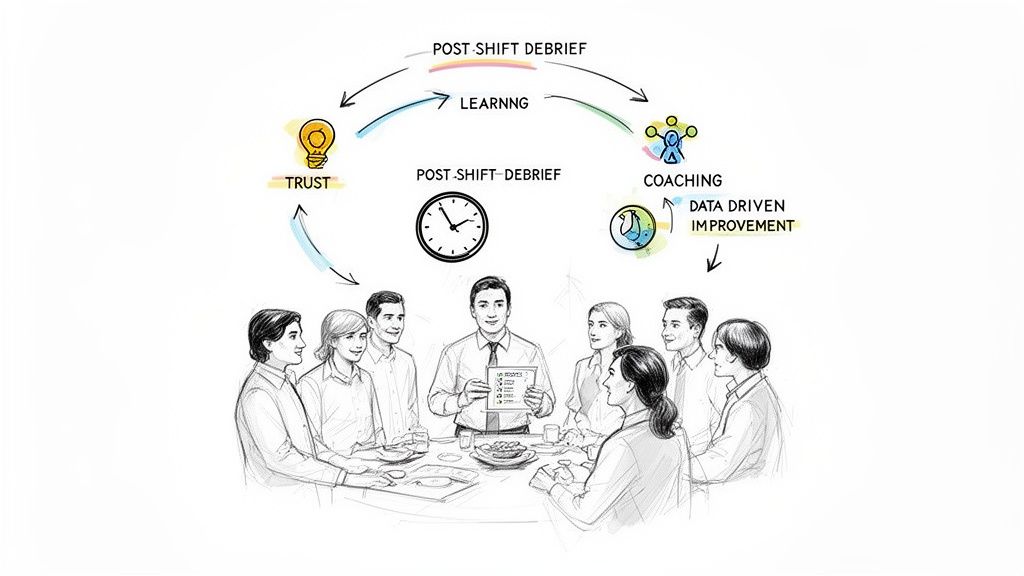
The natural rhythm of service gives you the perfect framework for impactful leadership. Three routines, in particular, can completely transform your team’s dynamic: pre-shift huddles, one-on-one check-ins, and post-shift debriefs.
- Pre-Shift Huddles: This is more than just reading off specials. A powerful pre-shift is a five-minute energy boost that aligns the team, celebrates a recent win, and sets a positive, focused tone for the service ahead.
- One-on-One Check-Ins: These are quick, informal conversations that happen in the flow of work. A simple, “How is your section feeling tonight?” shows you are paying attention and opens the door for real-time support.
- Post-Shift Debriefs: After a tough service, a quick huddle can turn frustration into a learning opportunity. It is a chance to ask, “What went well? What could we do better? What did we learn?”
These interactions are the foundation of a culture where every person feels seen, supported, and engaged. The goal is to make them as automatic as prepping the line or polishing glassware.
Great leadership is not about grand gestures; it is about being present and intentional in the small moments. These daily connections are where trust is built, and excellence becomes the standard.
Turning Feedback into Fuel for Growth
Great leaders know how to give feedback that drives improvement, not defensiveness. The key is framing it as coaching, not criticism. In a culture of open communication, feedback becomes a growth tool.
Effective feedback is timely, specific, and supportive. Do not wait for formal reviews. Address behaviors close to when they happen, focusing on the action, not the person.
For example, instead of saying “You need to be faster,” try:
“I noticed table four took longer than usual. Let’s walk through the steps and see how we can make it smoother next time.”
This keeps the conversation collaborative and solution-focused.
If you are looking for more ways to strengthen team dynamics, check out these great culinary team building activities.
Using Data for Development, Not Judgment
Performance data is a powerful coaching tool when used to guide growth, not assign blame. Metrics like sales, turn times, or guest feedback should start conversations, not shut them down.
Use data to highlight strengths and spot opportunities, always framing the discussion around development. This approach builds trust and encourages ownership.
For example, if a server’s appetizer sales are low, ask: “Which apps do you feel most confident recommending?” You may uncover a simple training gap that’s easy to fix. When data guides coaching, your team is empowered to improve and succeed together.
Keeping Your Best People with Smart Retention Strategies
Building a phenomenal team is only half the battle. The real marker of a high-performing restaurant or hotel is its ability to keep top talent engaged, motivated, and committed for the long haul.
A smart retention strategy is not just a “nice-to-have”, it is a direct investment in your bottom line, protecting you from the steep operational and financial costs of turnover. This is about creating a workplace where your best people see a real future and feel genuinely valued for their contributions.
Make Recognition a Daily Habit
Meaningful recognition is one of the most powerful and most overlooked leadership tools. Forget generic programs like “employee of the month.” Real recognition is timely, specific, and part of everyday operations.
When a line cook steps in during a slammed service or a server turns a tough table into a great review, acknowledge it in the moment. A public thank-you at pre-shift or a short handwritten note can go a long way.
To keep recognition consistent, focus on a few simple practices:
-
Peer-to-Peer Shoutouts: Use a Slack channel or breakroom board where teammates can recognize each other.
-
Spot Recognition: Give managers the freedom to reward great effort with small, immediate perks.
-
Celebrate Team Wins: Call out shared successes like hitting sales goals or earning standout reviews.
The goal is simple: catch people doing things right. When your team feels seen and appreciated, morale rises, and so does performance.
For a deeper dive, you can learn more about how to improve employee retention with actionable strategies.
Create Clear Paths for Career Growth
Ambitious people do not want to stay in a dead-end job. If your best employees cannot see a clear path forward within your organization, they will eventually look for one elsewhere. Creating visible and achievable career paths is a nonnegotiable part of any serious retention plan.
This does not mean everyone has to become a manager. Growth can take many forms. Sit down with your team members to understand what they actually want and help them build a development plan that gets them there.
A job is something you do for a paycheck. A career is something you build for the future. Show your team you are invested in their career, not just their job, and they will invest right back in you.
This could mean cross-training a line cook who shows an interest in pastry or giving a server mentorship opportunities to develop leadership skills. When you invest in your team’s professional development, you are not just filling roles; you are building future leaders and creating a pipeline of internal talent.
The Financial Case for Keeping Your Team
Focusing on retention is not just a cultural initiative; it is a critical financial strategy. In hospitality, where wages are surging and the workforce is massive, the cost of turnover is more significant than ever.
With U.S. hotels employing more than 2.1 million people, every employee you retain represents real savings. According to the American Hotel & Lodging Association (AHLA), employee turnover carries substantial costs across recruiting, onboarding, training, and lost productivity. You can discover more insights from the AHLA report to understand the full financial impact.
Cultivate a Positive and Supportive Environment
At the end of the day, people stay where they feel respected and supported. A positive work environment is the foundation upon which all other retention strategies are built. It is a culture where communication is open, feedback is constructive, and every team member feels psychologically safe.
This means enforcing a zero-tolerance policy for disrespect, promoting a healthy work-life balance, and ensuring managers lead with empathy, not just authority. When you build a workplace where people feel good about showing up, you create a powerful magnetic force that keeps your best people from walking out the door.
Your Blueprint for an Unstoppable Team
Building a high-performing team is not a one-time project. It is an ongoing system built through intentional hiring, consistent training, and everyday leadership. When these elements work together, strong performance stops being an exception and becomes the standard.
A Framework for Lasting Success
Keep your focus on these core pillars to build a resilient, high-performing hospitality team:
-
Hire for Character and Culture: Skills can be taught. Attitude, empathy, and teamwork are much harder to change.
-
Onboard with Intention: A structured onboarding process builds confidence, clarity, and cultural alignment from day one.
-
Lead Through Daily Coaching: Pre-shift huddles, one-on-ones, and real-time feedback make improvement part of the daily rhythm.
-
Retain with Purpose: Recognition, growth opportunities, and a positive work environment keep your best people engaged and committed.
When these pillars are in place, performance, retention, and team pride reinforce each other, creating a sustainable foundation for long-term success.
Got Questions? We’ve Got Answers.
Building a team that clicks is a marathon, not a sprint. It is totally normal to hit roadblocks along the way. Here are some quick, real-world answers to some common questions from hospitality leaders.
How can I measure team performance beyond just sales numbers?
Revenue is important, but it is only part of the story. The best operators know that sales are a lagging indicator of team health. If you want to see what’s really going on, you need to look at a few other things.
Think about tracking these areas:
- The Guest Vibe: Keep a close eye on your guest satisfaction scores and the tone of your online reviews. A happy, cohesive team almost always translates to happier guests. It is that simple.
- How Smoothly Things Run: Look at metrics like table turn times in your restaurant or how many rooms are cleaned per hour in your hotel. When those numbers improve, it is usually a sign that communication and teamwork are getting better.
- Who’s Sticking Around: Pay attention to employee turnover and retention rates. High performers do not stick around in chaotic environments. When your best people stay, it means you are doing something right.
Great teams move the needle on all of these fronts, not just one. It is a clear sign you have built a culture that works, which is what ultimately drives the financial results.
What’s the biggest mistake leaders make when building a team?
Easy. Inconsistency.
It is the leader who talks a big game about new standards but does not live by them. You cannot preach about teamwork and then let a toxic, high-performing server get away with undermining everyone else. The second you do that, your words lose all their weight.
Trust is the currency of leadership, and it is built through consistency. Your team needs to see that your actions align with your words, day in and day out.
If there is a gap between what you say and what you do, in your communication, your expectations, or how you recognize people, even the smartest strategy in the world will fall flat.
How do I improve my existing team without starting from scratch?
You do not need to clean house to build a killer team. More often than not, the talent you need is already working for you. They just need the right leadership and structure to really shine.
First, just talk to them. Sit down for some honest one-on-ones to hear about their goals, what drives them crazy, and what ideas they have. You will learn more in those conversations than you will from any report.
From there, you can roll out targeted training to fill any skill gaps and give people a path to grow. And finally, get a real recognition system in place, something more than just a pat on the back. When you consistently reward the behaviors you want to see, you will start seeing more of them.
Ready to build a resilient, motivated, and truly exceptional team? MAJC✨ provides the tools, community, and expert guidance to help you hire smarter, train effectively, and lead with confidence. Start building your unstoppable team today.