

The role of a head chef goes far beyond what happens during a busy dinner service. While leading the line is part of the job, the true scope of head chef responsibilities extends into strategy, leadership, and operational control. A head chef is not just a culinary expert, but a key driver of a restaurant’s success.
In fact, the role continues to grow in both responsibility and value. According to the U.S. Bureau of Labor Statistics, chefs and head cooks earn a median annual wage of nearly $60,000, with steady job growth projected through the next decade, reflecting the increasing demand for skilled kitchen leaders who can balance creativity with business performance.
Today’s head chefs balance creativity with profitability, manage food safety and costs, build strong supplier relationships, and lead the teams that bring a menu to life every day. They are responsible for turning a culinary vision into a consistent, scalable operation.
In this guide, we break down the 10 core head chef responsibilities every modern kitchen leader must master to run an efficient, profitable, and high-performing culinary program in 2026.
1. Menu Development and Culinary Innovation
At the heart of any successful restaurant is a compelling menu, and this is where a head chef’s creative and strategic responsibilities truly shine. Menu development is far more than simply choosing dishes; it is the art and science of creating a culinary identity that aligns with the restaurant’s brand, captures market trends, and drives profitability. This core function among head chef responsibilities involves a continuous cycle of innovation, recipe testing, and refinement to keep the dining experience fresh, exciting, and consistent.
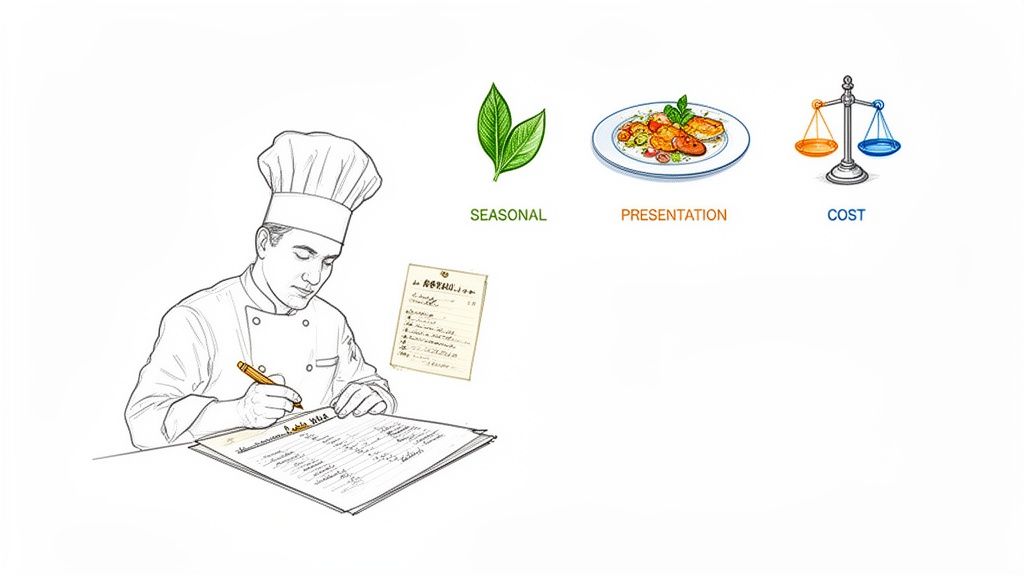
This process directly influences nearly every aspect of the business, from supply chain management and kitchen workflow to customer satisfaction and marketing.
2. Kitchen Staff Leadership and Team Management
Beyond culinary expertise, a head chef’s ability to lead and manage the kitchen team is paramount to a restaurant’s success. This crucial responsibility involves much more than giving orders; it is about cultivating a culture of excellence, discipline, and collaboration. Effective leadership among head chef responsibilities ensures that every member of the brigade, from the sous chef to the prep cooks, understands their role, feels motivated, and performs to a consistently high standard. This directly impacts food quality, service speed, staff retention, and the overall work environment.
This leadership shapes the entire kitchen dynamic. A well-led kitchen operates as a cohesive unit, reducing errors, minimizing waste, and creating a positive atmosphere where staff can thrive and grow professionally.
3. Food Cost Management and Inventory Control
Beyond the creative aspects of cooking, one of the most critical head chef responsibilities is mastering the financial side of the kitchen. Food cost management and inventory control are the bedrock of a restaurant’s profitability, directly impacting the bottom line. This responsibility involves a disciplined approach to tracking expenses, managing stock, minimizing waste, and strategically negotiating with suppliers to maintain quality without sacrificing financial health.
Effective cost control is a continuous balancing act. For instance, fine dining establishments practicing nose-to-tail cooking not only demonstrate culinary creativity but also maximize the yield from expensive proteins, turning bones into stocks and less common cuts into profitable specials. Similarly, Chipotle’s success is partly built on a highly sophisticated system for controlling ingredient costs across thousands of locations, ensuring consistency and profitability. A crucial aspect of controlling expenses involves implementing top inventory management best practices for commercial kitchens. These practices transform the kitchen from just a creative space into a sustainable, efficient business engine.
4. Kitchen Operations and Food Safety Compliance
Beyond culinary creativity, one of the most critical head chefs’ responsibilities is ensuring the kitchen operates as a safe, efficient, and compliant environment. This responsibility is nonnegotiable, as failures in food safety can lead to severe health risks for customers, legal repercussions, and irreparable damage to the restaurant’s reputation. The head chef is the ultimate guardian of sanitation standards, health codes, and operational protocols that protect both diners and the business itself.
This function demands meticulous attention to detail and a proactive approach to risk management. A critical aspect of a head chef’s role in maintaining a safe and efficient kitchen environment involves adhering to strict guidelines. Understanding frameworks like HACCP food safety and how to implement its principles is fundamental to preventing hazards before they occur. These systems are essential for managing everything from receiving and storage to preparation and service.
5. Kitchen Budget Planning and Financial Management
Beyond culinary artistry, a modern head chef must possess strong financial acumen. Kitchen budget planning and financial management are critical head chef responsibilities that directly impact the restaurant’s bottom line. This function involves moving beyond the plate to oversee the economic health of the kitchen, from controlling daily expenses to contributing to long-term financial strategy. It is the discipline of treating the kitchen not just as a creative space but as a vital business unit central to the restaurant’s profitability.
This responsibility is what separates a talented cook from a true kitchen leader. Understanding food costs, labor percentages, and profit margins allows head chefs to make smarter decisions that protect both quality and profitability. Financial awareness turns the kitchen into a sustainable business unit, not just a creative space.
6. Quality Control and Consistency Standards
A head chef’s ultimate responsibility is to ensure that every single dish leaving the kitchen is a perfect representation of the restaurant’s standards. Quality control is the bedrock of customer trust and brand reputation; it’s the commitment that a guest’s favorite dish will taste just as incredible on their tenth visit as it did on their first. This crucial function among head chef responsibilities involves establishing, monitoring, and enforcing rigorous standards for every component of every plate, from sourcing ingredients to the final garnish.
This relentless pursuit of consistency is what separates good restaurants from great ones. Whether it is a single-location bistro or a multi-unit operation, guests expect the same dish to look, taste, and feel the same every time they order it. Achieving that level of reliability requires clear standards, precise execution, and constant oversight from the head chef.
Consistency is not about limiting creativity; it is about protecting the guest experience. When quality standards are clearly defined and enforced, the kitchen can deliver excellence at scale, service after service.
7. Supplier Relations and Sourcing Strategy
Beyond the kitchen walls, a head chef’s influence extends directly to the farms, fisheries, and artisans who supply the restaurant’s ingredients. Building strong supplier relationships is a critical strategic responsibility that directly impacts food quality, cost control, and the restaurant’s culinary identity. This function involves much more than just placing orders; it is the continuous process of sourcing the best possible products, negotiating fair terms, and fostering partnerships that ensure consistency and reliability.
A well-managed sourcing strategy is a cornerstone of operational excellence and a key differentiator in a competitive market. When chefs build direct, trusted relationships with farmers, fisheries, and specialty suppliers, they gain more than just better ingredients. They gain reliability, transparency, and the ability to plan menus with confidence.
Over time, thoughtful sourcing becomes part of the brand itself, reinforcing authenticity, sustainability, and guest trust.
8. Kitchen Workflow Optimization and Service Management
A chaotic kitchen is an inefficient and stressful one. A core head chef’s responsibility is to architect a seamless operational flow that transforms raw ingredients into perfectly executed dishes with speed, consistency, and precision. Kitchen workflow optimization is the strategic arrangement of stations, staff, and processes to minimize movement, eliminate bottlenecks, and ensure clear communication. This function is critical for managing the intense pressure of service, maintaining food quality, and delivering a superior guest experience.
The impact of an optimized workflow is profound, directly influencing ticket times, staff morale, and ultimately, customer satisfaction. For instance, the highly synchronized kitchens in Michelin-starred restaurants rely on meticulous station design and non-verbal cues to execute complex dishes flawlessly under pressure. Similarly, fast-casual giants have mastered the assembly-line workflow, a model of efficiency that allows them to serve a high volume of customized orders rapidly without compromising quality. This strategic management of service is what separates a good kitchen from a great one.
9. Training and Development of Culinary Staff
A kitchen’s success is built on the skills of its team, making staff training one of the most critical head chef responsibilities. This goes far beyond initial onboarding. It is about creating a culture of continuous learning, consistency, and professional growth. The head chef serves as the primary mentor, responsible for setting standards, transferring knowledge, and developing talent at every level of the kitchen.
Effective training directly impacts kitchen efficiency, food quality, and staff retention. High-performing kitchens rely on structured skill development, repetition of core techniques, and clear expectations around execution. When cooks understand not just what to do but why it matters, standards become easier to maintain and mistakes decrease under pressure.
Over time, investing in training builds more than technical skill. It creates confidence, accountability, and a clear pathway for advancement. This approach turns line cooks into future leaders, reduces turnover, and ensures the kitchen can perform consistently, even as the team evolves.
10. Communication and Collaboration with Front-of-House
A kitchen cannot operate in a vacuum. One of the most critical head chef responsibilities is building a strong, collaborative relationship between the kitchen (back of house) and the service team (front of house). Clear communication is what turns a well-executed dish into a great guest experience. Without it, even the best food can fall flat.
This responsibility is about alignment. It means ensuring both teams share the same understanding of the menu, service flow, timing, and guest expectations. Pre-shift briefings, menu walkthroughs, and open feedback loops help servers confidently represent the food while allowing the kitchen to anticipate service realities on the floor.
When collaboration is strong, service runs smoother, mistakes are caught earlier, and tension between teams drops significantly. When it breaks down, the result is delays, misfires, frustrated staff, and disappointed guests. By actively fostering trust and communication between front and back of house, the head chef helps eliminate the “us vs. them” mindset and creates a unified team focused on delivering consistent, high-quality service.
Bringing It All Together: The Modern Culinary Leader
The role of a head chef today goes far beyond cooking. As we’ve seen throughout this guide, head chef responsibilities sit at the intersection of creativity, leadership, and business discipline. Success comes from understanding how all these areas connect.
At its core, the modern head chef is responsible for balancing:
-
Culinary vision and consistency: delivering high-quality dishes, every service, without compromise.
-
People leadership: training, motivating, and retaining a strong kitchen team.
-
Operational discipline: food safety, inventory control, and smooth kitchen workflows.
-
Financial awareness: managing food costs, labor, and margins without sacrificing quality.
None of these responsibilities works in isolation. A great menu fails without cost control. A skilled team struggles without systems. A well-run kitchen depends on alignment across people, process, and standards.
Ultimately, the head chef sets the tone for the entire kitchen. When leadership is clear and expectations are consistent, the kitchen becomes more than a place to cook. It becomes a reliable, high-performing operation that supports the restaurant’s reputation, profitability, and long-term success.
Mastering head chef responsibilities is not about doing more. It is about leading smarter, building stronger teams, and creating a kitchen where excellence can be repeated, service after service.
Ready to lead your kitchen with more structure and less guesswork?
MAJC✨ gives modern hospitality leaders access to tools, templates, and real-world guidance designed to support better decision-making, stronger teams, and more consistent operations. Explore how you can elevate your leadership and drive your business forward by visiting MAJC today.