

Finding the right restaurant manager is not just about filling a role. It’s about hiring a leader who can run a tight operation, guide a team under pressure, and protect your margins while delivering great guest experiences. The wrong hire leads to burnout, turnover, and costly mistakes. The right one moves your business forward.
And the stakes are high. According to the National Restaurant Association, 70% of restaurant operators report having job openings that are hard to fill, making every management hire more critical than ever. When talent is scarce, a weak interview process becomes an expensive risk.
That is why interviews matter so much in hospitality. You are not looking for polished answers or a long list of past duties. You are looking for how a candidate thinks, leads, and performs when service gets tough. The only way to uncover that is by asking the right restaurant manager interview questions.
Behavioral Restaurant Manager Interview Questions
This guide breaks down eight essential questions designed to reveal real-world skills: operational judgment, financial awareness, leadership style, and cultural fit. Each question is built to help you move beyond surface-level interviews and make hiring decisions that actually last.
1. Tell Me About a Time You Handled a Difficult Customer Complaint. How Did You Resolve It?
This is one of the most revealing behavioral restaurant manager interview questions you can ask. A candidate’s response unpacks their real-world ability to manage conflict, demonstrate empathy, and uphold brand standards under pressure. How they de-escalate a tense situation speaks volumes about their leadership style and commitment to guest satisfaction.
The answer reveals whether the candidate can think on their feet, balance the needs of the customer with the needs of the business, and turn a negative experience into a positive one. A strong candidate won’t just solve the immediate problem; they will also identify and address the root cause to prevent it from happening again.
What to Listen For
A compelling answer will follow a clear structure, often mirroring the STAR method (Situation, Task, Action, Result). Look for responses that demonstrate:
- Ownership: The candidate takes responsibility for the situation rather than blaming staff, systems, or the customer.
- Empathy: They actively listened to the customer’s concerns and validated their feelings.
- Problem-Solving: The candidate describes the specific, logical steps they took to investigate and resolve the issue.
- Proactive Resolution: They offered a solution that not only satisfied the guest but also protected the restaurant’s reputation, such as a meal replacement, a discount on a future visit, or direct follow-up.
Sample Answer and Follow-Up Questions
A strong candidate might say: “A guest was upset because their steak was severely overcooked, and their server had been unresponsive. I immediately apologized, listened to their full complaint without interrupting, and acknowledged their frustration. I took the steak back to the kitchen myself, spoke with the chef to prioritize a new one, and personally delivered it. I also comped their dessert and coffee. The next day, I held a brief pre-shift meeting to review our service check-in standards to prevent similar delays.”
Effective follow-up questions can dig deeper:
- “What was the most challenging part of that interaction?”
- “How did you ensure your team learned from this incident?”
- “If you could handle it again, would you do anything differently?”
To learn more about transforming negative feedback into loyalty, you can find proven strategies in our guide on how to handle customer complaints.
2. Describe Your Experience With Scheduling, Inventory Management, or P&L Responsibility. What Systems Do You Use?
This operational question cuts to the core of a manager’s business acumen. While customer service is paramount, profitability is what sustains the business. This question assesses a candidate’s grasp of the financial levers they will control, including labor, inventory, and overall revenue management. It reveals whether they are a true operator or simply a floor supervisor.
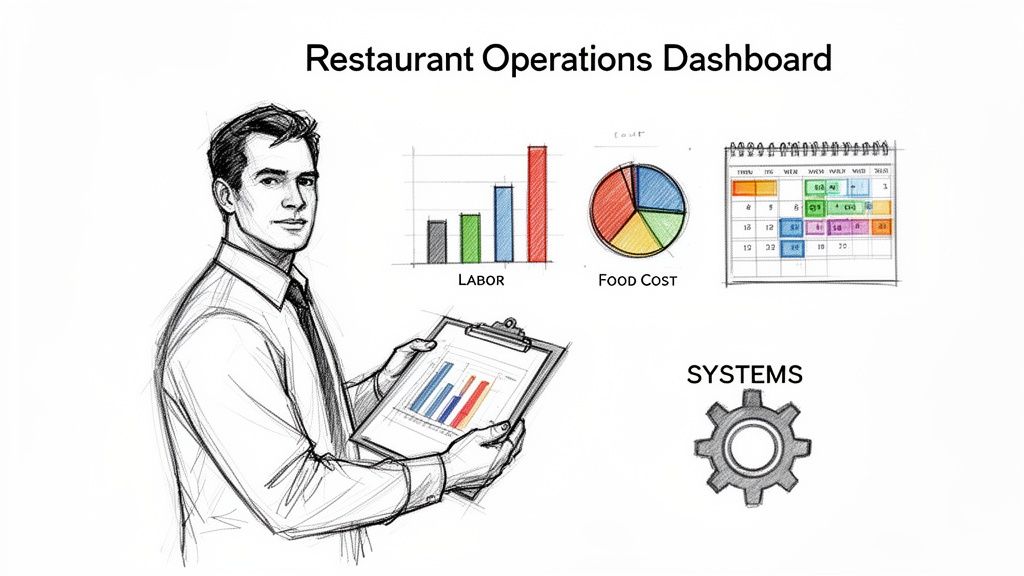
A great candidate will connect the dots between these three areas, explaining how an efficient schedule impacts labor costs on the P&L, or how precise inventory control reduces food waste and improves margins. Their familiarity with specific software and systems (like Toast, 7shifts, or Restaurant365) also indicates their technical aptitude and ability to leverage modern tools for data-driven decisions.
What to Listen For
A strong answer goes beyond listing duties. It provides concrete examples of how their actions positively impacted the bottom line. Look for responses that include:
- Quantitative Results: The candidate uses specific numbers to demonstrate their impact, such as reducing labor cost from 32% to 29% or lowering food cost by two percentage points.
- Systems Thinking: They explain how they use data from one area (like daily sales) to inform decisions in another (like staffing levels or inventory orders).
- Problem-Solving: The candidate describes a specific operational challenge, the system they implemented to fix it, and the successful outcome.
- Tech Proficiency: They confidently name the software they have used and can speak to its strengths and weaknesses.
Sample Answer and Follow-Up Questions
A solid answer typically includes points such as: “At my last restaurant, our food cost was hovering around 34%. I implemented a strict par level system using our existing POS and created a new digital order sheet. By tracking waste and analyzing sales velocity reports, we identified over-purchasing in produce and high-end proteins. Within six months, we brought food cost down to 31%, saving the business nearly $4,000 per month without changing a single menu price.”
Drill down further with these follow-up questions:
- “How do you build a weekly schedule to balance guest experience with labor targets?”
- “Walk me through how you would analyze a weekly P&L statement.”
- “What steps would you take if you noticed a sudden spike in food costs?”
For a deeper dive into optimizing stock control, explore our guide on implementing a food inventory management system.
3. Tell Me About a Time You Had to Lead a Team Through a Major Change (Menu Update, Rebranding, New System Implementation, etc.). How Did You Ensure Buy-In?
This is a critical question among situational restaurant manager interview questions because the only constant in the hospitality industry is change. A candidate’s response reveals their ability to not just implement new procedures but to lead a team through the uncertainty and potential resistance that accompanies them. How they navigate this process demonstrates their capacity for strategic communication, empathy, and visionary leadership.
A great manager doesn’t just enforce change; they inspire adoption. They understand that true buy-in comes from explaining the “why” behind the “what,” involving the team in the process, and providing the necessary support for a smooth transition. This question uncovers whether a candidate can turn a potentially disruptive event into an opportunity for growth and team cohesion.
What to Listen For
A strong answer will showcase a structured and people-centric approach to change management. Listen for evidence of a clear plan that addresses both the operational and human elements of a transition. Key indicators of an effective change leader include:
- Transparent Communication: The candidate clearly articulated the reasons for the change, its benefits, and the expected timeline.
- Team Involvement: They sought input from the team, identified “champions” to help lead the charge, and made staff feel like part of the solution.
- Proactive Support: The candidate anticipated challenges and developed resources like training sessions, quick-reference guides, or one-on-one coaching to help staff succeed.
- Patience and Persistence: They acknowledge that change takes time and describe how they managed resistance, celebrated small wins, and reinforced new behaviors.
Sample Answer and Follow-Up Questions
A strong candidate’s answer will usually touch on ideas like these: “We implemented a new cloud-based POS system, and there was significant resistance from veteran staff comfortable with the old one. My first step was to hold a team meeting explaining why we were changing, focusing on benefits like faster order times and easier check-splitting for guests. I identified two tech-savvy servers to be our ‘POS champions,’ giving them extra training so they could assist their peers. We then ran hands-on training sessions and created laminated cheat sheets for each station. I made it a point to be on the floor during the first few weeks to offer immediate support and celebrate every flawlessly processed order.”
Potent follow-up questions can provide more depth:
- “What was the most significant point of resistance you faced, and how did you address it directly?”
- “How did you measure the success of the transition beyond just operational implementation?”
- “Did you notice a temporary dip in performance, and how did you manage team morale during that period?”
4. Walk Me Through Your Approach to Hiring, Training, and Retaining Your Team. What’s Your Philosophy on Turnover?
This comprehensive question probes beyond daily operations and into the core of a manager’s leadership and business acumen. It assesses whether a candidate views people management as a strategic responsibility rather than just an administrative task. In an industry with notoriously high turnover, a manager’s ability to build and nurture a stable, high-performing team is a direct indicator of their potential success.
A candidate’s answer reveals their understanding of the entire employee lifecycle, from recruitment and onboarding to development and retention. It shows if they are reactive, simply filling vacancies as they appear, or proactive, creating a culture where employees want to stay and grow. Their philosophy on turnover distinguishes a manager who accepts it as an unavoidable cost from one who sees it as a solvable problem.
What to Listen For
A strong candidate will articulate a clear, systematic approach to team management. Their answer should demonstrate a blend of process-driven thinking and people-centric leadership. Look for these key elements:
- Strategic Hiring: They should describe a defined process for sourcing and interviewing, focusing on both skill and culture fit, not just filling a role quickly.
- Structured Training: The candidate should detail a formal training program that goes beyond basic tasks to include brand standards, service philosophy, and opportunities for growth.
- Retention Focus: They connect training and culture directly to retention, mentioning specific initiatives like recognition programs, clear career paths, or performance-based incentives.
- Data-Informed Philosophy: Their views on turnover should be grounded in reality, acknowledging industry challenges while emphasizing its impact on profitability, morale, and guest experience. They should speak in terms of metrics they have tracked or influenced.
Sample Answer and Follow-Up Questions
You’re not listening for a polished speech here, but you should hear themes like: “My approach is built on a three-part foundation: hire for attitude, train for skill, and lead for loyalty. For hiring, I use a structured interview process with behavioral questions to find people who are naturally hospitable. For training, every new hire gets a 30-day onboarding plan with a certified peer trainer. To further enhance your team’s training methods, consider how AI video tools can help, as demonstrated by companies that successfully modernize hospitality training. My philosophy on turnover is that while some is natural, high turnover is a symptom of poor leadership. I focus on retention through regular one-on-ones, transparent communication, and promoting from within whenever possible.”
Effective follow-up questions can provide more depth:
- “Can you give me an example of someone you hired who didn’t have experience but became a top performer?”
- “What was the turnover rate on your last team, and how did you work to improve it?”
- “How do you handle an employee who is a strong performer but a poor culture fit?”
For a deeper dive into retention strategies, explore our guide on how to reduce staff turnover.
5. Describe a Situation Where You Had to Make a Decision With Incomplete Information. How Did You Approach It? What Was the Outcome?
Restaurant management is a constant exercise in making swift, critical judgments with limited data. This question cuts to the core of a candidate’s decision-making process, risk tolerance, and ability to lead confidently through uncertainty. Whether it’s a sudden staffing emergency, a potential food quality issue, or an unexpected surge in guests, a manager must be decisive, not paralyzed by ambiguity.
Their answer reveals their underlying thought process and priorities. Do they gather as much relevant information as possible in the available time? Do they consult their team? Most importantly, does their decision-making framework align with your restaurant’s values, such as prioritizing guest safety, team welfare, or operational integrity?
What to Listen For
A strong candidate will detail a structured approach to a chaotic situation. Look for answers that showcase:
- Rapid Assessment: The ability to quickly identify the core problem and the potential consequences of action versus inaction.
- Resourcefulness: They sought out the most critical pieces of information available, even if incomplete, and may have consulted experienced team members.
- Calculated Risk: They understood the potential downsides of their decision but made a judgment call based on sound reasoning and core principles (like safety).
- Accountability: The candidate owned the outcome, whether it was positive or negative, and articulated what they learned from the experience.
Sample Answer and Follow-Up Questions
A compelling answer might sound like this: “During a busy Saturday service, a server reported that two separate tables had mentioned their chicken dish tasted slightly ‘off.’ I didn’t have a confirmed food quality report from the kitchen, but I couldn’t risk a potential health issue. I immediately pulled the item from the menu, visited the two tables to apologize and comp their meals, and instructed the kitchen to hold the remaining product for inspection. We lost revenue on that dish for the night, but we protected our guests and our reputation, which was the right call.”
Effective follow-up questions can provide deeper insight:
- “What was the most critical piece of information you wished you had at that moment?”
- “How did your team react to your decision?”
- “What process did you put in place afterward to prevent a similar situation?”
6. What Metrics Do You Track to Assess Your Team’s Performance and Guest Satisfaction? How Do You Use That Data to Improve?
This technical question separates managers who rely on intuition from those who lead with data-driven insights. Modern restaurants are rich with data, and a candidate’s ability to interpret and act on key performance indicators (KPIs) is a powerful predictor of their operational effectiveness. Their answer reveals their business acumen and commitment to continuous improvement.
The response to this question demonstrates whether a candidate can connect abstract numbers like labor percentage and guest satisfaction scores to real-world actions. A top-tier manager doesn’t just report the data; they use it as a tool to coach their team, refine processes, and drive profitability.
What to Listen For
A strong answer will move beyond simply listing metrics. The candidate should be able to explain the “why” behind each KPI and provide concrete examples of how they used that data to make a tangible difference. Look for:
- Holistic View: The candidate mentions a balanced mix of financial, operational, guest, and team metrics (e.g., food cost, table turn time, online review scores, and employee retention).
- Action-Oriented Mindset: They clearly describe the process of reviewing data, identifying a trend or problem, and implementing a specific solution.
- Team Involvement: The best managers share data with their team in an accessible way, helping staff understand how their individual performance contributes to the restaurant’s overall success.
- Comfort with Technology: The candidate speaks confidently about using POS systems, analytics dashboards, or other software to gather and interpret information.
Sample Answer and Follow-Up Questions
A strong answer typically reflects ideas like: “I review a daily dashboard covering three core areas. Financially, I track food and labor costs against our budget. Operationally, I monitor table turn times and ticket times from our POS. For guest satisfaction, I analyze our online review scores and internal feedback. Last month, I noticed our ticket times were creeping up by 15% on weekends. I used the data to pinpoint the bottleneck at the grill station and cross-trained an additional cook for peak shifts, which brought our times back down to standard.”
Effective follow-up questions can dig deeper:
- “Walk me through how you communicate these metrics to your front-of-house and back-of-house teams. Do you use different approaches?”
- “Describe a time a leading indicator, like a slight drop in appetizer sales, helped you prevent a bigger problem.”
- “Which metric do you find most challenging to influence, and why?”
For a deeper dive into the specific numbers that matter most, explore our guide on the top restaurant KPIs every restaurant manager should track.
7. Tell Me About a Time You Disagreed With a Decision Made by Your Supervisor or the Company. How Did You Handle It?
This question is a powerful tool for gauging a candidate’s professional maturity and ability to navigate internal conflicts constructively. Their response reveals whether they can voice concerns respectfully, think critically about company-wide directives, and ultimately commit to a unified team direction, even when they don’t fully agree.
The answer separates candidates who challenge authority unproductively from those who advocate for improvement through proper channels. It shows if they are problem-solvers who present data-backed alternatives or simply complain. A strong candidate demonstrates the ability to balance their own perspective with the broader goals of the business, showcasing their leadership potential and understanding of organizational structure.
What to Listen For
A high-quality response will show a clear, respectful process for managing professional disagreement. The candidate should have moved beyond simple frustration to constructive action. Look for answers that include:
- Respectful Inquiry: The candidate first sought to understand the “why” behind the decision rather than immediately assuming it was wrong.
- Constructive Communication: They chose an appropriate time and place to voice their concerns privately and professionally, using data or specific examples to support their position.
- Professionalism: The tone of their story is crucial. It should be objective and reflective, not bitter or insubordinate.
- Commitment to the Team: After the final decision was made, they fully supported it and worked to implement it successfully with their team, without undermining their supervisor.
Sample Answer and Follow-Up Questions
A strong response often includes points like: “My previous GM decided to implement a new, rigid script for servers to use when greeting tables. I was concerned it would sound robotic and hurt our authentic service style. I requested a brief meeting and shared guest feedback data that praised our staff’s personality. I proposed a compromise: a script that covered key points but allowed for individual customization. Although he stuck with the original decision, I fully supported it, explained the reasoning to my team during pre-shift, and led role-playing exercises to help them deliver it as naturally as possible.”
Effective follow-up questions can dig deeper:
- “Once the decision was final, how did you ensure your team was on board?”
- “What was the outcome of the policy change?”
- “What did you learn from that experience about influencing decisions from your position?”
8. Describe Your Biggest Professional Failure or Learning Experience in a Restaurant Context. What Did You Learn?
This question is designed to test a candidate’s self-awareness, resilience, and capacity for growth. The fast-paced, high-pressure restaurant environment guarantees that mistakes will happen. Exceptional leaders are not defined by their absence of failure, but by their ability to learn from it, take accountability, and implement changes to prevent recurrence.
How a candidate answers this question reveals their humility and emotional intelligence. It separates managers who blame external factors from leaders who see every setback as an opportunity for improvement. Their response offers a window into their problem-solving process when things go wrong and their commitment to continuous professional development.
What to Listen For
A strong answer will be specific, honest, and structured. It should clearly articulate the mistake, the lesson learned, and the tangible changes made as a result. Vague or generic responses may indicate a lack of self-reflection or an unwillingness to be vulnerable.
Key indicators of a great candidate include:
- Accountability: The candidate takes full ownership of the failure without making excuses or shifting blame to their team or circumstances.
- Analysis: They can clearly explain what went wrong and identify the root cause of the problem.
- Actionable Learning: The candidate describes the specific new processes, training, or behavioral changes they implemented following the experience.
- Growth Mindset: They frame the failure as a valuable learning experience that ultimately made them a better manager, not as a source of shame or defensiveness.
Sample Answer and Follow-Up Questions
A thoughtful candidate might respond: “Early in my career, I hired someone based on a personal friendship rather than their skills, thinking their personality would be a great fit. Team dynamics quickly suffered because they lacked the necessary experience, and I was perceived as showing favoritism. I learned the critical importance of using an objective, skills-based hiring process for every role. I took responsibility, coached the underperforming employee, and implemented a structured interview scorecard for all future hires to ensure fairness and consistency.”
Use these follow-up questions to probe deeper:
- “Looking back, what would you do differently in that situation?”
- “How did you repair the team’s trust after that experience?”
- “Can you give me an example of how you now use that learning in your current role?”
Build a Better Team With a Smarter Interview Process
The goal is not to trip candidates up. It is to give them space to demonstrate real-world capability. When you ask someone to walk through a P&L, explain how they handled a difficult guest, or describe their training process, you are collecting evidence, not promises. That evidence is the foundation of a fair, consistent, and effective hiring decision.
Key Takeaways for Your Next Interview
To ensure your hiring process yields the best possible candidates, keep these core principles at the forefront of your strategy:
- Structure is Your Ally: Ask every candidate the same core questions and evaluate them against consistent criteria to reduce bias and improve decision quality.
- Go Beyond the “What” to the “How”: Don’t just ask what a candidate has done. Ask how they did it, why they chose that approach, and what the specific outcome was. The thought process behind a decision is often more revealing than the decision itself. Follow-up questions are critical here.
- Balance Technical Skills With Soft Skills: A manager can know every inventory system on the market, but if they cannot inspire their team, handle conflict, or communicate a vision, they will ultimately fail. The questions outlined in this guide are designed to assess both sides of the leadership coin: the operational acumen and the emotional intelligence required to run a thriving restaurant.
- Culture Fit is a Two-Way Street: Use the interview to clearly communicate your restaurant’s values, mission, and work environment. A great manager is not just someone who can do the job; they are someone who believes in what you are building and can champion that culture to every employee and guest.
Actionable Next Steps to Implement Today
Transforming your interview process does not have to be an overnight overhaul. Start with these manageable steps:
- Review and Revise Your Question Bank: Choose five to seven questions from this guide that align most closely with the specific challenges and goals of your restaurant.
- Create a Simple Scoring Rubric: For each question, define what a poor, average, and excellent answer looks like. This simple tool will standardize your evaluations immensely.
- Train Your Interviewers: Ensure everyone involved in the hiring process understands the questions, the scoring rubric, and the legal guardrails to avoid discriminatory inquiries. Consistency is key.
Ultimately, a more thoughtful and strategic approach to restaurant manager interview questions is an investment. It is an investment in reducing costly turnover, which remains one of the biggest hidden expenses in the restaurant industry. It is an investment in building a positive and productive work culture. Most importantly, it is an investment in finding the right leaders who will not just manage your restaurant, but elevate it, earning loyalty from your staff and creating unforgettable experiences for your guests. The right questions lead to the right conversations, and the right conversations lead to the right hire.
Hiring great restaurant managers starts with better questions and better systems.
MAJC✨ supports hospitality leaders with practical tools, templates, and expert guidance to help you build stronger teams and reduce costly turnover over time. Stop sorting through endless resumes and start having more strategic conversations by visiting MAJC today.