

Step behind the swinging doors and you will find the real heart of any restaurant: the back of the house (BOH). Back of the house positions are the crew of pros responsible for everything from breaking down produce, plating the final dish, and keeping the kitchen spotless. They are the engine that drives every single memorable dining experience.
The Unseen Engine of Every Great Restaurant
When you think of a great meal, you probably picture the finished plate, looking perfect. But that dish is the final act of a complex, high-stakes performance happening just out of sight. The back of the house is where culinary creativity, brutal precision, and pure grit collide to turn raw ingredients into something special. It is a world of controlled chaos, sizzling pans, and a language all its own.
Understanding these roles is non-negotiable for any aspiring chef, restaurant manager, or owner trying to build a team that can execute. A strong BOH crew does not just cook; they communicate, collaborate, and innovate under relentless pressure.
More Than Just Cooking
The BOH is a full-blown ecosystem with a clear chain of command and specialized jobs. Every single person, from the executive chef dreaming up the menu to the dishwasher making sure you have clean plates for service, plays a crucial part. Success hangs on how well all those individual parts work together. The core functions boil down to three things:
- Culinary Execution: Prepping, cooking, and plating every dish to meet the restaurant’s standards for quality and consistency, night after night.
- Operational Management: Watching inventory like a hawk, controlling food costs, building staff schedules, and making sure the kitchen runs like a well-oiled machine.
- Safety and Sanitation: Holding the line on strict hygiene rules to guarantee food safety and maintain a clean, organized workspace for the whole team.
A well-run back of the house operates like a finely tuned orchestra. Each section knows its part, follows the conductor’s lead, and contributes to a beautiful final product.
Think of this guide as your all-access pass to the structure, talent, and teamwork that define the best kitchens. We will break down each role, piece by piece, outlining the skills you need and the paths you can take to build a career in the wild world of professional cooking.
Mapping the Modern Kitchen Brigade
From the outside, a busy kitchen can look like total chaos. But under all that noise and intensity is a highly organized system, the kitchen brigade, that allows professional kitchens to pump out beautiful, perfectly timed food, night after night. Each of the back-of-house positions in this brigade has a specific job, and success hinges on how well they all operate as one unit.
This hierarchy is the absolute backbone of a restaurant, creating a clear chain of command that makes a seamless dining experience possible.
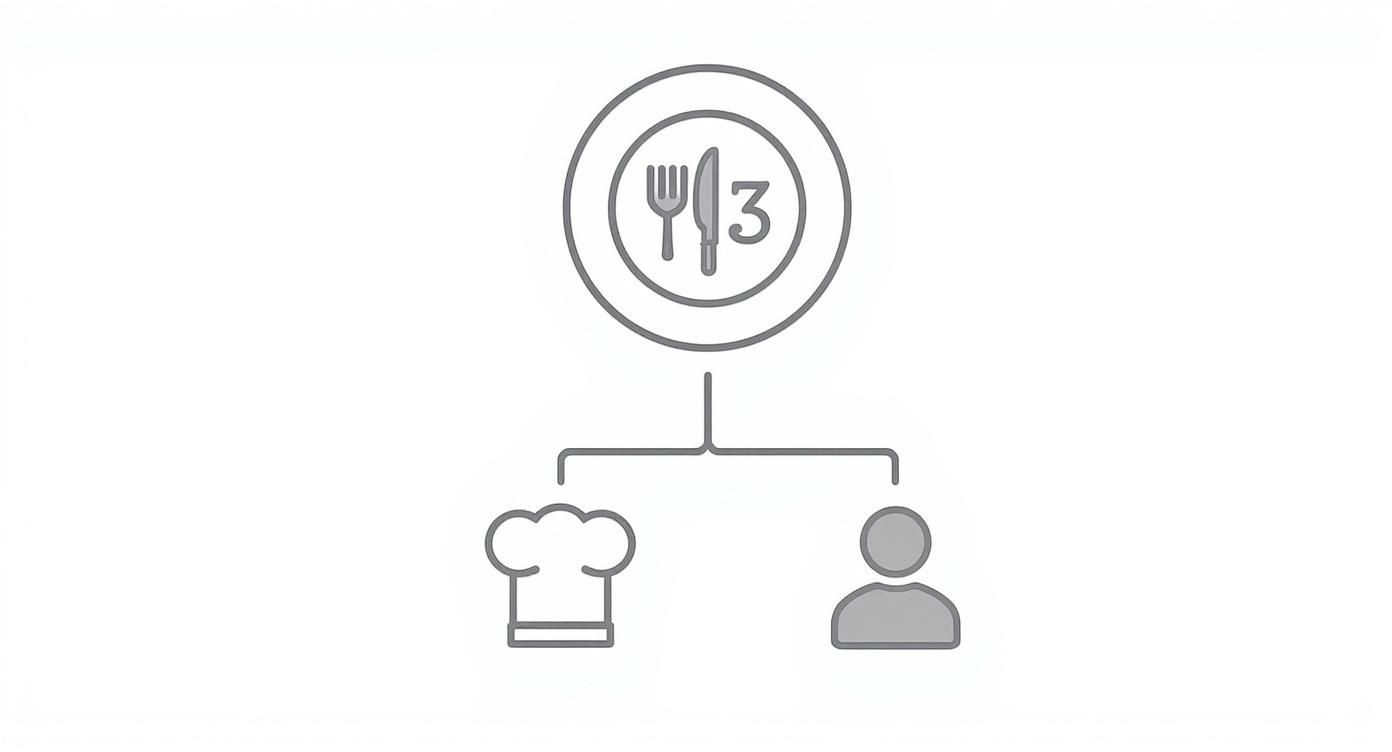
This visual gives a great overview of how the front and back of house need to work together to create that final experience for the guest. Now, let’s get into the specific roles that make up the BOH team.
To help you get a quick sense of how these roles fit together, here is a snapshot of the most common positions you will find in a professional kitchen.
Key Back of the House Positions at a Glance
| Position | Primary Responsibility | Key Skills |
|---|---|---|
| Executive Chef | Oversees culinary vision, menu engineering, and finances, often across multiple locations. | Business acumen, leadership, creativity, and menu costing. |
| Chef de Cuisine | Leads a single kitchen’s daily operations, ensuring quality and consistency. | Staff management, quality control, and execution under pressure. |
| Sous Chef | Manages the line, expedites service, and assists the Head Chef with daily tasks. | Expediting, problem-solving, versatility, and scheduling. |
| Line Cook | Executes dishes at a specific station (grill, sauté, etc.) during service. | Speed, precision, consistency, teamwork. |
| Garde Manger | Manages the cold station, preparing salads, appetizers, and charcuterie. | Knife skills, artistic presentation, and organization. |
| Pastry Chef | Specializes in desserts, bread, and all baked goods for the restaurant. | Precision baking, creativity, and scientific accuracy. |
| Dishwasher | Maintains cleanliness of all dishes, cookware, and the kitchen environment. | Reliability, speed, and attention to sanitation standards. |
This table provides a high-level look, but the day-to-day reality of each role is where the real work happens. Let’s break down these positions into the teams that run the show.
The Leadership Core
At the top of the food chain, you have the leaders who are responsible for the big-picture strategy and the minute-to-minute execution. These roles are a blend of culinary art, sharp business sense, and people skills.
- Executive Chef: Think of this person as the visionary. The Executive Chef is often a high-level manager overseeing multiple restaurants or a whole hospitality group. They focus on menu engineering, food costing, brand standards, and the long-term culinary direction.
- Chef de Cuisine (Head Chef): This is the day-to-day leader of a single kitchen. The Chef de Cuisine is the one who takes the Executive Chef’s vision and makes it happen on the plate. They run the line during service, manage quality control, train the team, and make sure every dish is perfect. In many independent spots, one person wears both the Executive and Head Chef hats.
- Sous Chef (Second in Command): The Sous Chef is the Chef de Cuisine’s right hand—a crucial, hands-on manager who keeps the engine running. They expedite tickets, jump on stations when someone is in the weeds, and handle admin like scheduling and inventory. A great Sous Chef is what allows the Head Chef to focus on the bigger picture.
The Station Specialists
The line is the engine room of any kitchen, where a team of specialized cooks, or Chefs de Partie, own their individual stations. Each station handles specific parts of a dish, and they all have to sync up perfectly to fire an order.
- Sauté Chef (Saucier): Often one of the most respected and intense stations on the line. The Saucier is in charge of all sautéed items and, critically, the sauces that go with them. This job is all about precision and timing.
- Grill Chef (Grillardin): The Grillardin has mastered cooking over an open flame, handling all the meats, fish, and vegetables that hit the grill. You need a deep understanding of temperature and timing to nail a perfect medium-rare every time.
- Fry Chef (Friturier): This chef runs the deep fryers, turning out perfectly crisp and golden items. Consistency is everything here, along with knowing how to maintain the quality of the cooking oil.
- Garde Manger (Pantry Chef): The Garde Manger is the master of the cold station. They put out salads, cold appetizers, pâtés, and charcuterie boards. This role requires a great eye for presentation and obsessive organization.
- Pastry Chef (Pâtissier): Usually working in a separate, cooler, and calmer part of the kitchen, the Pastry Chef is a specialist. They handle all desserts, breads, and baked goods. It is a completely different skillset from the hot line, demanding scientific precision and a ton of creativity.
These roles demand intense focus and seamless teamwork. Communication is everything, which is why things like a structured pre-shift meeting are non-negotiable for setting the team up to win. You can learn more about that in our guide on the art of the pre-shift.
The Essential Support Crew
No kitchen can run without the people who form its foundation. These back of the house positions are often the first step into a culinary career, offering invaluable experience and a clear path for anyone willing to work hard.
- Line Cook: These are the versatile soldiers of the kitchen, working the different stations under the Sous Chef and station leads. Their job is to prep their station (mise en place), cook dishes to order during the rush, and keep their area clean.
- Prep Cook: The prep cook is the unsung hero of the BOH. They come in before service to do the time-consuming work: chopping vegetables, butchering meat, making stocks, and portioning ingredients. They make it possible for the line cooks to fire tickets in minutes.
- Expediter (Expo): This person is the critical communication hub between the kitchen and the dining room. Stationed at the pass, the Expediter takes orders from servers, calls them to the line, and ensures every single plate is correct, clean, and properly garnished before it heads out to a guest.
- Dishwasher (Porter or Kitchen Steward): You could argue this is the most important job in the entire restaurant. The dishwasher makes sure the team has the clean plates, pans, and tools they need to do their jobs. They are also absolutely essential for maintaining the overall sanitation and cleanliness of the kitchen.
A kitchen without a dishwasher is like a car without wheels. You can have the best engine in the world, but you are not going anywhere. This role is the foundation of our entire operation.
The demand for skilled people to fill these roles is higher than ever. The industry is still grappling with a massive BOH labor shortage that is putting incredible pressure on restaurants. According to NetSuite, about 70% of U.S. restaurants report being short-staffed, with back-of-house positions among the most difficult to fill. Building and holding onto a strong, well-structured team has become more than just good business, it is a matter of survival.
The Skills That Define a BOH Professional
Anyone can love food. But succeeding in the back of house requires a whole lot more than passion. It demands a specific blend of technical mastery and mental toughness that lets a team not just survive the rush, but actually thrive in it.
These are the core competencies that separate a good cook from a great culinary professional and are absolutely essential for anyone building a career in back of house positions.
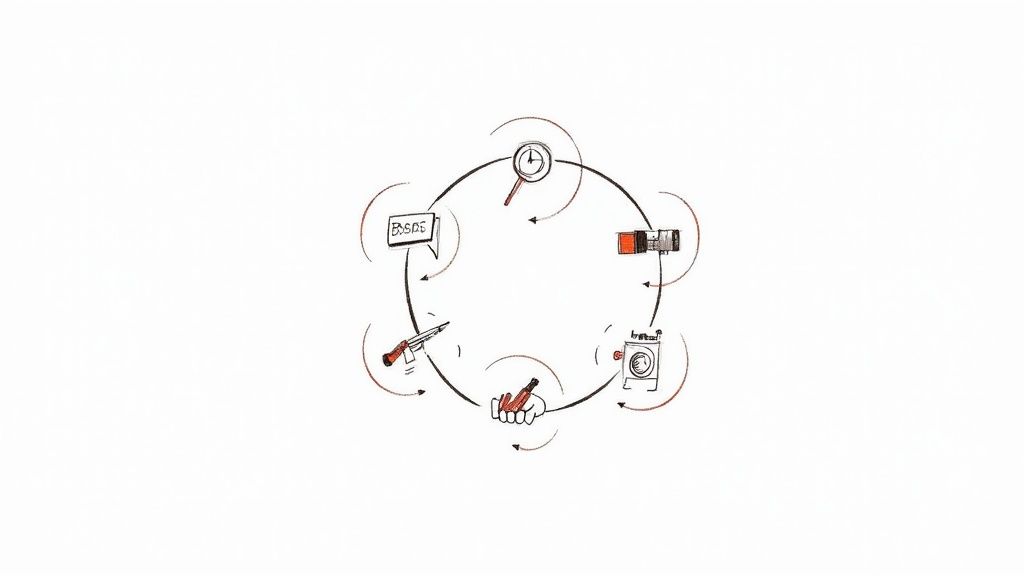
You can think of these skills in two buckets: the hard skills you can see and measure, and the soft skills that hold a team together when the pressure is on. A well-run kitchen needs both in equal measure.
Foundational Hard Skills
These are the tangible, teachable abilities every BOH pro has to master. They are the building blocks of consistency and quality, the reason every plate that leaves the kitchen looks and tastes the way it is supposed to. Without them, even the most creative menu is just an idea.
Key hard skills include:
- Knife Skills: This is ground zero. It is not just about being fast; it is about precision, consistency, and safety, whether you are dicing an onion, breaking down a fish, or doing delicate garnish work.
- Cooking Techniques: A deep working knowledge of cooking methods is non-negotiable. This means mastering everything from dry-heat methods like searing and grilling to wet-heat methods like braising and poaching.
- Food Safety and Sanitation: In a professional kitchen, this is everything. BOH pros need an expert-level grasp of proper food handling, temperature control, and cross-contamination prevention to keep guests and staff safe.
- Station Management (Mise en Place): The French term for “everything in its place” is more than a process; it is a philosophy. It is the discipline of having every ingredient prepped and every tool ready before service starts, which is the secret to speed and efficiency.
Essential Soft Skills for the Kitchen
Hard skills might get you in the door, but soft skills are what make you a leader. The high-stress, fast-paced kitchen environment is the ultimate test of someone’s ability to work with others. These skills are often tougher to teach but are just as critical for a team that clicks.
A professional kitchen requires:
- Communication Under Pressure: Kitchens are loud, hot, and chaotic. The ability to communicate clearly, concisely, and respectfully is what prevents mistakes and keeps service flowing. No room for ego.
- Problem-Solving: An order is wrong, a salamander goes down, you are running low on scallops, what do you do? The best BOH pros do not just spot problems; they immediately start working on solutions, calmly and quickly.
- Teamwork: No one is an island on the line. Success is a team sport that requires anticipating what your neighbor needs, jumping in to help without being asked, and keeping a positive attitude, even when you are in the weeds.
- Adaptability: Service is unpredictable. A true BOH professional can pivot on a dime, whether it is adjusting to a last-minute menu change, handling a surprise 12-top, or jumping on a different station to help out the team.
In a professional kitchen, your ability to communicate and collaborate is just as important as your ability to cook. A talented team that cannot work together will always fail before a less talented team that operates as one.
Certifications and Continuous Learning
To formalize these skills, many professionals pursue industry-recognized certifications. These credentials do not just validate knowledge; they show a real commitment to the craft. The most common and respected is the ServSafe certification, which covers critical food safety and sanitation and is often a prerequisite for management roles.
Beyond certifications, the best kitchens are built on a culture of continuous learning. A well-structured training program is the key to developing both the hard and soft skills your team needs to excel. For a deeper dive, our guide on how to train restaurant staff quickly and effectively offers real-world strategies for building a skilled, confident BOH team.
How to Build and Retain Your BOH Dream Team
The demand for skilled kitchen professionals is stronger than ever. Keeping them is the real challenge. High turnover isn’t just a scheduling headache, it’s a significant financial drain, especially behind the line, where specialized skills come at a premium. According to 7shifts, replacing a back-of-house employee costs an average of US $1,491, which is about 41% more than the US $1,056 average cost of replacing a front-of-house employee. These figures add up fast, quietly eroding margins. Building a team that stays with you doesn’t begin on day one; it starts when you decide whom to hire and how you support them.
Crafting Job Descriptions That Actually Work
Your job description is a candidate’s first taste of your restaurant. If it is generic, you will get generic applicants. To attract serious cooks, you need to speak their language and prove your kitchen is a place they can build a career.
A solid job description does three things well:
- Gets Specific About the Role: Do not just say “Line Cook.” Say “Experienced Grill Cook for high-volume, farm-to-table concept.” Detail the station, the expectations, and the specific skills they will need on day one.
- Shows Off Your Culture: What makes your kitchen different? Is it your commitment to a respectful, no-yelling environment? Your focus on from-scratch butchery? Your team-first mentality? Sell that.
- Talks Money and Benefits Upfront: Be transparent. List the pay range, mention the benefits, and include any perks like staff meals, signing bonuses, or a clear path for professional growth.
A well-written post acts as a filter. It weeds out the tire-kickers and brings in the people who are not just looking for any job, but the right job.
Running Interviews That Reveal More Than a Resume
The interview is where you find out who someone really is under pressure. Technical skills matter, of course, but you are hiring a whole person who has to mesh with your team when the tickets are flying. Your questions need to go deeper than “Where have you worked?”
A good interview should feel like a conversation that tests experience, problem-solving, and attitude. Mix up your questions to get a full picture.
Sample Interview Questions for BOH Positions
To get beyond the standard “yes” or “no” answers, you need to ask questions that force candidates to tell a story. This is where you will get a real glimpse into how they think, act, and communicate in a professional kitchen.
| Question Category | Sample Question |
|---|---|
| Technical Skill | “Walk me through your process for setting up your station for a busy Saturday night service.” |
| Problem-Solving | “Describe a time a piece of equipment failed mid-service. What did you do to solve the problem?” |
| Teamwork | “Tell me about a time you had a disagreement with a fellow cook. How did you handle it?” |
| Cultural Fit | “What kind of kitchen environment do you thrive in? What do you value most in a chef or manager?” |
These kinds of questions give you insight into a candidate’s real-world abilities and whether they will be a positive force on your line.
Building a Culture of Respect and Growth
Getting the right people in the door is just the beginning. The real work is keeping them. Retention boils down to one thing: creating a culture where your team feels valued enough to stay and grow.
A positive kitchen culture is not a luxury; it is a core business strategy. When your team feels respected, supported, and sees a future with you, they become your greatest asset.
This means nailing the fundamentals. Competitive pay is the price of entry, but it is rarely enough on its own. Meaningful benefits, like health insurance or paid time off, signal that you care about your team as people, not just as employees.
Finally, show them a path forward. A dishwasher should see a clear route to becoming a prep cook. A line cook should know what it takes to become a sous chef. When you invest in your team’s growth through training and mentorship, you are giving them the single best reason to stay. For more actionable strategies, check out our guide on how to reduce turnover in the hospitality industry.
Charting a Career Path in the Kitchen
A job in the back of house is more than just a paycheck; it is the first step onto a dynamic and rewarding career ladder. With hard work and a hunger to learn, the path from an entry-level role to a leadership position is not just possible, it is a well-worn trail. The journey shows how raw talent, when sharpened by experience and mentorship, can forge a truly fulfilling culinary career.
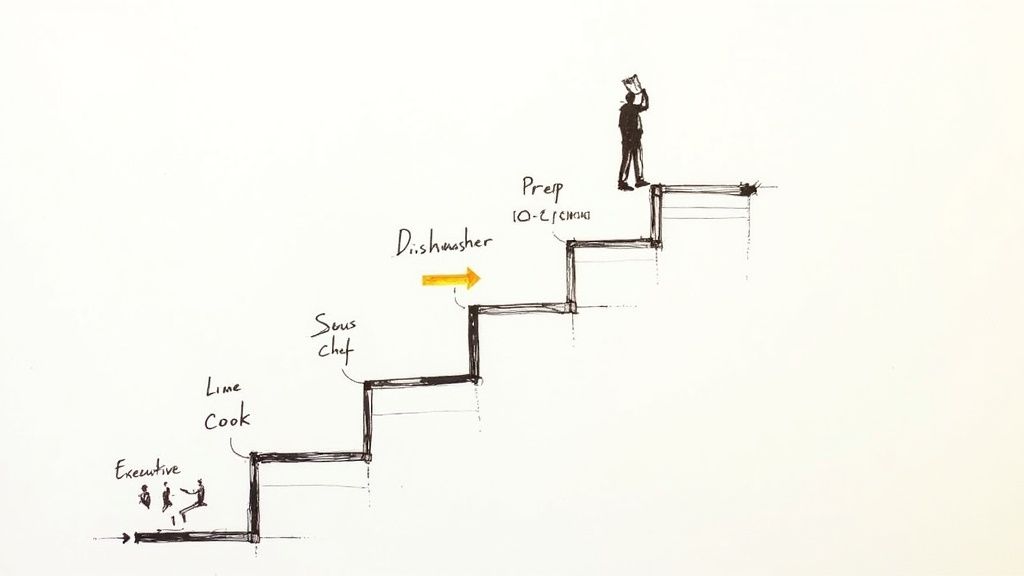
This climb is not just a theory; it is a path countless culinary leaders have followed. The skills learned at each stage build on the last, creating a well-rounded professional who understands the kitchen from the dish pit all the way up to the pass.
The Traditional Kitchen Ladder
The classic career path in a kitchen is a step-by-step climb, where each role prepares you for the next. It’s a true meritocracy where performance, attitude, and an insatiable desire to learn are the keys to moving up.
- Starting Point (Dishwasher or Prep Cook): Nearly every great chef started here. This is where you learn the relentless pace, the unique culture, and the non-negotiable importance of sanitation and organization. It is the foundation everything else is built on.
- Moving to the Line (Line Cook): After proving you are reliable and eager, the next step is the line. Here, you master a station, learning the core cooking techniques, speed, and consistency required to execute dishes during the controlled chaos of service.
- Taking on Responsibility (Sous Chef): A skilled line cook with leadership potential moves up to Sous Chef. This role is a major leap, involving team management, expediting orders, and helping the head chef with daily operations. It is the critical bridge between cooking and managing.
- Leading the Kitchen (Executive Chef): The final step is earning the top spot. The Executive Chef is the visionary who oversees the entire culinary program—from menu creation and food costing to staff development and protecting the restaurant’s reputation.
This journey is often accelerated by a commitment to lifelong learning and, crucially, finding the right mentors. The guidance of a seasoned chef can be transformative, offering insights and opportunities you just cannot find in a textbook. You can explore more on this in our article on the power of mentorship in hospitality.
Beyond the Traditional Path
While the classic brigade system offers a clear ladder, the skills honed in back of the house positions open doors to a huge array of exciting careers outside the restaurant kitchen. The discipline, creativity, and operational expertise you gain are incredibly valuable in other fields.
The modern culinary world offers more paths to success than ever before. The skills you master on the line can become your ticket to entrepreneurship, media, or specialized consulting.
For seasoned BOH veterans, alternative career paths include:
- Private Chef: Catering to exclusive clients, from families to celebrities, offering a personalized and high-end culinary experience.
- Food Stylist: Combining culinary skill with an artistic eye to make food look irresistible for photography, commercials, and films.
- Restaurant Consultant: Using years of hard-won operational experience to help new or struggling restaurants improve their menus, kitchen workflow, and profitability.
- Culinary Instructor: Sharing your knowledge and passion with the next generation of aspiring chefs at culinary schools or community programs.
Common Questions About BOH Positions
Let’s wrap up with a few of the most common questions people have about back of the house positions. Whether you are mapping out your career or trying to hire the right talent, these quick answers should give you some clarity.
What Is the Typical Salary Range for Back of the House Positions?
Pay for BOH positions is all over the map, depending heavily on the role, the type of restaurant, and where in the country you are. Entry-level roles such as dishwashers often start near minimum wage, for example, the U.S. Bureau of Labor Statistics (2023) reports an average annual wage of about US $31,650 for dishwashers nationwide. For leadership positions like Sous Chef or Executive Chef, salaries can begin around US $45,000 and climb significantly higher at premier venues, as reported by UpMenu. Over time, benefits, and tip-share pools can further increase take-home pay.
How Do You Handle the High-Pressure Kitchen Environment?
Thriving in a busy kitchen is not something you are born with; it is a skill you build through discipline and teamwork. It all starts with organization, what chefs call mise en place. Having everything prepped, portioned, and ready to go before the first ticket prints is the single best way to keep chaos at bay.
Beyond that, it comes down to efficient movement and clear, calm communication. Veteran cooks learn to focus on one ticket at a time, blocking out the noise. But honestly, the most critical piece is a team culture where people have each other’s backs. That is what gets you through the toughest Saturday night service.
In the heat of service, your ability to stay organized and communicate clearly is your greatest asset. The best chefs are not just great cooks; they are masters of controlling chaos.
What Is the Difference Between a Chef de Cuisine and an Executive Chef?
While you will sometimes hear these titles used for the same person, they are technically two different jobs. Think of the Executive Chef as the big-picture leader who sets the entire culinary vision. They often focus on menu engineering, food costing, and managing staff, sometimes for a whole restaurant group.
The Chef de Cuisine, on the other hand, is the day-to-day general in a single kitchen. They are hands-on, executing the Executive Chef’s vision, running the line during service, and making sure every plate that goes out is perfect. Of course, in a lot of smaller restaurants, one talented person wears both hats.
Are Culinary School Degrees Necessary to Succeed in the BOH?
A culinary degree can give you a fantastic foundation in classic techniques and theory, but it is absolutely not a golden ticket or a strict requirement. Plenty of incredible, highly successful chefs have built their entire careers through hands-on experience, grinding it out on the line and learning from great mentors.
At the end of the day, a relentless work ethic, a genuine passion for learning, and the ability to perform under pressure are what really count. Drive and dedication will get you further up the kitchen ladder than any piece of paper.
Building a strong BOH team starts with the right knowledge and tools. At MAJC, we provide the resources, training, and community support hospitality leaders need to hire smarter, retain longer, and run more profitable businesses. Join our community and access the tools to build your dream team today.