


Fighting to keep good people in a restaurant comes down to three things: investing in your managers, creating clear career paths, and building a culture of respect and recognition. When you get these right, a high-turnover job starts to feel more like a stable career, and your best people will want to stick around and grow with you.
The Real Cost of a Revolving Door Staff
Turnover isn’t just frustrating; it’s expensive. Every time someone leaves, you pay for job ads, interviews, onboarding, and slower service while new hires learn the ropes. But the deeper cost hits your consistency and your culture.
Constantly rotating staff makes it harder to deliver a reliable guest experience, and your seasoned employees end up carrying the load. That extra pressure accelerates burnout, creating a cycle that’s tough to break.
This playbook gives you the practical steps to build a team that wants to stay, and a restaurant where people thrive.
For a deeper dive, check out our comprehensive guide on talent retention..
Why Retention Is a Top Priority
Retention isn’t just a restaurant challenge, it’s a major concern across the entire workforce. The 2023 Gallagher Organizational Wellbeing Report found that a staggering 66% of HR executives identify employee retention as a top workforce priority, underscoring how widespread and persistent the issue has become.
For operators, the message is clear: improving retention takes more than quick fixes. It requires intentional, sustained efforts that address the root causes behind turnover and strengthen the overall employee experience.
How to Build a Training Program That Sticks
Great employee retention starts the moment a new hire walks through your door, not months down the road. An effective onboarding and training program is your first, and best, chance to show them they’ve made the right choice.
A strong start shows new team members that you’re invested in their success, which sets a positive tone for their entire employment and can turn a job into a career.
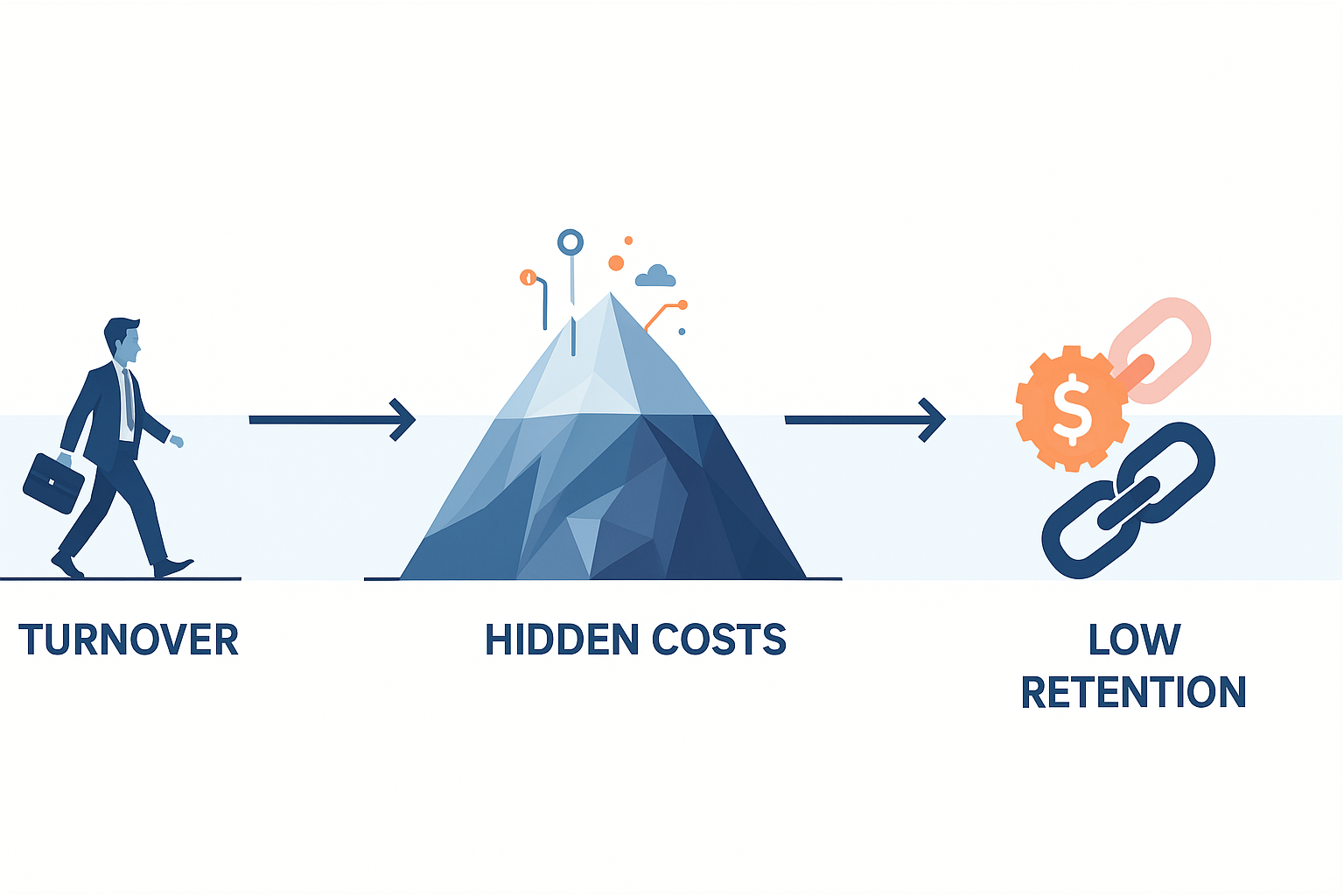
This cycle of low retention is fueled by the very issues that cause turnover in the first place: a lack of training, support, and connection. It’s a loop you have to break intentionally.
Design an Onboarding Experience That Empowers
That first week is absolutely critical. Your goal isn’t to overwhelm new hires with a firehose of information but to immerse them in your culture and give them quick, tangible wins. A structured first-week plan can make all the difference, moving them from feeling like an outsider to a valued part of the team.
Think about creating a simple, practical checklist that covers the essentials.
- Day One: Focus on introductions, a tour of the space, and pairing them with a seasoned team member. Their main job is to observe and ask questions, not perform.
- Shadowing a Pro: Have them shadow your top server or line cook for an entire shift. This gives them a real-world look at the standards you expect and the actual flow of service.
- Hands-On Menu Training: Go beyond memorization. Have them taste key dishes and learn the story behind them. This is what equips them to speak about the menu with passion and authority.
This focused approach helps build competence quickly. For more ideas, check out our guide on how to train restaurant staff quickly and effectively.
Check In to Catch Issues Early
So many new hires quit within the first three months, often because small, fixable issues were never addressed. Proactive check-ins at the 30, 60, and 90-day marks are essential for catching potential problems before they escalate into a resignation.
These aren’t formal performance reviews; they’re supportive, human conversations. A simple chat can uncover hidden frustrations or areas where they need more support.
Use these check-ins to ask open-ended questions that encourage honest feedback.
- “What’s been the biggest surprise about working here so far?”
- “Is there anything about the job that’s different from what you expected?”
- “What’s one thing we could do right now to make your job easier?”
Keep the Learning Going
Ongoing learning shows your team you’re invested in their growth, and that’s one of the strongest drivers of retention. The 2025 Work Institute Retention Report notes that many employees leave not because of pay, but because of limited career development, a poor work environment, or work-life balance challenges. Continuous learning directly supports all three.
This doesn’t require a big budget. Quick pre-shift refreshers, cross-training between roles, or sponsoring a certification can build skills and confidence fast. By investing in your team’s development, you strengthen the loyalty and competence that keep great employees around.
Rethinking Your Pay and Scheduling
Let’s get real about two of the biggest reasons people leave this industry: chaotic schedules and unpredictable pay. When your team can’t plan their lives or figure out what their take-home pay will actually be, they start looking for the door.
This isn’t just about throwing more money at the problem, either. It’s about building systems that offer stability and fairness. Honestly, that’s often more valuable to people than a slightly higher hourly rate. A thoughtful approach here shows your team you see them as people, not just names on a spreadsheet.
Create Schedules That Respect People’s Time
“Clopening” shifts and last-minute schedule changes are brutal. When your crew can’t make a doctor’s appointment, arrange childcare, or just have a social life, burnout is a guarantee. The fix? A scheduling process built on predictability and a little bit of flexibility.
Posting schedules at least two weeks in advance is a game-changer. It’s a simple move, but it gives your team room to breathe and plan their lives, which immediately cuts down on stress. It’s a basic sign of respect for their time outside the restaurant.
And let’s be honest, modern tools make this so much easier. Investing in one of the best restaurant scheduling software options takes the headache out of the equation for everyone. It allows for easy, manager-approved shift swaps, keeps communication clear, and handles time-off requests automatically. You give your team a degree of control over their work-life balance while saving your managers hours of administrative back-and-forth.
Build a Fair and Transparent Pay Structure
Money can be a sensitive topic, but transparency around pay builds trust fast. When employees understand how their compensation works, and see it’s fair, they feel valued and stay longer. Moving beyond a simple hourly wage can also create a more stable, team-focused environment.
Here are a few effective models:
- Tip Pooling: Tips are shared among the team using a clear formula, encouraging collaboration instead of “my table vs. yours.”
- Service Charges: Adding a fixed fee to each check creates more predictable income and smoother pay across slow and busy shifts.
- Performance Bonuses: Rewarding the team for hitting goals, like reviews, sales, or waste reduction, ties everyone’s success to the restaurant’s success.
Pay structures that encourage teamwork, like tip pooling, are a direct line to building those strong internal bonds that pay off in a big way.
Comparing Restaurant Compensation Models
No single pay structure is perfect for every concept. This table breaks down the most common models to help you find the best fit for your team, your guests, and your bottom line.
| Compensation Model | How It Works | Pros | Cons | Best For |
|---|---|---|---|---|
| Traditional Tipping | Guests tip individual servers directly for their service. | High-performing servers can earn significant income; direct incentive for great service. | Creates income instability and potential competition between staff members. | Casual and fine-dining restaurants where individual server performance is paramount. |
| Tip Pooling | All tips are collected and distributed among staff based on a points or percentage system. | Promotes teamwork, ensures all roles are compensated, and evens out income fluctuations. | High performers may feel they are subsidizing others; it can be complex to manage. | High-volume, team-oriented concepts like cafes, pizzerias, and busy bistros. |
| Service Charge | A mandatory percentage (e.g., 20%) is added to all checks and distributed as wages. | Provides highly predictable and stable income for all staff, including BOH. | May feel less voluntary for guests; can remove the direct incentive for upselling. | Fine-dining and event-focused venues seeking to provide stable, professional wages. |
Ultimately, the goal is to land on a system where every single team member feels their contribution is seen and fairly rewarded. When you combine a predictable schedule with a transparent pay structure, you remove two of the biggest stressors in an employee’s life.
Creating Real Career Paths for Your Team
Nobody stays in a job that feels like a dead end. If your team sees no future with you, they’ll start looking elsewhere. Clear, attainable career paths are one of the strongest retention tools you have.
This isn’t about corporate ladders, it’s about making growth visible. Show your staff how a server becomes a shift lead, how a line cook becomes a sous chef, or how a rock-star host can grow into a floor manager. When people see a future, they stay and invest in your business.
Map Out a Visible Path to Growth
Many employees simply don’t know what the next step looks like. When expectations and skill requirements are transparent, a job becomes a career.
A line cook should know exactly what they need to progress to sous chef. A standout host should understand the path to management. This clarity fuels motivation, loyalty, and long-term commitment.
Creating these paths doesn’t require an HR department; a simple chart in the breakroom outlining roles, responsibilities, and required skills can make all the difference.
Upskill Your Team with Practical Training
Once your team can see a path forward, you need to give them the skills to walk it. Upskilling and cross-training are low-cost, high-impact ways to develop talent from within, strengthening your bench while making daily operations more flexible.
Here are simple, practical ways to build skills:
- Cross-Train the Kitchen: Let a line cook spend time on pastry or have a prep cook shadow the saucier. You get a more versatile team, and they gain skills that support real career growth.
- Build Beverage Expertise: Sponsor a bartender or server for a basic wine or beverage certification. Their expertise boosts sales and elevates the guest experience.
- Grow Future Leaders: Spot servers with leadership potential and train them on opening/closing duties. Preparing people for shift lead roles sends a clear message: internal promotions are real here.
These small investments show your team you’re committed to their future. For deeper development, hospitality certifications can offer a structured path for advancing technical and leadership skills.
When you create real opportunities for advancement, everything changes; you stop being just an employer and start being a long-term partner in their career. And that’s how you keep your best people growing with you.
Fostering a Culture of Recognition and Respect
Paychecks and schedules get people in the door. Feeling valued is what makes them stay. A positive workplace culture, built on a foundation of genuine recognition and respect, is one of the most powerful and least expensive tools you have for keeping your best people. This is where small, consistent actions add up to a massive impact on morale and loyalty.
When your team feels seen and appreciated, they become more invested. Not just in their own jobs, but in the success of the entire restaurant. This isn’t about grand, expensive gestures. It’s about weaving simple, human connections into the daily fabric of your operations.
At the end of the day, retention lives and dies with your culture.
Simple Ways to Build a Culture of Appreciation
You don’t need a huge budget or a new HR platform to get started. You can start building a more appreciative environment tomorrow with a few simple, practical ideas. The key is to encourage both peer-to-peer and manager-to-team recognition, making gratitude a shared responsibility.
- Launch a “Kudos” Board: Grab a simple whiteboard or corkboard for the breakroom. Encourage staff to jot down quick notes celebrating a coworker who helped them out, crushed a tough service, or just brought great energy to a stressful shift. It’s low-tech but high-impact.
- Start a Peer Recognition Program: Create a simple system where employees can nominate a “Teammate of the Month.” The winner gets a small but meaningful reward: a gift card, a prime parking spot, or first dibs on shifts for the next schedule.
- Celebrate the Small Milestones: Don’t just wait for the five-year work anniversary. Acknowledge the one-year and three-year marks with a personal thank you from a manager and a small token of appreciation. It shows you’re paying attention.
These small acts create a positive feedback loop. When employees feel valued, their engagement deepens, which in turn strengthens your entire retention strategy.
The Manager’s Role in Setting the Tone
Managers are your strongest lever for building a respectful, motivating culture. Their behavior, how they communicate, give feedback, and handle conflict, sets the tone for the entire team.
Train leaders to give specific, meaningful recognition, not generic praise.
Instead of “good job,” something like:
“Alex, the way you calmly handled that custom order during the dinner rush kept both the guest and the kitchen on track,” shows real appreciation and boosts confidence.
How managers handle friction matters just as much. Effective leaders guide respectful conversations, focus on solutions instead of blame, and create space for staff to speak up without fear. This builds trust and resolves issues before they drive people out.
A culture of appreciation is one of the most powerful retention tools you have, inexpensive to implement, and invaluable for loyalty, teamwork, and a workplace people truly want to stay in.
How to Measure Your Retention Success
You’ve rolled out new training programs, tweaked the schedule, and started a recognition system. Great. But is any of it actually working?
Moving from guesswork to a data-driven strategy is the final, crucial step. Without tracking your progress, you’re flying blind, unable to tell which changes are making a real difference and which are falling flat.
The goal is to stop reacting to turnover and start proactively managing retention. That means setting up a simple system to measure what matters. When you have clear data, you can see the direct impact of your hard work and make smarter decisions about where to focus your energy next.
Key Metrics to Track
You don’t need a complex analytics department to get started. A few essential metrics will give you a clear picture of your team’s stability and satisfaction.
The key here is consistency. Track these numbers quarterly to spot trends and measure the impact of your new initiatives over time.
Start with these core KPIs:
- Employee Turnover Rate: This is the most direct measure of your retention success. Calculate it by dividing the number of employees who left in a period by your average number of employees, then multiplying by 100 to get a percentage. It’s also incredibly helpful to break this down by role to see if you have a problem specifically with servers, line cooks, or another position.
- Employee Satisfaction Scores: Forget long, complicated surveys. A simple, anonymous “pulse survey” with one to three questions can work wonders. Ask staff to rate their job satisfaction on a scale of one to 10 or how likely they are to recommend your restaurant as a great place to work.
Uncovering the “Why” with Exit Interviews
Metrics tell you what is happening, but exit interviews tell you why.
A well-conducted exit interview is one of your most valuable sources of honest feedback. This isn’t a time to get defensive; it’s a time to listen carefully and uncover the real reasons a valued team member is moving on.
To make these conversations effective, you need to ask open-ended questions that encourage real answers. Instead of asking, “Were you happy with your pay?” try something like, “What are your thoughts on our compensation and scheduling structure?”
This approach creates a powerful feedback loop. If multiple departing employees mention scheduling conflicts, you have a crystal-clear signal on where to focus your next improvement effort.
By combining the hard data with the human stories, you can continuously refine your approach and build a workplace people truly want to be a part of.
Your Top Restaurant Retention Questions, Answered
We’ve gathered the most common questions operators ask when they get serious about retention. Think of this as the quick-hit guide to solve immediate problems while you’re building your long-term strategy.
What’s the one thing I can do right now to improve retention?
If you want the fastest impact, focus on your managers. Nothing else comes close. They’re on the floor every day, and their influence on your team’s mood and motivation is massive.
Start by training your managers to have regular, informal check-ins with their direct reports. A supportive manager who actually listens, catches small problems before they blow up, and proves they care is often the number one reason a good employee decides to stick around. It costs you nothing but time and has a huge payoff.
How can we improve retention when our budget is tiny?
You don’t need a huge budget to make people feel valued. Honestly, some of the most powerful retention plays are about culture, not cash.
It’s about creating an environment where people want to be.
Here are a few low-to-no-cost ideas that work:
- Launch a Peer “Shout-Out” System: Put a whiteboard in the breakroom. It costs next to nothing and gives your team a way to recognize each other’s hard work.
- Lean into Schedule Flexibility: Just making it easier to swap shifts or honoring a time-off request can make a world of difference to someone’s work-life balance.
- Give Consistent, Positive Feedback: A genuine “thank you” for a job well done is free, but its impact is priceless. Don’t underestimate it.
How do I actually know if any of this is working?
You have to measure it. Otherwise, you’re just guessing. Tracking a few key metrics turns your efforts from hopeful shots in the dark into a real, data-driven plan.
First, track your quarterly employee turnover rate. If that number starts to drop, you’re doing something right.
Next, use simple, anonymous “pulse surveys” asking staff to rate their job satisfaction on a scale of one to 10. And finally, pay close attention to your exit interviews. When the reasons for leaving shift from things you can control (like a toxic manager or bad scheduling) to things you can’t (like moving away), you’ll know you’re making real progress.
Ready to stop the revolving door and build a team that stays? The MAJC✨ platform provides operator-tested tools, expert-led training, and a peer community to help you implement these retention strategies effectively. Join MAJC today and build a smarter, more stable team.