

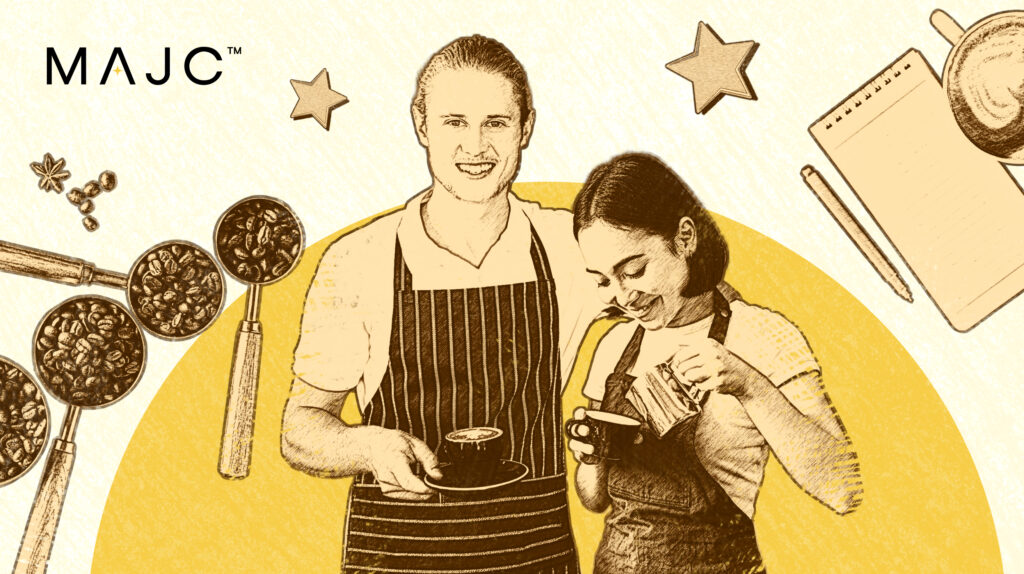
Becoming a barista is more than just pouring coffee; it’s a craft that balances technical skill with the art of hospitality. In today’s market, the demand for skilled baristas is at an all-time high, offering a vibrant career path for those ready to turn a passion for service into a professional ritual.
Think of the role as part hands-on expertise and part customer-facing performance. To succeed, you’ll need a solid foundation in coffee knowledge and a genuine drive to create positive experiences for every guest who walks through the door.

What the Role Involves
At its core, being a barista is about being the welcoming face of a café and building a consistently positive experience. Sure, you make drinks, but it’s much bigger than that. Your day-to-day will likely be a mix of:
- Customer Service: Greeting guests, taking orders with a sharp memory, and making everyone feel genuinely welcome.
- Drink Preparation: Crafting a whole range of coffee and non-coffee beverages to a consistently high standard.
- Maintaining Cleanliness: Keeping the bar, equipment, and customer areas tidy and organized is nonnegotiable.
- Team Collaboration: Working smoothly with your coworkers, especially when the morning rush hits.
A Growing Career Path
Deciding to become a barista means tapping into a booming job market. According to data from CareerExplorer, the barista profession is projected to grow by 4.6%, signaling a stable career path. This growth is backed by current employment figures from Zippia, which reports over 474,463 active baristas in the U.S. and a high volume of job openings nationwide. You’re not just learning a job; you’re stepping into a career with real runway. You can dig deeper into these trends by reviewing barista job market statistics and what they mean for newcomers.
Building Your Foundational Barista Skills
Before you can pull that perfect, syrupy espresso shot, you need to build a solid foundation. Think of this as your barista bootcamp, the essential knowledge that will set you up for success behind the bar. It all starts with the coffee itself.
You’re joining a world that runs on coffee. The good news? Most entry-level barista jobs are open to candidates as young as 16 or 18, and a real enthusiasm for customer service often means more than a long resume.
You can start by learning the absolute basics. Get to know the difference between Arabica beans and Robusta beans. Understand the basic mechanics of pulling a shot and the recipes for the most common drinks. This is your starting line.
Developing Your Technical Know-How
The technical skills are the heart of a barista’s craft. You do not need a professional setup at home to get started, but understanding the why behind each step will put you way ahead of the curve. These are the skills you’ll lean on every single shift.
- Espresso Extraction: This is the soul of most coffee drinks. It’s a dance of grinding beans to just the right consistency, tamping with even pressure, and timing the shot to nail that balanced flavor. A huge part of this is mastering espresso grind size, which can completely change how a coffee tastes.
- Milk Steaming and Texturing: Learning to steam milk into a silky microfoam is what separates a latte from a cappuccino. The goal is a velvety, paint-like texture, not overheated milk with big, soapy bubbles. It takes practice, but it’s a game-changer.
- Drink Building: You’ll need to build a mental library of recipes and learn to assemble drinks quickly and consistently. This means knowing the right ratios of espresso to milk and syrup for everything from a simple Americano to a complicated seasonal special.
Mastering Essential Soft Skills
Technical ability gets you in the door, but soft skills are what make a barista truly great. This is the human side of the job, the part that creates a memorable experience for customers and a great vibe for the whole team. You probably have more of these skills than you think. Being a great barista is about more than just coffee. It is about being a calm and welcoming presence, even when you have a line of customers out the door. Your ability to connect with people is your most valuable tool.
Think about where you already use these skills. Have you ever juggled multiple assignments for school? That’s multitasking. Helped a friend figure out a tough problem? That’s problem-solving. These are the exact same traits that make for a successful front-of-house team member, so do not be afraid to highlight them.
Before we dive into certifications and training, let’s break down the core skills every hiring manager looks for.
Essential Skills for Aspiring Baristas
This table outlines the key hard and soft skills that form the bedrock of a successful barista career. Focus on developing a little bit in each area, and you’ll be well on your way.
| Skill Category | Key Skills to Master | Why It Matters |
|---|---|---|
| Technical Skills | Espresso extraction, milk steaming, drink building, and equipment cleaning | These are the nonnegotiable, hands-on abilities required to make consistent, high-quality drinks and keep the cafe running smoothly. |
| Customer Service | Active listening, friendly demeanor, and product knowledge | Great service turns a one-time visitor into a regular. It’s about making people feel seen, heard, and happy with their order. |
| Operational Skills | Speed and efficiency, multitasking, cash handling, and cleanliness | A busy cafe is a juggling act. These skills help you manage the rush without sacrificing quality or creating chaos. |
| Teamwork | Clear communication, willingness to help, and reliability | You’re part of a team. Supporting your coworkers, communicating clearly, and being dependable makes everyone’s job easier and better. |
| Problem-Solving | Handling customer complaints, adapting to rushes, and fixing minor issues | Things will go wrong, a drink is made incorrectly, a machine acts up. Staying calm and finding a quick solution is a superpower. |
As you can see, being a barista is a blend of art, science, and human connection. Mastering these skills is your first and most important step toward landing a job and thriving in it.
How to Get Hired With No Experience
Breaking into the coffee world can feel like a catch-22. Every job seems to want experience, but how do you get experience without a job? The good news: most cafés are looking for potential, not a perfect resume. A genuine passion for coffee and a customer-first attitude are often the most valuable assets you can bring to the table.
The reality is that this industry runs on on-the-job training. Managers would rather hire someone who is reliable, eager to learn, and great with people than someone who already knows how to pull a shot but lacks a team mentality.
Charting Your Path Through Training
While it’s not always a hard requirement, getting some training before you apply can boost your confidence and make your application pop. It shows a hiring manager you’re not just curious, you’re committed.
You do not have to enroll in a multi-year program. Many people start with informal learning. You can find countless free tutorials online covering everything from basic espresso theory to latte art. Even practicing with a simple home espresso machine helps you get a feel for the fundamentals like grind size, tamping pressure, and extraction times.
If you’re ready for a more structured approach, consider these options:
- Local Workshops: Check with your local roasters and independent coffee shops. Many offer one-day or weekend workshops that are perfect for getting your hands on professional equipment with direct feedback from seasoned pros.
- Online Certifications: Formal online programs can give you a deep dive into coffee theory, from bean origins to brewing science. Having a credential like this on your resume signals you’ve done your homework.
- Community Platforms: Resources like MAJC offer a unique mix of training, community, and job matching. You can access an academy to learn verifiable skills, connect with mentors for advice, and find employers who are actively looking for fresh talent just like you.
The goal isn’t to become an expert overnight. It’s to show up to an interview with a solid foundation and prove you have the drive to learn quickly once you land the job.
Leveraging Certifications for a Competitive Edge
Earning a certification can be a game-changer, especially when you’re starting from scratch. It’s verifiable proof of your knowledge and dedication. While it cannot replace hands-on experience, a good certification tells a hiring manager you’ve already invested your own time in understanding the craft.
When you walk into an interview with a certification, you’re no longer just another applicant with no experience. You’re a proactive candidate who is ready to hit the ground running and contribute from day one.
Crafting Your Resume and Nailing the Interview
Your resume and interview are your first real shots at showing a hiring manager who you are. This is where you connect your passion for coffee with your potential as a new teammate. A great application does more than just list past jobs; it tells a story about why you’re the right person for the gig.
Forget staring at a blank page. Think about your past experiences, even the ones that seem unrelated.
Worked in retail? You’ve got customer service chops. Fast food? You know how to handle speed and pressure. The trick is to translate those experiences into the language of a café.
Translating Your Experience
You do not need prior coffee experience to write a resume that gets noticed. What you need is to show you have the core traits every café manager is hunting for: reliability, a great attitude, and a real hunger to learn. Frame your past duties to spotlight these skills.
Instead of writing, “Stocked shelves in a retail store,” try this:
- “Maintained inventory and organized displays to create a positive customer environment.”
And instead of “Took orders at a fast-food counter,” consider this:
- “Accurately handled a high volume of customer orders with speed and a friendly demeanor, ensuring a positive guest experience.”
See the difference? These small tweaks shift the focus from the task to the skill. That’s what managers are actually hiring for when they bring on new people. Your resume isn’t just a list of things you did. It’s a marketing document where you’re selling your potential. Focus on transferable skills like customer interaction, multitasking, and working cleanly and efficiently.
Acing the Barista Interview
Once that resume gets you in the door, it’s time to let your personality shine. Managers want to hire people they’ll enjoy working alongside for an 8-hour shift. Be enthusiastic, be curious, and be ready for questions that test how you’d handle the real-world chaos of a café.
You will almost definitely be asked, “How do you handle a rush?” This is not a trick question. They want to see if you get the importance of teamwork, clear communication, and staying cool when the ticket machine will not stop printing.
A solid answer might sound something like this: “I know rushes are part of the job and even part of the fun. My approach is to focus on one drink at a time to maintain quality, keep an open line of communication with my team so we’re all in sync, and give every customer a warm acknowledgment so they know they’ll be taken care of soon.”
That kind of response shows you’re a problem-solver, not someone who gets rattled easily.
Succeeding in Your First 90 Days and Beyond
Congrats, you got the job! Now the real work, and the real fun, begins. Your first 90 days as a barista will feel like a whirlwind. You’ll be hit with new names, new skills, and new ways of working, but a little planning goes a long way. Having a roadmap helps you navigate it all with confidence and sets you up to really crush it long-term.
Getting here was a huge step. Polishing your resume, applying, and nailing the interview is a journey in itself.

Think of that hiring timeline as the prologue. You’ve passed those milestones. Now, the story shifts from just getting the job to truly thriving in it.
Your First Month: Building the Foundation
Your first few weeks will be a firehose of information. You’re learning the café’s specific recipes, figuring out the point-of-sale (POS) system, and picking up on all the unwritten rules, like who restocks the oat milk and when.
Do not panic. Nobody expects you to be a pro on day one.
Your job right now is simple:
- Be a Sponge: Watch how the veteran baristas move. Notice how they talk to customers, how they handle a rush, and how they sequence drinks without getting frazzled.
- Ask Good Questions: It is always better to ask how to make a drink than to serve it wrong and have to remake it. Show you’re paying attention.
- Live the Menu: When things are slow, study the recipes. The faster you get the core drinks down, the more confident you’ll feel when you’re at the bar.
The single most valuable thing you can do in your first month is soak it all in. Absorb everything, stay positive, and aim to get solid at one new thing each shift. That attitude will earn you the trust of your team and manager faster than anything else.
Months Two and Three: Honing Your Craft
By month two, you should be feeling more settled. The basics are starting to click. Now it’s time to start refining your skills and building real connections.
Focus on getting faster and more consistent. Challenge yourself to steam perfect, silky milk for every single latte. Aim to pull espresso shots that are consistently delicious, not just “good enough.”
This is also your chance to start building a following with regulars. Remembering someone’s name and their “usual” is a small thing that makes a massive difference. It shifts a transaction into a moment of genuine hospitality, and that’s the whole game.
As you near the 90-day mark, start asking for feedback. Pull your shift lead or manager aside and ask them where you can improve. This shows you’re taking ownership of your growth and that you’re in it for the long haul. I
Common Questions About Becoming a Barista
As you start looking into how to become a barista, it’s smart to think about the practical side of things. What’s the pay really like? Are certifications worth it? What’s the toughest part of the job?
Let’s dive into some of the most common questions to give you a clearer picture of what to expect.
How Much Can I Expect to Earn as a Barista?
Your starting wage will likely be near your local minimum wage, but that’s only half the story.
Tips are a significant part of your total earnings, especially in busy cafés. On a good day, they can add a serious boost to your hourly take-home pay.
As you build your skills and prove you’re a reliable team member, your base pay will grow. Specialty coffee shops, in particular, tend to reward baristas who have a deep knowledge of coffee and can deliver an exceptional customer experience.
Do I Need a Certification to Get Hired?
The short answer? No. For most entry-level barista jobs, a certification is not a strict requirement.
Most coffee shops are more than willing to provide on-the-job training, especially for candidates who are genuinely excited to learn and have a great attitude.
However, having a certification can definitely give you an edge. It signals a real commitment to the craft and shows a hiring manager you’ve already invested in building a solid foundation of knowledge. In a competitive stack of applications, that can make your resume stand out and might even help you land a higher starting wage.
What Is the Hardest Part of Being a Barista?
Ask any seasoned barista, and they’ll probably tell you the biggest challenge is managing the pressure during peak hours. You’re juggling multiple complex drink orders, engaging with a line of customers, and trying to maintain both speed and quality. It takes serious multitasking skills and a calm head.
The morning rush can feel intense, but it’s also where you grow the most. It’s a fast-paced dance of efficiency and hospitality, and learning to stay calm and organized is the key to mastering it.
The job can also be physically demanding, with long stretches on your feet. But with practice, a supportive team, and a focus on working efficiently, these challenges become much more manageable, and often, they become the most rewarding parts of the job.
Ready to build the skills that will get you hired and help you succeed? MAJC✨ offers an all-in-one platform with training, a supportive community, and job-matching tools to accelerate your barista career. Get the practical knowledge and connections you need to land your first café job and thrive from day one. Start your journey at majc.ai.