

Being a great server is about so much more than just taking orders and dropping off plates. You are the director of the guest’s entire experience, the one person who can turn a simple meal into something memorable. This guide is about moving past the basics. It’s for anyone ready to learn the real-world skills needed to navigate the restaurant floor with confidence and a little bit of grace.
Mastering Your Craft Before the Rush Begins
A great shift is won long before the first guest walks in the door. The best servers know this. They understand that what happens in the 30 minutes before service dictates the next five hours. This is not just about folding napkins; it is a mental warm-up.
This is where you build the foundation for a smooth, profitable night. When you are prepared, you are not just taking orders, you are guiding an experience. You are the trusted expert at the table.
Your Pre-Shift Ritual
Every restaurant has its own rhythm, but a solid checklist ensures you never miss a critical detail. This is not just a list of tasks; it is about getting your head in the game.
When you nail your pre-shift, you stop problems before they start. You will not run out of lemons mid-rush or have to sheepishly ask a manager for the price of a special. You are ready.
Here is a practical checklist you can adapt to your restaurant:
-
Review the Floor Plan and Reservations: Know your section. Look for any large parties, birthdays, or anniversaries. Check for notes on guest allergies or preferences. This lets you map out your evening before it even begins.
-
Taste and Discuss the Specials: Get to the pre-shift meeting and actually participate. Ask the chef or manager questions. The more you know, the better you sell.
-
Check Your Station and Side Work: Is your station fully locked and loaded? Make sure you have enough clean silverware, glassware, napkins, pens, and whatever condiments you need. Our complete server side work checklist template can help you build a bulletproof system.
-
Confirm 86’d Items: Always, always know what’s off the menu before service starts. Nothing sours a guest’s mood faster than getting them excited about a dish you cannot serve.
-
Set a Personal Goal: Pick one thing to focus on tonight. Maybe it’s selling more of a particular wine, making a more personal connection at each table, or nailing a new upselling line. This tiny bit of focus is how you get better, shift by shift.
Guiding the Guest Journey From Greeting to Goodbye
Every interaction, from the initial hello to the final thank you, shapes the guest experience. Being a standout server means mastering this journey, ensuring every step feels seamless, personal, and intentional.
Make an Immediate Impact
Your first 30 seconds at the table set the entire tone. Walk up with confident, open body language, stand tall, make eye contact, and crack a genuine smile. A warm, unhurried greeting like, “Good evening, welcome. My name is [Your Name], and I will be taking care of you tonight,” lands much better than a rushed, “Ready to order?”
This is your first chance to read the room. Are they rushing to a show, or settling in for a long, relaxed night? Is this a special celebration? Catching these subtle cues from the jump lets you tailor your service to what they actually need.
The infographic below shows a few key things to lock down before your shift even starts. This is how you show up to that first table with total confidence.

Running through this simple process: studying the menu, checking your station, and getting your head in the game, makes sure you are ready for anything from your very first table.
Take the Order with Finesse
When it is time for the order, your job shifts from host to guide. This is where your menu knowledge becomes your superpower. Ditch the robotic scripts and just have a natural conversation.
- Ask Better Questions: Instead of, “Drinks?” try something like, “Are we starting with a few cocktails, a bottle of wine, or maybe some sparkling water tonight?” It opens up the conversation.
- Paint a Picture: If a guest is on the fence, give them a real suggestion. “If you are in the mood for something rich and savory, the short rib is incredible. We braise it for eight hours, so it just falls apart.”
- Listen. Then Confirm: Always repeat the order back, especially for big groups or tables with a lot of modifications. It takes two seconds, confirms you heard them right, and prevents 99% of errors before they happen.
A great server listens more than they talk. Pay close attention when guests ask about ingredients, it is often a clue about a potential allergy or dietary preference. Your job is to be a low-stress, high-information guide.
The Art of the Attentive Check-In
Once the order is in, it is all about timing. You need to be present without hovering, which is a delicate balance to strike. A good rule of thumb is to check in at a few key moments:
- The Two-Bite Rule: Check back within two minutes or after two bites once an appetizer or entrée hits the table. This gives them just enough time to taste everything and know if something is not right.
- The Half-Full Glass: When you see drinks are about halfway down, that is your cue to ask about another round. They should not have to flag you down for it.
- Find the Lulls: Scan your tables as you move through the dining room. The best time to check in is during a natural pause in their conversation, not when someone is in the middle of a great story.
This attention to detail is what elevates good service to great service. It shows you are paying attention to the people, not just the ticket.
Master the Menu and Guide the Guest
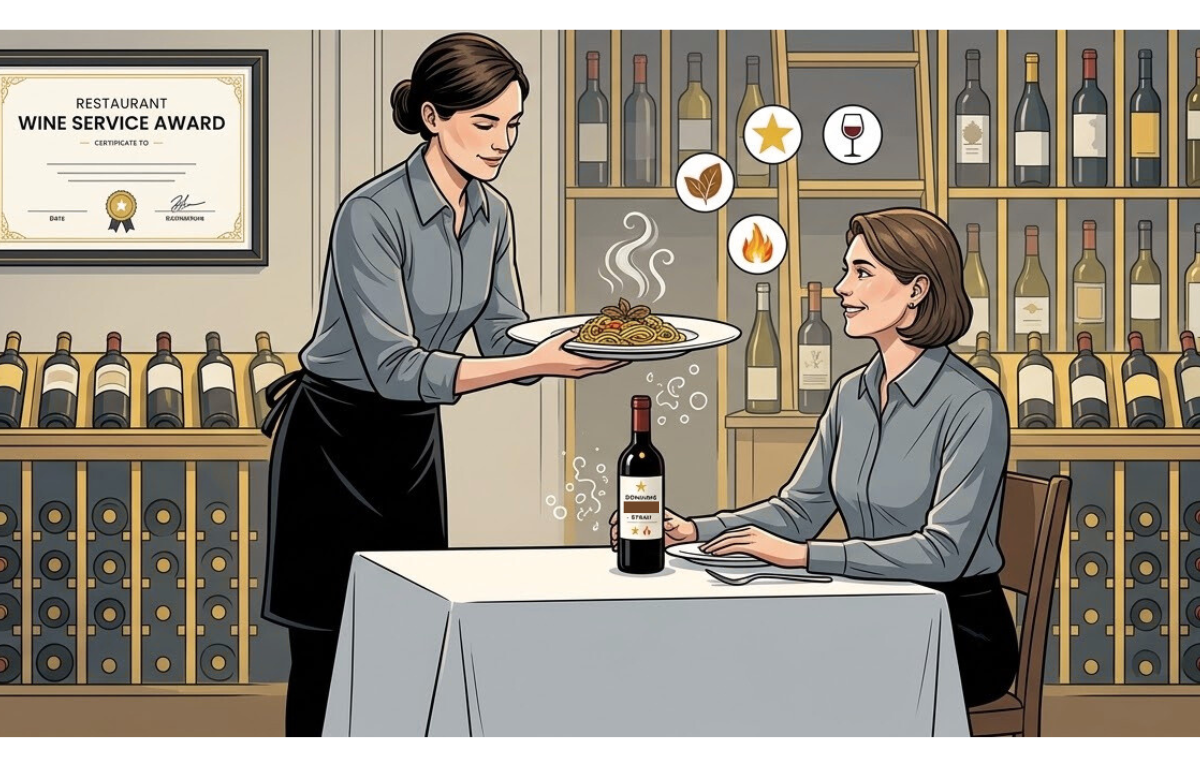
A good server does not just take orders. A great server guides the experience. This is not about being pushy or just trying to drive up the check. It is about shifting your mindset from “upselling” to genuinely enhancing the meal.
When you do this right, you stop being an order-taker and become a culinary guide for your guests. You use your knowledge to help them find a dish or a drink they will be talking about for days. That’s what creates regulars, boosts your tips, and makes you indispensable to your team.
Know Your Menu, Inside and Out
Memorizing ingredients is table stakes. True mastery comes from knowing the story behind each dish. Think of yourself as the storyteller for what the chef is creating in the back.
Lean in during pre-shift meetings. Ask questions. Where does the fish come from? What makes this particular sauce special? What was the inspiration for the new dessert? When you can share those little details, you are not reciting a script; you are sharing a passion. This level of detail also means you can confidently answer questions about allergies or modifications. You make guests feel seen, safe, and cared for.
Sell with Your Words
The words you choose are your most powerful tool for shaping the guest’s experience. You can make a dish sound completely irresistible by painting a picture that engages the senses.
This skill is more valuable than ever. Servers are currently the most in-demand position in the industry, and many restaurants are running with five fewer staff members than they need on average. Servers who can deliver a high-quality experience efficiently are worth their weight in gold. You can dive deeper into these labor trends in this industry analysis on FSR Magazine.
Consider the difference:
- Vague: “Want an appetizer?”
- Descriptive: “While you’re deciding, may I suggest our calamari? It’s lightly fried for a perfect crisp and comes with a fantastic spicy marinara that our chef makes in-house.”
The second one is not pushy; it is helpful and enticing. It gives the guest a reason to say yes.
Turn Upselling into Smart Recommending
The secret to upselling without feeling like a salesperson is to frame every suggestion from the guest’s point of view. The goal is always to make their meal better, not just more expensive. This means you have to listen first, then make thoughtful suggestions that actually match their tastes.
Here is what that looks like in practice:
- Suggesting a Starter: If a table seems to be settling in for a relaxing dinner, you might say, “It will be about 15 minutes for your entrees. Would you like to start with our shared cheese board? It pairs beautifully with the wine you’ve chosen.”
- Enhancing a Drink: A guest orders a “gin and tonic.” This is your opening. “We have some wonderful local gins. Would you like to try the [Premium Brand]? It has some great citrus notes that really make the drink pop.”
Pushy, generic tactics make guests feel like they are just a number. But thoughtful, well-timed recommendations build trust and show you are paying attention.
To make this crystal clear, here’s a look at what separates a clumsy upsell from a smart recommendation.
Comparing Ineffective and Effective Upselling Techniques
| Ineffective Tactic | Effective Strategy | Guest Perception |
|---|---|---|
| “Do you want to add a side of shrimp for $8?” | “The chef recommends adding grilled shrimp to that pasta. The smokiness really complements the cream sauce.” | Feels like a transaction vs. an expert suggestion. |
| “Would you like to see the dessert menu?” | “I noticed you all enjoyed the steak. Our pastry chef just made a chocolate lava cake that’s incredible. It takes about 10 minutes to bake, so I wanted to ask before I clear your plates.” | A generic question vs. a personalized, timely recommendation. |
| “Want to upgrade to top-shelf vodka?” | “For a martini, I really recommend using Grey Goose. It is much smoother and makes a huge difference in the final drink.” | A vague upsell vs. a specific benefit that improves the experience. |
Notice how the effective strategies provide a “why.” They connect the suggestion back to the guest’s enjoyment, making it feel less like a sale and more like an insider tip.
Ultimately, these suggestions are not just about increasing the check average, though they will. They are about demonstrating your expertise and building a connection with your table. When you consistently make people’s meals better, your value (and your income) will naturally follow.
Handling Difficult Situations With Grace and Professionalism
Look, things go wrong. It’s a restaurant. An order gets fired late, a steak comes out medium instead of medium-rare, or sometimes a guest just walks in already having a terrible day. These moments are going to happen.
How you react is what separates the pros from the amateurs. The secret is to stop seeing a complaint as a personal attack. It is not. It is an opportunity. A guest who speaks up is giving you a chance to fix it and win them back. Get this right, and you can build more loyalty than you would from a perfectly smooth service.
The L.A.S.T. Method for Service Recovery
When a guest is upset, the goal is simple: listen, show you care, and fix the problem. Fast. A proven framework for handling these high-pressure moments is the L.A.S.T. method: Listen, Apologize, Solve, and Thank.
-
Listen: This is 90% of the battle. Give the guest your complete attention. No distractions. Let them get it all out without cutting them off. Make eye contact, nod, and use small phrases like “I see” or “I understand.” More than anything, they just want to feel heard.
-
Apologize: Keep it simple and sincere. You are not admitting you personally messed up; you are acknowledging their experience is not what it should be. “I am so sorry that your steak was overcooked” is all it takes. It shows you are on their side.
-
Solve: Take ownership immediately. Offer a clear, direct solution. “Let me get a new steak on the fire for you right away. The kitchen can have it out in about 10 minutes.” This could also be offering to comp the item or grabbing a manager, but the key is that you are actively fixing it for them.
-
Thank: This one feels weird at first, but it is powerful. “Thank you so much for letting us know about this.” It reframes the complaint as valuable feedback, not an attack. It tells the guest you actually care about getting things right.
Never, ever take it personally. The guest is unhappy with the situation, not you. Keep your cool, focus on the solution, and stay in control. That is professionalism.
Knowing When to Involve a Manager
You should always be the first line of defense, but you also need to know when to tag in your manager. If a guest is becoming louder, making demands you cannot meet, or if the issue is serious, like a major billing error or an allergy cross-contamination, it is time to escalate.
A simple, “I want to make sure this gets handled perfectly for you. Let me grab my manager, who has the ability to resolve this properly,” is a clean and professional hand-off. It shows the guest you are taking their concern to the highest level. For a deeper dive, our article on how to handle customer complaints breaks down more complex scenarios.
Ultimately, mastering service recovery turns you into a firefighter. You are not just taking orders; you are building trust, showing resilience, and proving that even when things go wrong, you can make them right. That is a skill that will serve you throughout your entire career.
Building Your Hospitality Career Beyond the Floor
Being a great server is an excellent accomplishment, but it should not be the end of the road. The skills you master on the floor, communication, sales, keeping your cool under pressure, and solving problems on the fly, are the exact same skills that build great leaders.
Think of your time as a server as your launchpad. This is not just about a job; it is about your professional growth. Start by tracking your own numbers. Keep a running tally of your check averages, your upselling wins, and every positive guest review that shouts you out by name. This is not ego; it is evidence. It builds the case for your next promotion.
Charting Your Path Forward
Your experience on the floor opens more doors than you might think. You have already proven you can handle the front lines, and that is invaluable knowledge for anyone aspiring to lead.
You have a few natural next steps right in front of you:
- Lead Server or Captain: This is the perfect first step into management. You will take on more responsibility for a section, help train the new hires, and start acting like a leader during service.
- Restaurant Manager: Here, you graduate from managing tables to managing the whole floor. You are overseeing staff, wrangling inventory, and making sure the entire operation runs without a hitch.
- Sommelier or Beverage Director: If you have a passion for wine, spirits, or cocktails, you can lean into it. Specialize and become the in-house expert for the restaurant’s entire beverage program.
- Restaurant Owner: For many, this is the ultimate goal. Your deep understanding of service, the guest experience, and floor operations gives you a massive head start when building your own place from the ground up.
The Importance of Continuous Growth
Building your career is an active process. Do not wait for opportunities to come to you. Seek out mentors, ask for more responsibility, and never stop learning about your craft. Your ambition is your greatest asset.
Networking is another huge piece of this. Build real relationships with your managers, the chefs, and even your suppliers. These connections can turn into mentorships, new job offers, and insights you just cannot get anywhere else.
The person you impress today might be the one offering you a management job tomorrow. And when you are ready to take that step, preparing with the right restaurant interview questions for servers can make all the difference.
Frequently Asked Questions About Being a Server
Even the most polished training program cannot prepare you for every scenario that happens on the floor. Here are some real-world answers to the questions that come up most, helping you navigate the tricky parts of being a great server.
How Can I Increase My Tips Without Being Pushy?
Forget the hard sell. Bigger tips come from genuine connection and anticipating needs, not from pushing another glass of wine.
Learn guest names when they are offered. Get them a refill before they have to ask. When you recommend something, make it personal and honest. Instead of a generic “the salmon is popular,” try, “The chef is doing something incredible with the salmon tonight; the crispy skin is a game-changer.” Frame your suggestions as a way to make their meal better, not just to pad the check. A guest who feels cared for is always going to be more generous than a guest who feels sold to.
What Is the Best Way to Handle Getting Double or Triple Sat?
Acknowledge, acknowledge, acknowledge. The moment you get slammed, your first move is to make eye contact with each new table. A quick, “Folks, I see you. I will be right with you,” is all it takes. This simple nod buys you time and instantly reassures them they have not been forgotten.
From there, it is all about triage. Your goal is to get drinks to every table first. This gets their experience started and gives you a crucial buffer to circle back and take food orders. If the kitchen is busy, be straight with them. A simple, “Just a heads-up, the kitchen’s a bit backed up, but I will get your appetizers out the second they are ready,” manages expectations and shows you are on it.
How Do I Memorize a Large and Frequently Changing Menu?
Do not try to swallow the whole thing in one bite. You will choke. Break the menu down into sections and master one at a time. Own the appetizers this week, then move on to entrées next.
Use flashcard apps on your phone or simple mnemonic devices to drill ingredients. But the single most important thing you can do is taste everything. Nothing sells a dish with more passion and authority than actually knowing what it tastes like. When you have experienced the flavor profile firsthand, the right words just flow.
At MAJC✨, we provide the training, tools, and community to help you build a hospitality career that lasts. From tools and templates to a network of industry peers, we are here to help you grow. Learn more and join the MAJC community today!