


Better team communication isn’t about a single fix. It’s a three-part loop: auditing where you are at, implementing consistent daily routines, and sustaining that momentum with clear systems and playbooks. This is how you move past temporary solutions and build a culture of genuine clarity.
Why Great Communication Is Nonnegotiable
The numbers do not lie. A 2022 Grammarly Business study, conducted in partnership with The Harris Poll, found that ineffective workplace communication costs U.S. businesses an estimated $1.2 trillion annually. In hospitality, where coordination, timing, and clarity directly affect service quality, communication breakdowns quickly lead to frustrated teams and inconsistent guest experiences.
This highlights the importance of open dialogue, something we dig into in our guide on how to reduce staff turnover. Fixing communication is one of the most powerful retention strategies you have.
Your Roadmap From Chaos To Clarity
So, how do you fix team communication in a way that actually sticks? It starts by diagnosing the specific problems your team is facing and matching them with tangible solutions. Generic advice falls flat because it does not get to the root of your unique challenges.
Is your team drowning in endless email threads for issues that a five-minute huddle could solve? Or are your shift handoffs so inconsistent that critical details are lost in the transfer? Recognizing the specific gap is the first step toward closing it for good.
This guide is a practical playbook for restaurant and hospitality leaders ready to move from chaos to clarity. To give you a clear roadmap, the table below connects common communication headaches to their business impact and the specific solutions we will cover in the upcoming sections.
Mapping Common Communication Gaps To Practical Solutions
Before we dive into the “how,” let’s connect the dots. This table outlines the frequent communication challenges teams face and points directly to the actionable solutions this guide provides.
| Common Problem | Business Impact | Strategic Solution In This Guide |
|---|---|---|
| Inconsistent pre-shift briefings | Misaligned team priorities, service errors, and decreased guest satisfaction. | Implement structured daily huddles with clear agendas. |
| Vague project or task handoffs | Duplicated work, missed deadlines, and frustration between departments. | Create standardized handoff templates and checklists. |
| Ambiguous communication channels | Wasted time searching for info, and important messages lost in noise. | Develop a “Communication Playbook” defining channel usage. |
| Lack of constructive feedback | Stagnant skill development, unresolved conflicts, and low morale. | Establish routines for regular, purposeful one-on-one meetings. |
Think of this as your diagnostic tool. As you read, you will find the exact playbooks, templates, and routines needed to turn these common problems into strengths.
Auditing Your Team’s Communication Health
You cannot fix what you cannot see. It is one thing to have a gut feeling that team communication is off, but it is another to know exactly where it is breaking down. Moving from a vague sense of frustration to a specific diagnosis is where real change begins.
That is where a communication audit comes in. Think of it as your diagnostic toolkit, a way to pinpoint the exact friction points holding your team back.
It is like a doctor’s check-up. You do not just say you feel unwell. You describe symptoms. Is it a dull ache or a sharp pain? Does it happen in the morning or at night? The more specific you get, the better the diagnosis. The same goes for your team’s communication habits.
Pinpointing Specific Communication Gaps
Your first job is to move past vague complaints and identify where communication actually breaks down during service. “No one is on the same page” is not the problem, it is the symptom. To fix it, you need to look closely at how information moves through your restaurant day to day.
Start by auditing these core areas:
-
Pre-Shift Communication: Are your pre-shift meetings short, clear, and focused? Do team members leave knowing the priorities, specials, 86’d items, and service expectations for that shift?
-
Shift-to-Shift Handoffs: Is critical information passed cleanly between shifts, or does it get lost between the morning prep crew and the dinner team?
-
Written & Digital Updates: Where do schedule changes, menu updates, or policy reminders live? Is it a scheduling app, a group message, or a back-of-house board? More importantly, does everyone know where to look?
-
Manager Check-Ins: Are one-on-one conversations happening regularly, or only when something goes wrong? Effective communication includes feedback, clarification, and support, not just correction.
-
Access to Information: When someone has a question during service, can they quickly find the answer, or does it require tracking down a manager in the middle of a rush?
When you answer these questions honestly, patterns start to emerge. You might discover that your pre-shift is solid, but critical updates get buried in group messages. Or that expectations change shift to shift, creating confusion and frustration. Those are specific, fixable problems and the foundation for better team communication.
From Diagnosis to Actionable Solutions
Once you have identified the weak spots, start connecting them to real-world scenarios.
Imagine a kitchen team member who consistently misses menu updates because they were shared during a FOH pre-shift meeting they did not attend. The problem is not that the cook is disengaged; it is that the communication channel is broken for your whole team. The diagnosis is a channel gap. The solution might be as simple as posting a summary of every huddle in a designated chat channel immediately afterward.
This process, spotting specific issues and tying them to real situations, is the only way to build solutions that actually stick. It is the foundation for creating clear processes everyone can rely on. In fact, standardizing these protocols is so vital that it often becomes a core part of a team’s operational playbook. We get into the nuts and bolts of this in our guide on how to create standard operating procedures.
The point of a communication audit is not to assign blame. It is to get a shared understanding of what is not working so you can build a system that does, together.
By taking the time to do a proper audit, you turn a big, frustrating problem into a set of smaller, manageable challenges. This focused approach ensures you are not just trying generic fixes but are implementing solutions that address what your team actually needs, setting the stage for the high-impact routines we will cover next.
Implementing High-Impact Communication Routines
Big changes do not happen overnight. Real, lasting improvements come from small, consistent actions that build momentum day after day. If you want to improve team communication in a way that gets immediate results, the secret is in powerful daily routines.
This is not about theory. It is about concrete habits you can start this week. These are not massive overhauls; they are quick wins designed to build clarity, trust, and alignment from the ground up.
Before you jump in, it helps to know where to focus. Think of it as a simple diagnostic process: you evaluate what is happening, pinpoint the weak spots, and then figure out the root cause.
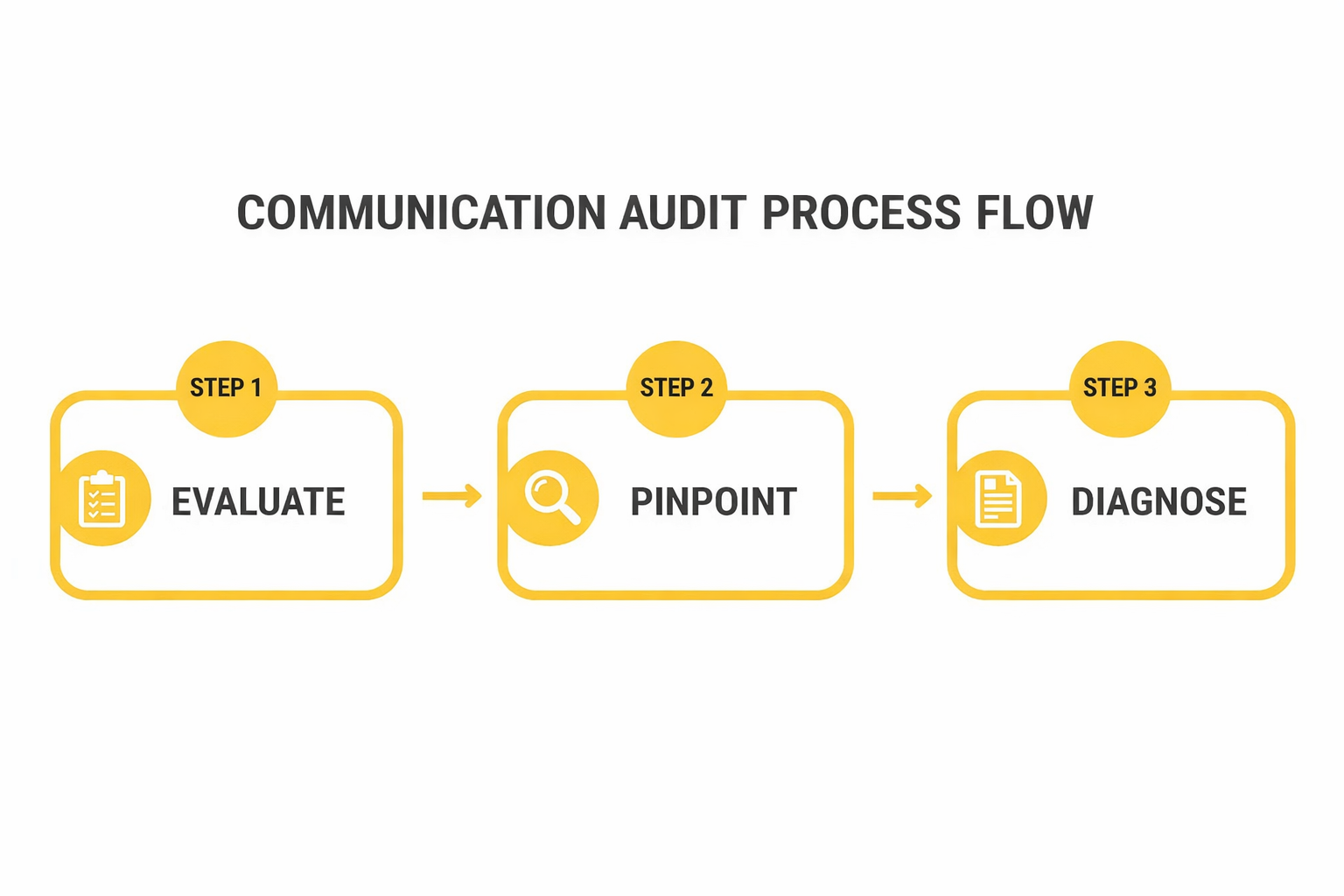
This way, the routines you implement actually solve the right problems instead of just adding another meeting to the calendar.
The Power of the 15-Minute Daily Huddle
The daily huddle, or pre-shift meeting, is arguably the single most impactful routine for any hospitality team. When done right, it aligns everyone in under 15 minutes, preventing hours of confusion later. When done poorly, it is a waste of everyone’s time.
The key is structure. A great huddle is not a casual chat; it is a focused, high-energy touchpoint with one purpose: to get everyone on the same page for the day ahead.
For any hospitality team, this is non-negotiable. We have put together a full guide on the art of the pre-shift that breaks this down even further, but you can get started right away with this simple three-part agenda:
- Priorities: What is the single most important goal for this shift? It could be pushing a new menu item, focusing on table turn times, or hitting a specific guest experience target. Name it.
- Roadblocks: What could get in the way? This is where the team flags low inventory, notes a big upcoming reservation, or mentions that the ice machine is acting up again.
- Wins: Acknowledge great work from the day before. Give a shout-out to a team member who went above and beyond or celebrate a positive guest review. This ends the huddle on a high note and reinforces the exact behaviors you want to see.
By keeping the daily huddle fast-paced and predictable, you create a reliable rhythm for your team. This consistency builds trust and makes it clear that communication is a top priority, not an afterthought.
Mastering Structured Project Handoffs
“I thought you were handling that.” How many times has that phrase brought a project to a screeching halt? Vague handoffs between shifts, departments, or team members are a primary source of duplicated work and missed deadlines.
Implementing a structured handoff process eliminates ambiguity. It ensures that when a task moves from one person to another, all the critical information moves with it. This does not need to be complicated.
For a kitchen-to-service handoff, it might be a simple checklist. For an event transition, it could be a shared doc. The tool matters less than the habit of using it every single time.
A solid handoff template should always cover these basics:
- Current Status: Where do things stand, in one or two clear sentences?
- Key Action Items: What are the immediate next steps that need to happen?
- Ownership: Who is responsible for each of those action items by name?
- Relevant Files or Links: Where can the next person find everything they need?
Creating a simple, repeatable process for handoffs transforms your team’s workflow. It replaces assumptions with clarity and empowers people to take ownership with confidence because they know exactly what is expected.
Making One-on-One Meetings Matter
Finally, let’s talk about one-on-ones. Too often, these become simple status updates that could have been an email. A purposeful one-on-one, however, is a dedicated space for coaching, feedback, and career growth, and it is one of the most powerful tools for connecting with individual team members.
To make these meetings count, shift the focus from what is being done to how it is being done. This is your time to discuss challenges, celebrate growth, and make sure each person feels supported and heard. According to a Gallup study, companies with engaged employees are 23% more profitable than those with low engagement. Regular, meaningful one-on-one conversations are a proven contributor to that engagement, helping managers build trust, alignment, and long-term commitment within their teams.
A simple framework can make these conversations much more productive:
- Start With Their Agenda: Ask your team member to come prepared with topics they want to discuss. This immediately gives them ownership of the conversation.
- Focus on Feedback: Share one piece of specific, constructive feedback and one piece of genuine recognition. Frame it around growth, not criticism.
- Clear Roadblocks: Ask, “What can I do to help you be more successful?” This simple question can uncover hidden issues and prove you are there to support them.
By dedicating real time to these individual conversations, you build stronger relationships and create a culture where feedback is a normal, healthy part of how the team operates. These three routines, the daily huddle, structured handoffs, and purposeful one-on-ones, are the building blocks for a more connected and effective team.
Building A Sustainable System For Clear Communication
Daily huddles solve today’s problems, but a real communication system prevents tomorrow’s confusion. The goal is not more rules. It’s clarity. When your team knows exactly where information lives and how it moves, they stop guessing and start executing with confidence.
Strong systems make the right way to communicate the easiest way.
Your Team’s Communication Playbook
Think of this as a simple, living guide that answers one question:
“Where does this information go?”
In hospitality, clarity comes from defining how your team shares updates during fast-moving shifts, not from adding more tools.
A practical playbook should clearly define:
-
Pre-shift Huddles: Specials, priorities, staffing changes, and service focus for that shift.
-
Scheduling and Availability: Handled through your scheduling app, not scattered texts.
-
Urgent Updates: Text or approved messaging app only for time-sensitive issues.
-
Policies and Procedures: Stored in one accessible place (binder, shared doc, or internal app).
When everyone knows where to look, critical information stops getting lost between shifts.
Standardizing Your Key Processes
Beyond channels, great systems standardize moments. This removes friction and keeps communication consistent, no matter who’s on duty.
Two high-impact examples:
-
Shift Handoff Checklist: A simple format covering 86’d items, prep status, maintenance issues, and guest notes. This prevents costly surprises between dayparts.
-
Weekly Team Update: A short recap shared by management covering wins, priorities, and upcoming changes. No meetings required.
Standardization doesn’t kill flexibility; it protects it. When communication follows a shared structure, your team spends less time clarifying and more time delivering great service.
How To Sustain A Culture Of Great Communication
Putting new routines in place is only the beginning. The real challenge is making them stick. A culture of great communication is not a one-time initiative; it is a daily practice that has to become part of how your team operates.
The shift you are aiming for is simple: move from doing communication tasks to communicating clearly by default. That happens when people see two things clearly: that the new approach actually makes their shifts easier, and that leadership lives by the same standards.
Prove It Works
To keep buy-in high, you have to show that better communication delivers real results on the floor. That means paying attention to both operational signals and team feedback.
Operational wins might look like fewer service mistakes, smoother shifts, clearer handoffs between stations, or fewer guest complaints. On the human side, it shows up in quick check-ins, one-on-ones, and everyday conversations where people say, “That was clearer than before.”
When your team connects focused pre-shift communication with calmer, more controlled service, the habit reinforces itself. Clear communication stops feeling like extra work and starts feeling like a competitive advantage.
Strong communication also plays a major role in retention. Teams that feel informed and heard report higher job satisfaction and trust in leadership, which directly affects who stays and who leaves.
You Have to Model the Way
Sustainable communication always starts at the top. What you do matters more than any template or guideline you introduce. Your team will mirror your habits.
That means using the same tools and structures you ask others to follow. Keep huddles tight and purposeful. End conversations with clear next steps and ownership. Avoid vague direction.
Just as important, invite feedback on your own communication. Ask simple, honest questions like:
-
“Was that clear?”
-
“What could I explain better next time?”
When leaders show that clarity is a shared responsibility, not a one-way demand, teams feel safer speaking up. Recognize and call out moments when communication is done well. That reinforcement shows everyone what “good” looks like and helps turn clarity into part of your culture.
Communication FAQs for Hospitality Leaders
Still have a few questions? We get it. Rolling out new communication habits takes work. Here are a few common hurdles leaders run into and how to clear them.
How do you handle team members who resist new communication processes?
This is one of the most common hurdles. You cannot just roll out a new process and expect instant buy-in. You have to start with the why.
Connect the change directly to their daily pain points. Show how a structured pre-shift huddle prevents getting blindsided by 86’d items, unclear priorities, or last-minute changes during service. When your team sees the system as a way to make their shift smoother, not just another management rule, resistance drops fast.
And remember: consistency matters. If leaders do not follow the process every day, the team will not either.
What is the best way to give difficult feedback?
The goal is to make feedback so regular that it stops feeling “difficult.”
Do not save everything for a big sit-down after things go wrong. Address issues early, in private, and as close to the moment as possible. Focus on the behavior, not the person, and frame the conversation around shared goals and improvement.
When feedback feels like coaching instead of criticism, it becomes a normal part of the job, not something people fear.
How can we improve communication between shifts and departments?
Breakdowns between shifts, or between front of house and back of house, are one of the biggest sources of frustration in restaurants.
The fix is simple but nonnegotiable: critical information must be documented and passed along consistently. That might mean a written shift log, a shared manager notebook, or a designated group message for operational updates.
If a decision affects the next shift, it has to be communicated clearly, every time. When teams trust that information will not get lost between handoffs, service becomes smoother, and tension drops fast.
Ready to build a team that hires better, retains longer, and runs smarter? MAJC✨ gives you the tools, templates, and peer community you need to create a thriving hospitality business. Join MAJC today and start building your A-team.