

At its core, reducing employee turnover is about creating a workplace where people want to stay.
In restaurants and hotels, high turnover is rarely caused by a single issue. It is usually the result of weak leadership, unclear expectations, limited growth opportunities, and a culture that burns people out faster than it supports them.
Left unchecked, turnover quietly erodes profitability, service quality, and team morale. That is why understanding how to reduce employee turnover is not an HR exercise. It is a core operational priority for hospitality leaders.
Why Great Employees Leave and How to Keep Them
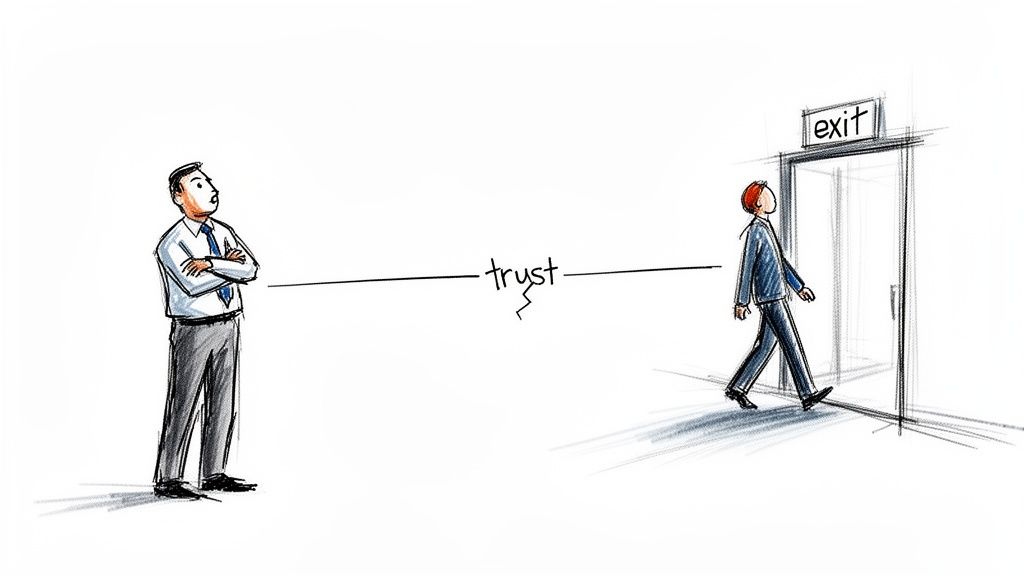
There’s an old saying in business that still rings true: people don’t leave jobs, they leave managers. While pay and benefits absolutely matter, it’s the day-to-day interactions with a direct supervisor that often decide whether an employee sticks around or starts quietly looking for the exit. Leadership behavior is the pivot point.
If you’re trying to figure out how to reduce employee turnover, the answer starts in the mirror and with your management team. Someone might take a job for the company’s reputation or the paycheck, but their loyalty is earned, or lost, through their relationship with their manager. That relationship hinges on trust, clear communication, and a real sense of support.
The data supports this. Gallup research consistently shows that managers play an outsized role in retention, accounting for at least 70% of the variance in employee engagement. Engagement, in turn, is one of the strongest predictors of whether employees stay or leave.
Retention studies repeatedly point to trust in leadership, clear communication, and day-to-day management behavior as more influential than pay alone when it comes to long-term employee retention.
Training Managers to Be Retention Leaders
Great managers aren’t born; they’re made. Giving them the right skills transforms them from taskmasters into coaches who inspire loyalty and high performance. The real work is in building emotional intelligence and communication skills.
These are the core areas where your managers need support:
- Effective Communication: This is more than just giving orders. It’s about active listening, asking for feedback, and clearly explaining the “why” behind decisions. When people feel heard and informed, they feel respected.
- Emotional Intelligence (EQ): Managers with high EQ can read the room, understand their team’s stress levels, and respond with empathy. They know how to de-escalate conflict and offer support before burnout takes over.
- Giving Meaningful Feedback: Vague praise or harsh criticism is demotivating. Train managers to give feedback that’s specific, actionable, and focused on growth, balancing constructive notes with genuine recognition.
By developing these skills, your managers can build the strong relationships that make people want to stay. For a deeper look, check out our guide on how to improve team communication.
Creating a Supportive and Safe Environment
A supportive environment is one where people feel safe enough to speak up, make mistakes without fear of blame, and ask for help when they need it. This psychological safety is the bedrock of a healthy team culture.
A manager who builds this kind of environment doesn’t just solve problems for their team. They empower their team to solve problems themselves, building confidence and capability along the way. They celebrate effort, not just results, and treat failures as learning opportunities.
A manager’s job isn’t just to oversee work; it’s to create an environment where good work can happen. That means building trust, showing empathy, and consistently demonstrating that you have your team’s back.
Think about it from an employee’s perspective. Would you go the extra mile for a boss you know will throw you under the bus at the first sign of trouble? Or for one who coaches you through a mistake and helps you learn from it? The answer is obvious.
Actionable Coaching for Your Leaders
To put this into practice, push your leaders to move beyond simple check-ins and start asking better questions. Instead of the classic “How’s it going?” which almost always gets a generic “Fine,” they can use more specific coaching questions to open up real conversations.
Here are a few examples to share with your management team:
- “What’s one thing we could change about our team’s workflow that would make your job easier?”
- “What part of your work are you most excited about right now?”
- “Is there anything blocking your progress that I can help remove?”
- “What skills are you hoping to develop in the next six months, and how can I support that?”
These questions shift the dynamic from a status update to a collaborative conversation about growth. They show the employee that their manager is genuinely invested in their success and well-being. Ultimately, a manager who acts as a coach and an advocate becomes the reason your best people choose to stay.
Build a Culture of Growth and Opportunity
One of the biggest reasons people bolt from hospitality is the feeling of being stuck, that their current role is a dead end. If you want to cut your turnover, you have to show your team a real, achievable path forward with you.
This means you have to stop thinking about just filling shifts and start thinking about developing talent. When your people see you investing in their future, they invest right back into yours. It flips the script from a simple transaction to a partnership, building the kind of loyalty that actually lasts.
This isn’t just a feel-good tactic; it directly tackles the real reasons people leave. Research from McKinsey consistently shows that lack of career development, limited advancement opportunities, and poor growth pathways are among the top drivers of voluntary turnover.
Despite this, many organizations still lack formal retention strategies, creating a major gap between understanding why employees leave and actually doing something about it.
Map Out Clear Career Pathways
Vague promises of “room for growth” are meaningless. Your team needs to see a tangible map showing them how to get from point A to point B.
You need to create and document clear career pathways for every single role. For a server, that path might go from head server to assistant manager, and maybe even to GM. A line cook could progress to sous chef and eventually executive chef.
For each step on that ladder, define the specifics:
- Required Skills: What do they need to master? This isn’t just about knife skills; it could be inventory management or P&L basics.
- Performance Metrics: What goals do they need to hit consistently in their current role to even be considered for the next one?
- Training Provided: What certifications, mentorship, or upskilling will you offer to help them get there?
When the path is clear, employees start working toward the next milestone instead of looking for it at the restaurant down the street. If you’re looking for more on this, check out our guide on how to build a high-performing restaurant team culture that lasts.
Invest in Upskilling and Mentorship
Investing in your team’s skills is a direct investment in your business. It shows you see them as people, not just pairs of hands. This can be anything from formal training sessions to informal coaching during pre-shift.
A mentorship program is one of the most powerful, low-cost ways to do this. Pair your seasoned pros with the newer folks to share knowledge, offer guidance, and build relationships. It doesn’t just speed up the learning curve for the mentee; it develops crucial leadership skills in the mentor.
Growth isn’t just about promotions. It’s about helping people become better versions of themselves, both professionally and personally. When you create that environment, people don’t want to leave.
You can also offer access to online courses, cross-train employees in different departments, or bring in experts for workshops on wine, butchery, or finance. These efforts make your team more capable and adaptable, a win for everyone.
Champion a Healthy Work-Life Balance
The hospitality industry is infamous for its grueling hours and unpredictable schedules, a combo that leads directly to burnout and turnover. Actively promoting a healthy work-life balance shows you respect your team as human beings with lives outside of work.
Flexible scheduling is a fantastic place to start. Modern scheduling software that lets employees easily swap shifts, request time off, and set their availability gives them a sense of control over their lives. That control is a game-changer.
And your managers have to lead by example. If they’re pulling 70-hour weeks and never taking a day off, they’re setting a toxic standard. Make sure your leaders take their vacation time and respect their team’s days off by not blowing up their phones.
Redesigning Your Hiring and Onboarding Experience
Think of hiring and onboarding as the foundation you’re building with a new team member. If that foundation is cracked from day one, everything you try to build on top of it will feel shaky. Pouring real time and attention into this stage is one of the smartest ways to find people who aren’t just skilled, but who will actually thrive in your culture.
Write Job Descriptions That Tell the Truth
Your job description is more than a checklist of duties, it’s the first promise you make to a future employee. Too often, we see descriptions that are either way too vague or paint a picture that’s too good to be true. Both lead to a massive disconnect between expectations and reality, which is a fast track to an early exit.
Get honest and get specific. Clearly lay out the day-to-day work, what it really takes to succeed, and even some of the challenges they’ll face. Don’t be shy about describing your team’s vibe. Is it a high-energy, all-hands-on-deck environment or more structured and steady? This kind of transparency helps people self-select, meaning the candidates who apply are genuinely excited for the job you’re actually offering.
For a deeper dive, our guide on how to write a job description breaks down how to create listings that attract the right people for the right reasons.
Conduct Interviews That Reveal Character, Not Just Skills
The interview is your chance to see the person behind the resume. You can teach someone how to run a section or use your POS system, but you can’t easily teach work ethic, grit, or a collaborative spirit. Your interview process needs to be designed to find those traits.
Ditch the generic questions like “What’s your biggest weakness?” They invite rehearsed answers. Instead, dig for real-world examples with behavioral questions:
- “Tell me about a time you had to deal with a truly difficult guest. What was the situation, and what did you do?”
- “Walk me through a shift that went completely off the rails. How did you prioritize and keep your cool?”
- “Describe a time you disagreed with a coworker’s approach. How did you handle it, and what was the outcome?”
These questions force candidates to pull from actual experience, giving you a much clearer picture of how they think, solve problems, and work with a team. It’s a glimpse into their character under pressure.
Create an Onboarding Experience They Won’t Forget
That critical window between an offer acceptance and the end of the first month can make or break a new hire’s future with you. A great onboarding experience makes them feel welcomed, prepared, and confident. A bad one makes them feel like an afterthought, leaving them to question their decision to join your team.
Structure is your best friend here. Don’t just wing it. Just as with guests, good customer onboarding strategies build loyalty and engagement from the start. The same principle applies to your new hires. A thought-out plan shows them you’re invested in their success from day one.
The point of onboarding isn’t just to teach someone a job. It’s to pull them into your culture and show them, through action, not words, that they made the right choice.
A structured onboarding plan makes sure nothing important gets missed and helps your new hire build momentum fast. We’ve put together a checklist for the first 90 days to turn what can be an overwhelming time into a clear path for success.
The First 90 Days Onboarding Checklist
A structured plan to ensure new hires are successfully integrated, engaged, and set up for long-term success.
| Timeframe | Key Actions | Goal |
|---|---|---|
| Phase One: First Week | Knock out all paperwork, give them a welcome kit, assign a buddy or mentor, and do a proper team intro. Schedule quick, daily check-ins with their direct manager. | Make them feel welcome and comfortable. Give them a go-to person for all the “stupid” questions they’re afraid to ask. |
| Phase Two: First 30 Days | Set clear, achievable performance goals for the first month. Provide focused training on their core tasks and systems. Schedule regular one-on-one feedback sessions. | Build their confidence and competence in the job’s key functions. Forge a strong, open line of communication with their manager. |
| Phase Three: 60–90 Days | Review progress on their initial goals and collaborate on new ones. Get them involved in a team project. Ask them for feedback on their onboarding experience. | Help them shift from a “trainee” mindset to feeling like a fully contributing member of the team. Reinforce their long-term value. |
By the end of 90 days, a well-onboarded employee shouldn’t just know how to do their job; they should feel like they belong. This is your single best shot at turning a new hire into a long-term team member.
Creating Systems for Recognition and Fair Pay
Feeling invisible is a fast track to burnout.
While a chaotic schedule or a tough shift is temporary, feeling consistently unappreciated is a deeper problem, the kind that tells your best people it’s time to find a new job. Building a workplace where people feel seen, valued, and fairly compensated isn’t just a “nice-to-have.” It’s a core retention strategy.
This is about way more than a paycheck. It’s about creating intentional systems for both financial and non-financial recognition that make your team feel like true partners in the business. When your staff knows their hard work is noticed and rewarded, they become more invested, motivated, and loyal.
Designing Competitive and Transparent Pay Structures
Compensation is almost always the first thing people look at, so you have to get it right. Fair pay is the absolute foundation of a healthy relationship between you and your team. If your pay isn’t competitive for your market, you’ll constantly lose good people to the restaurant next door. Period.
Building a solid pay structure that people trust comes down to a few key moves:
- Do Your Homework: Regularly check what other local restaurants and hotels are paying for similar roles. And don’t just look at the hourly wage. Consider tips, benefits, and any bonus potential to get the full picture of total compensation.
- Create Clear Tiers: Documented pay bands for each role, based on experience, skill level, and responsibilities, are nonnegotiable. This takes the guesswork out of pay and helps you avoid the kind of disparities that can poison a team’s morale.
- Be Radically Transparent: No, you don’t have to post everyone’s salary on the wall. But you should be able to clearly explain to any employee how your pay system works. They need to understand exactly what they have to do to earn a raise or qualify for a promotion.
This kind of transparency builds trust and shows your team that pay is handled fairly, not based on who the manager likes best that week. When people understand the system, they feel more in control of their financial future with your company.
Fostering a Culture of Frequent and Meaningful Recognition
While pay gets people in the door, recognition keeps them showing up and caring, day after day. A culture of appreciation is one of the most powerful, and often lowest-cost, ways to keep your team intact. The key is to make it frequent, specific, and genuine.
Good recognition doesn’t have to be complicated or expensive. The goal is just to create multiple ways for appreciation to happen, so great work never goes unnoticed.
Here are a few practical ideas you can put into play this week:
- Peer-to-Peer Shout-Outs: Create a visible space for appreciation, whether it’s a whiteboard in the breakroom or a simple feature inside your scheduling or communication app. Giving teammates a way to recognize each other builds camaraderie and shared ownership.
- Manager’s “Catch of the Day”: Challenge your managers to end each shift by specifically recognizing one person for something they did exceptionally well. Being specific is what matters. Instead of a generic “Great job tonight,” try “The way you handled that complicated allergy order with such care and attention was outstanding.”
- Celebrate Personal Milestones: Remember birthdays and work anniversaries. It’s such a simple gesture, but it shows you see your employees as people, not just line items on a schedule. A handwritten card from the leadership team or a small gift card can go a shockingly long way.
- Amplify Guest Compliments: When a guest leaves a glowing review online or mentions a server by name, make sure that feedback gets back to the employee and is shared with the whole team. It validates their hard work and connects their effort directly to guest happiness.
Ultimately, a strong recognition system reinforces the behaviors you want to see. More importantly, it creates an environment where every single person feels their contribution actually matters. That sense of value is fundamental to building a team that chooses to stay and grow with you.
Your Questions on Employee Retention Answered
Even with a solid game plan, specific questions always pop up. Think of this as your quick-reference guide for those moments when you need a clear solution to a pressing retention challenge.
What is the most effective way to reduce employee turnover quickly?
If you need to stop the bleeding now, focus on your managers. While a big-picture strategy is always the long-term goal, the fastest results almost always come from improving the day-to-day interactions between your leaders and their teams.
Start by making one-on-one meetings mandatory between managers and each of their direct reports. The goal isn’t a status update. It’s to check on morale, ask what they’re struggling with, and find out what support they actually need from you. Give your managers immediate coaching on how to listen actively and give positive, specific feedback, not just generic “good jobs.”
Even a small improvement in daily manager interactions can give morale a significant shot in the arm and slow down the exodus. It’s a powerful signal to your team that you’re listening and that their well-being is a priority.
How can I reduce turnover if I cannot afford to increase wages?
Pay is important, but it’s rarely the only reason people stay. When the budget is tight, you have to get creative with low-cost, high-impact strategies that make the job better. A supportive culture is a powerful retention tool that money can’t buy.
Here are a few areas to zero in on:
- Offer More Scheduling Flexibility: This is consistently one of the biggest drivers of satisfaction in our industry. Modern scheduling software that allows for easy shift swaps and actually respects time-off requests can dramatically improve work-life balance at little to no cost. It gives your team a sense of control over their lives.
- Document and Share Career Paths: Show your team there’s a future with you. Clearly map out what it takes to get from line cook to sous chef, or from server to floor manager, including the skills they need to build. People are far more likely to stick around if they can see a clear path forward in your organization.
- Implement a Public Recognition Program: This costs nothing but builds incredible goodwill. Think peer-to-peer shout-outs on a breakroom whiteboard or celebrating personal milestones in a team huddle. It makes people feel seen and valued, which is priceless.
How do I measure the success of my retention strategies?
To know if your efforts are actually working, you have to track a few key metrics. Vague feelings about morale aren’t enough; you need data to see what’s truly making a difference.
Start by consistently tracking these four key performance indicators (KPIs):
- Employee Turnover Rate: Calculate this quarterly. Is the percentage of people leaving going up, down, or staying flat? This is your big-picture number.
- Employee Satisfaction Surveys: Use simple, anonymous surveys to get honest feedback on management, culture, and workload. This is the qualitative data that tells you the why behind the numbers.
- Average Employee Tenure: How long, on average, are people staying with you? A rising average tenure is a crystal-clear sign of success.
- New Hire Turnover Rate: Pay close attention to how many new hires leave within their first 90 days. A drop here is a fantastic indicator that your hiring and onboarding fixes are working.
The key isn’t just to react to turnover, but to get ahead of it with the right policies and programs. When you proactively address the things that drive people away, you build a loyal, motivated team that wants to stay.
What role does technology play in reducing employee turnover?
Good tech can be a massive ally in your retention efforts, usually by simplifying the annoying tasks that directly impact employee satisfaction. It’s not about replacing the human element; it’s about supporting it.
For instance, smart scheduling software gives your team more control over their shifts, which directly improves their work-life balance. Online learning platforms provide consistent, accessible training, showing your team you’re invested in their growth.
Even hiring platforms have gotten smarter. They can use better matching algorithms to help you find candidates who are a great long-term cultural fit from day one, which dramatically reduces the chances of a costly early departure.
For a deeper dive into how to reduce employee turnover by building stronger internal career paths and retaining talent long term, check out our Operator’s Guide to Growing and Retaining Talent from Within.
Ready to stop the revolving door and build a team that stays and grows with you? MAJC✨ is the community-driven platform designed by hospitality operators, for hospitality operators. Access operator-tested tools, expert-led training, and a peer community to help you hire smarter, retain longer, and run a more profitable business. Join MAJC today and start building your dream team.