

Learning to bartend is not just about memorizing a few drink recipes. It is a craft where customer service, technical skill, and pure efficiency come together to create an experience for your guests and drive real revenue for the business.
Building Your Foundation in Modern Bartending
Welcome to the world behind the stick. What many people used to see as a temporary gig has completely transformed, especially since the craft cocktail boom started around 2000. Bartending today can be the launchpad for a serious, rewarding career.
This field carries significant momentum. Official projections from the U.S. Bureau of Labor Statistics show that bartending jobs are set to grow by 6% through 2034. This growth represents approximately 44,800 new positions entering the market, signaling a robust demand for skilled professionals.
But you cannot build a great bar program, run a slammed service, or lead a team without nailing the fundamentals. It is like learning an instrument. You have to master the scales and chords before you can start writing your own music.
Speak Like a Bartender
The first thing you need to do is learn the language. Nothing screams “rookie” louder than walking into a professional bar and not knowing the difference between a drink served “neat” and one served “up.” Confidence behind the bar comes from competence, and competence starts with knowing how to communicate.
Get these core terms down cold, and you will be on your way:
- Neat: A spirit served right out of the bottle. No ice, no chill, just the spirit in a glass at room temperature.
- On the Rocks: Simple. Any spirit or cocktail poured over ice in a glass.
- Up: This means a cocktail is chilled by shaking or stirring it with ice, then strained into a stemmed glass without any ice.
- Jigger: That hourglass-shaped metal tool. It is for measuring your pours.
- Muddler: Looks like a small baseball bat. You use it to gently press and mash fruits, herbs, and spices to release their flavors into a drink.
Knowing this vocabulary is the foundation for everything. It is how you will read recipes, take direction from your lead bartender, and talk to your guests without missing a beat. This is the shared language that keeps a bar running smoothly, just like the communication that is vital for any high-performing front-of-house team member.
Master Your Tools and Skills
Professional bartending is a physical craft built on precision, not flashy tricks. Your goal is to be clean, consistent, and efficient with every movement.
The Foundation: Precision Pouring
Accuracy is the bridge between a balanced cocktail for the guest and a profitable house. Whether using a jigger or a free-pour count, mastery comes from repetition. Practice with water-filled bottles until your muscle memory creates the quiet confidence of a pro.
The Standard: Mise en Place
Efficiency starts before the first order. Mise en place, everything in its place, means your station is fully stocked and garnishes are prepped before service begins. This level of organization is what allows you to handle a “three-deep” rush without breaking a sweat.
The Gear: Know Your Tools
Every piece of equipment has a specific purpose designed to increase speed and improve drink quality. Mastery means knowing your tools inside and out.
Essential Bartender Tool Kit
This is not about collecting fancy gadgets. It is about mastering the handful of tools you will use hundreds of times a night. Get to know their weight, their feel, and their function until using them becomes second nature.
| Tool | Primary Use | Pro Tip |
|---|---|---|
| Shaker Tins | Shaking or stirring cocktails to chill and dilute them properly. | Always use two metal tins (a “tin-on-tin” setup) instead of a glass and a tin. They create a better seal and chill faster. |
| Jigger | Accurately measuring liquid ingredients for consistency. | Hold the jigger level between your fingers, right over the shaker tin, to prevent spills and ensure an accurate measurement every time. |
| Bar Spoon | Stirring cocktails, layering drinks, and grabbing garnishes. | The twisted handle is not just for looks; it helps the spoon spin smoothly in your hand for an effortless stir. |
| Hawthorne Strainer | Straining shaken cocktails while holding back ice and solids. | Hold the strainer with your index finger to “gate” it, allowing you to control how much pulp or ice gets through. |
| Julep Strainer | Straining stirred cocktails from a mixing glass. | It fits snugly into a mixing glass and is designed to let the liquid flow out smoothly without splashing. |
| Fine-Mesh Strainer | “Double straining” to remove tiny ice chips or bits of fruit/herb. | Use it in combination with a Hawthorne strainer for an ultra-smooth, clean-looking cocktail. |
Get your hands on these tools and start practicing. The more comfortable you are with your kit, the faster and more confident you will become when the ticket machine starts firing. This is where the craft begins.
Mastering Classic Drinks and Building Speed
Once you have the lingo and tools down, it is time to get to the heart of the craft: the drinks. This is where you start building your cocktail list and, just as important, the speed to make them when the ticket machine is screaming. It is where theory gets real.
Memorizing recipes is a starting point, but great bartenders understand why a drink works. Do not just learn the specs for a Margarita; learn that it is a sour. Grasping the basic families, like sours (spirit, sweet, sour), fizzes (sours with bubbles), and highballs (spirit plus a mixer), gives you a mental blueprint.
This is how you move from just knowing the words to actually performing behind the bar.
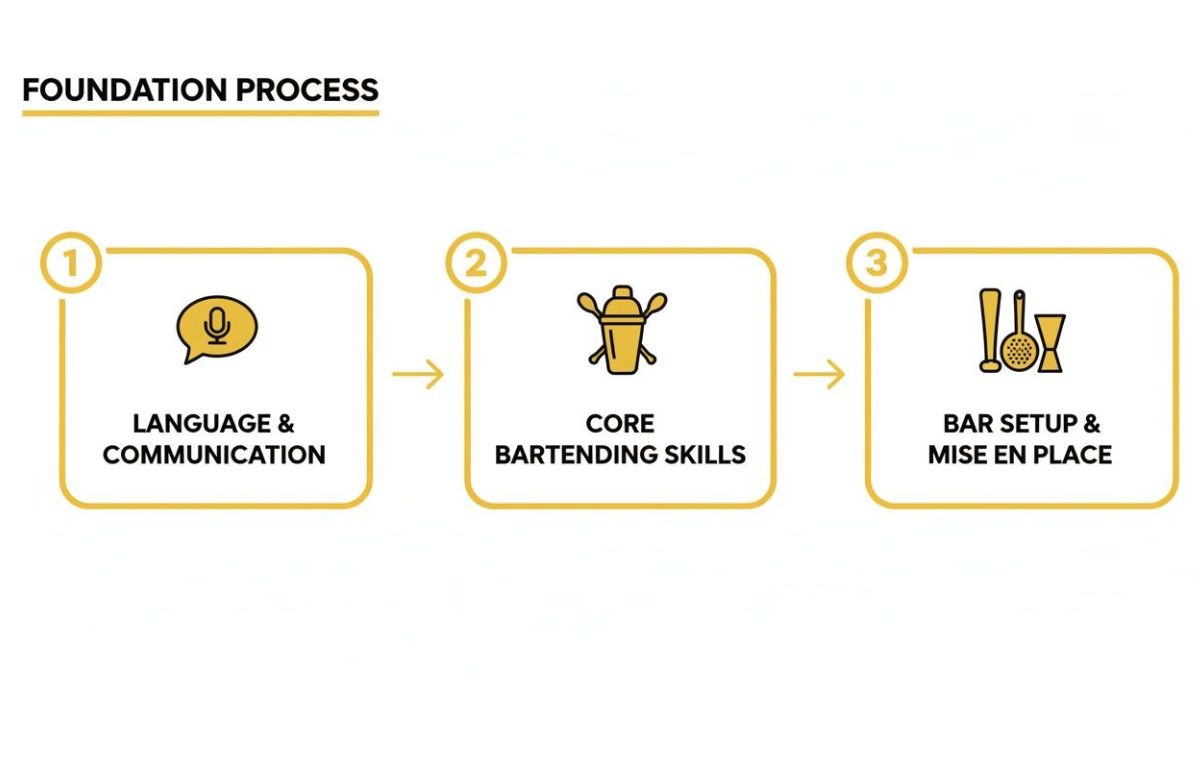
When you see the patterns, you are not memorizing 50 different cocktails. You are learning a handful of templates you can build on, which makes picking up new drinks a whole lot faster.
Building Your Core Drink List
Every bar has its own menu, but a core set of classics is the industry’s backbone. These are the drinks you will make everywhere, and knowing them cold is nonnegotiable. To really stand out, you need to be able to make a wide range of drinks well. A great place to start is to master 10 classic whiskey cocktails that cover different styles and customer tastes.
Focus your first reps on these essential categories:
- The Old Fashioned Family: Built in the glass, this drink teaches you how to balance a spirit with sugar, bitters, and just the right amount of dilution.
- The Martini and Manhattan: These are the ultimate tests of precision. Stirred, spirit-forward drinks are all about temperature control and texture.
- The Sour Family: Drinks like the Daiquiri, Whiskey Sour, and Margarita are the foundation. They teach you the critical dance between strong, sweet, and sour.
- The Negroni: An iconic, equal-parts cocktail. This one teaches you how to work with bold, bitter flavors and create balance.
Your goal is not just making these drinks; it is making them the exact same way every single time. A guest who loves your Old Fashioned on a slow Tuesday should get that same perfect drink on a slammed Saturday. That is consistency.
Practice Drills for Speed and Accuracy
Speed behind the bar is not about moving frantically. It is about economy of motion, making every movement count. You can build this muscle memory at home without pouring a single drop of expensive liquor.
Set up a home practice station with empty bottles filled with water, a few with pour spouts. Line them up like a speed rail and run drills.
Pouring Accuracy Drill:
- Grab your shaker tin and a jigger.
- Using a water bottle with a pour spout, practice hitting exact measurements: 1 ounce, 1.5 ounces, 2 ounces, and 0.75 ounces.
- Focus on a clean cut-off. Stop the pour right on the line, no spills.
- Do this for 10 minutes a day. You are training your hands to feel what a perfect pour is without looking.
Building a Drink Round Drill:
- Write down a test order for three or four different drinks, say, a Margarita, a Manhattan, and a Vodka Soda.
- Line up your “ingredients” (the water bottles) and your glassware.
- Build the entire round. Think through the steps. Which glass can you build in? Which needs shaking? Which needs stirring?
- Try to build the round in a logical order, touching each bottle only once. This is how you streamline your workflow and learn to handle multiple orders without getting lost in the weeds.
These drills can feel repetitive, but they are the secret sauce. This is how you stop thinking about every little step and start doing them by instinct. That frees up your mind to actually talk to guests and run the bar.
Navigating the Legal Side of Serving Alcohol
Making great drinks is the fun part. Serving them legally and responsibly is the part of the job that protects you, your bar, and every guest who walks through the door. It is absolutely nonnegotiable.
Think of this knowledge as your professional safety net. It is what separates a true pro from someone just slinging cocktails. A single mistake can lead to massive fines, license suspensions for the bar, and even personal legal trouble. This is not just about rules; it is about building a long, successful career.
Why Certifications Are Your Best Friend
This is where getting certified becomes a no-brainer. Programs like TIPS (Training for Intervention ProcedureS) and ServSafe Alcohol are the industry gold standard for a reason. They are not just a piece of paper to hang on the wall; they are practical training designed to give you the confidence to handle the tough situations that inevitably come with serving alcohol.
Getting certified will teach you a few critical, real-world skills:
- Spotting Fake IDs: You will learn to identify security features and common red flags on an ID, moving beyond just checking the birthdate.
- Recognizing Intoxication: Training helps you pick up on the subtle (and not-so-subtle) cues that a guest is approaching their limit, long before it becomes a problem.
- Refusing Service Professionally: This is easily one of the hardest things to do behind a bar. These courses give you scripts and proven strategies to handle it safely and legally.
For bar managers, getting your entire team certified is not just good practice; it is a powerful liability shield. It shows a commitment to responsible service that can lower insurance premiums and be your best defense if an incident occurs.
Knowing Your Local Liquor Laws
Liquor laws are anything but one-size-fits-all. They change dramatically between states, counties, and even cities. It is your job to know the specific rules for where you work. What time is last call? Can a guest take an unfinished bottle of wine home? Are there restrictions on happy hour specials? Not knowing is not an excuse.
Refusing Service the Right Way
Knowing you have to cut someone off is one thing. Actually doing it without causing a scene is another skill entirely. The goal is always to be polite, firm, and nonjudgmental.
Here is a professional game plan for refusing service:
- Bring in a Manager: If you can, discreetly let your manager or security know what is happening before you approach the guest. Having backup is always a good idea.
- Go Private: Try to pull the guest aside. No one wants to be embarrassed in front of their friends, and a public confrontation rarely ends well.
- Use “I” Statements: Instead of saying, “You’re drunk,” try, “I’m sorry, but I cannot serve you another drink right now.” It makes it about your responsibility, not their behavior.
- Blame the Rules: It is a classic for a reason. Saying, “It’s the law, and I could lose my job or the bar’s license,” shifts the focus from a personal decision to a legal requirement.
- Offer an Alternative: Always offer water or a nonalcoholic drink. Offering to call them a cab or a rideshare shows you still care about their safety.
Your job is to de-escalate the situation, not to win an argument. A calm, professional refusal keeps everyone safe, which is the ultimate goal. That is what responsible service is all about.
What It Means to Be a Modern Bartender
The skills that made a great bartender a decade ago are now just table stakes. If you are learning to bartend today, staying relevant means looking ahead, not just mastering the classics. It is about anticipating what your guests will want before they even know they want it.
The bar scene never stops changing, and the best bartenders are the ones who change with it. Mastering the skills that modern customers and employers actually value is how you future-proof your career. It is the difference between being just another person shaking tins and becoming an indispensable hospitality pro.
The Rise of Mindful Drinking
One of the biggest shifts we are seeing is the explosion of the nonalcoholic and low-ABV movement. This is way beyond offering soda water with a lime. Guests are actively looking for complex, thoughtful, and delicious drinks that just happen to have little or no booze.
This trend is going to completely reshape menus. A 2026 report from Penn State Extension notes that awareness of alcohol-free bars has jumped to 34%, with consumer interest at 41%. That signals a massive demand in major markets, and it is an exciting new playground for skilled bartenders.
To really nail this, you have to apply the same principles of flavor, balance, and presentation to your zero-proof drinks as you would to any classic cocktail.
- Go Deep on Syrups and Shrubs: Build real depth of flavor with house-made syrups using fresh herbs, spices, and botanicals.
- Work with Zero-Proof Spirits: The market for high-quality non-alcoholic gins, whiskeys, and aperitifs is growing fast. These give you a fantastic base to get creative.
- Focus on Texture and Acidity: Use different teas, cold-pressed juices, and even drinking vinegars to build drinks that are just as engaging as their boozy counterparts.
Putting Sustainability to Work Behind the Bar
The modern bar is a sustainable one. Period. What used to be a niche interest, minimizing waste, sourcing locally, is now a core business practice. It is not just good for the planet; it is great for your bar’s bottom line and its story.
Guests are more conscious than ever. A bar that proves it is committed to reducing its environmental impact really stands out. This is a skill set that employers are actively looking for.
Thinking sustainably forces you to be more creative. That spent citrus from juicing is not trash; it is the key ingredient for a beautiful oleo-saccharum that can become the base of your next signature drink.
Simple changes can make a huge difference:
- Use the Whole Ingredient: Do not throw anything away. Dehydrate fruit wheels for garnishes, candy citrus peels, or infuse spirits with leftover herbs.
- Source Locally: Partner with local farms and producers. It cuts down your carbon footprint, supports your community, and gives you access to insanely fresh ingredients.
- Audit Your Waste: Actually look at what is being thrown away. Then, put a real recycling and composting program in place.
Using Tech the Smart Way
Technology is finding its place behind the bar, not to replace us, but to support us. Smart tools can boost efficiency, improve consistency, and free you up to focus on what actually matters: the person sitting across from you.
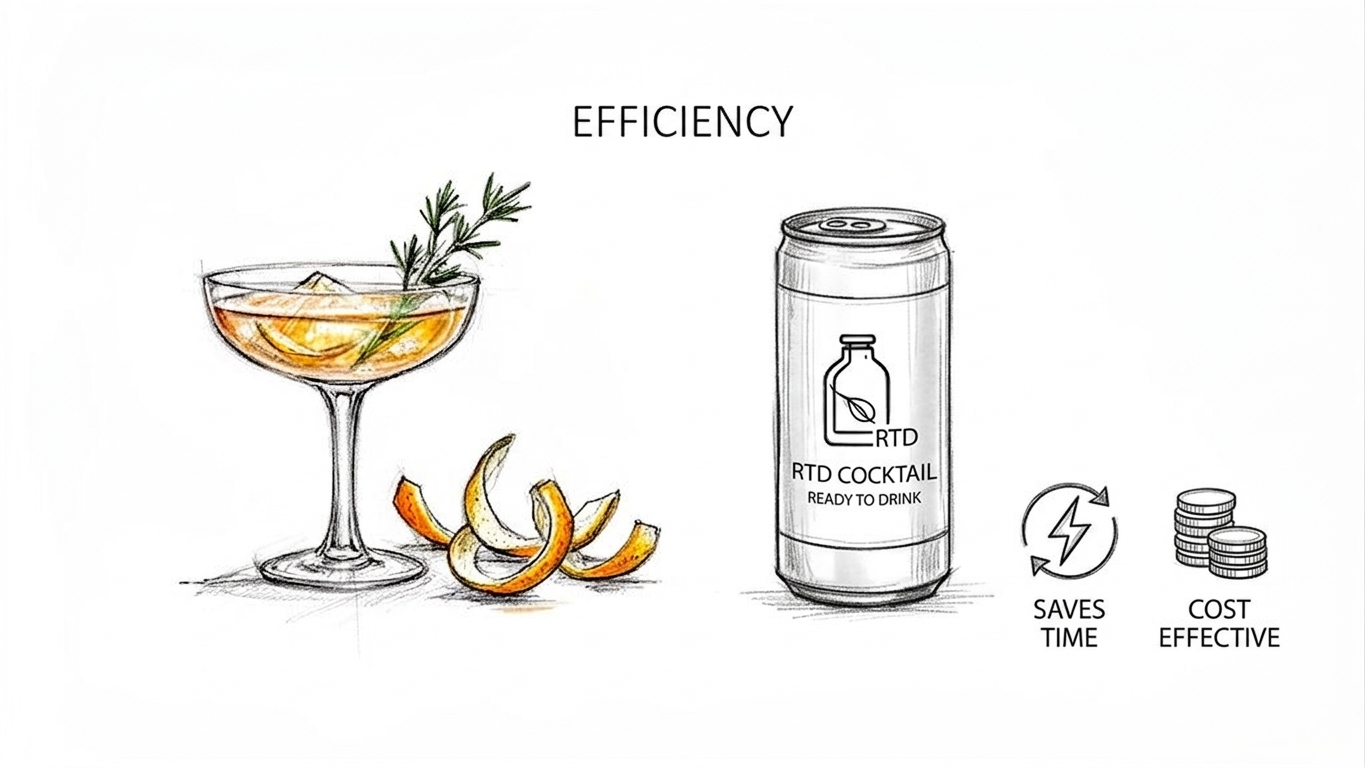
Ready-to-drink (RTD) cocktails, for example, are being used in high-volume spots to serve popular drinks like an Aperol Spritz or a Gin & Tonic quickly and consistently. This lets the lead bartender focus on crafting the more complex, creative cocktails without letting service times drag.
Alright, you have put in the work. You know your jiggers from your shakers, you have memorized the classics, and you understand the serious business of responsible service. Now for the best part: turning all that practice into a paycheck.
This is where your new skills meet the real world. The path from home practice to a packed bar is all about a solid resume, a killer interview, and proving you belong behind the stick.
Building a Resume That Opens Doors
Your resume is your opening line with a bar manager. It needs to land with impact, even if you do not have a single “bartender” title on it yet. Think of it as a showcase for transferable skills, your formal training, and any certifications you have earned.
The goal is not just to get a job; it is to start a career in hospitality. Managers are looking for reliability, a great attitude, and a genuine hunger to learn. These traits are often more valuable than years of experience, especially for that first role.
To get a hiring manager’s attention, you need to know what they are looking for, and what they are not.
Resume Dos and Don’ts for Aspiring Bartenders
| Do | Don’t |
|---|---|
| Put your certifications first. A ServSafe or TIPS certification at the top instantly tells them you are a serious, responsible candidate. | List every job you have ever had. Focus only on roles that prove your customer service chops, ability to hustle, and teamwork. |
| Create a “Skills” section. List the classic cocktails you have mastered, your spirits knowledge, and the bar tools you can handle with confidence. | Exaggerate your experience. It is better to be a sharp, skilled trainee than to get caught in a lie. Honesty builds trust. |
| Write a short, professional summary. State your goal of launching a bartending career and your passion for the craft of hospitality. | Use passive, generic language. Instead of “responsible for customer service,” try “Resolved customer issues to ensure a positive experience.” |
| Quantify your past achievements. For example, “Handled cash and credit transactions for over 150 customers daily in a fast-paced retail setting.” | Forget to proofread. Typos and grammar mistakes signal a lack of attention to detail—a fatal flaw for any good bartender. |
A well-crafted resume shows you understand the business of the bar, not just the drinks.
Nailing the Interview and the Stage
Once your resume gets you in the door, it is time to let your personality and knowledge do the talking. Be ready to discuss more than just how to make a Negroni. Managers want to see your passion for hospitality and hear how you think about the guest experience.
Many bars use a “stage” (pronounced staahj), which is basically a working interview. This is your chance to prove your worth in real-time. You might shadow a bartender, help with prep, or even be asked to make a few drinks. Whatever you do, stay humble, ask smart questions, and keep your head on a swivel.
The single best thing you can do on a stage is to act like the world’s greatest barback. Stock ice, polish glassware, and wipe down the bar without being asked. That kind of hustle shows you understand service flow and are a true team player.
Surviving and Thriving in Your First 90 Days
Congratulations, you got the gig! The first three months are an all-out sprint to absorb everything you can and become an indispensable part of the team. Your mission is simple: be reliable.
Focus on these three things to earn your place:
- Master the Barback Role: Even if you were hired as a bartender, being a fantastic barback first earns you massive respect. A bartender who knows how to support their crew is always more valuable.
- Learn Their System: Every bar has its own rhythm. Pay close attention to the POS system, where they keep the backstock, and any house specs for cocktails. Do not assume; ask.
- Build Real Rapport: Get to know your teammates and the regulars. Learn their names and their favorite drinks. This is how you move from being the new hire to being part of the bar’s family.
When you are ready to start applying, check out the best hospitality job boards to find employers actively searching for fresh talent. Your hard work has gotten you here. Now go get that job.
Frequently Asked Questions About Bartending
Let’s cut through the noise and get straight to what aspiring bartenders really want to know.
How Long Does It Take to Become a Good Bartender?
The only honest answer is: it depends. How fast you go from nervous to natural hangs on your drive, the quality of your training, and where you get your first real shot.
You will likely move through a few phases.
- The first few months are all about absorption. You are learning the classic recipes, getting a feel for your tools, and finding the rhythm of a busy shift. Expect to feel a bit swamped, but the progress comes fast.
- Six months to a year in, the fundamentals should be locked down. You are not just making drinks anymore; you are anticipating orders, keeping your station clean under pressure, and juggling multiple tickets without breaking a sweat.
- After a year or two, you shift from competent to confident. You have handled enough rushes and curveballs that nothing really fazes you. This is when the job clicks and becomes second nature, and you might even start putting your own spin on the classics.
True mastery is a lifelong process, but with real-world practice and a commitment to learning, most people can become a capable, confident bartender within their first year on the job.
Do I Really Need Bartending School?
The bartending school debate is a classic. Some programs offer a structured launchpad, drilling you on dozens of recipes in a low-stakes, simulated environment. This can be a significant confidence booster for beginners.
On the other hand, many top-tier bartenders never attended formal school. They learned on the job, starting as barbacks and absorbing skills from seasoned pros. This “trial-by-fire” training builds speed and efficiency under real pressure, levels of intensity a classroom cannot replicate.
Neither path is a golden ticket. A certificate does not guarantee a job, and starting as a barback doesn’t mean you’ll be mixing cocktails on day one. The most effective approach is often a hybrid: build your core knowledge through self-study, obtain legally required certifications (like TIPS), and then secure a role where you can learn directly from industry veterans.
What Is a Realistic Income for a New Bartender?
Your hourly wage will likely hover around the minimum, but that is only a fraction of the story. Income in this industry is driven by tips and can vary based on several factors:
-
Venue Type: A high-volume nightclub or a fine-dining establishment offers much higher earning potential than a quiet neighborhood pub.
-
Location: Bartenders in major cities with active nightlife scenes consistently earn more than those in smaller markets.
-
Skill and Service: This is the variable you control. A fast, knowledgeable, and genuinely friendly bartender who connects with guests will consistently see higher returns. Great service pays for itself.
For those entering their first year, a solid income is realistic, with immense growth potential as you refine your skills and move into premier venues. For those who treat bartending as a profession, there is no ceiling.
Ready to turn your passion for bartending into a professional career? MAJC✨ is a community-driven platform designed by hospitality operators to help you build the skills that matter. With our training resources, expert-led workshops, and powerful hiring tools, we connect talented people like you with the industry’s best employers. Accelerate your learning and find your next great job at MAJC.