


The job of a restaurant host goes far beyond a warm welcome. They manage the flow of the dining room, set the tone for service, and directly impact both guest satisfaction and revenue.
It’s easy to think of the host stand as an entry-level position, but that’s a mistake. A strong host controls table flow, balances server workload, and keeps service running smoothly from the moment guests walk in.
They are both the first and last point of contact, shaping how guests experience your restaurant from start to finish. A warm, organized welcome can set the tone for a great visit, while a disorganized one can create friction that’s hard to recover from.
This is a critical role across the industry. Data shows there were over 300,000 restaurant hosts in the U.S. as of 2023, according to Data USA, highlighting how essential the position is to daily operations.
A great host doesn’t just greet guests; they manage expectations, prevent bottlenecks, and keep the floor moving efficiently. When the host stand runs well, the entire restaurant runs better.
The Core Restaurant Host Duties You Need to Know
Think of the role in three parts: managing the guest experience, controlling the flow of the floor, and owning the first impression. When a host nails all three, the whole restaurant runs better.
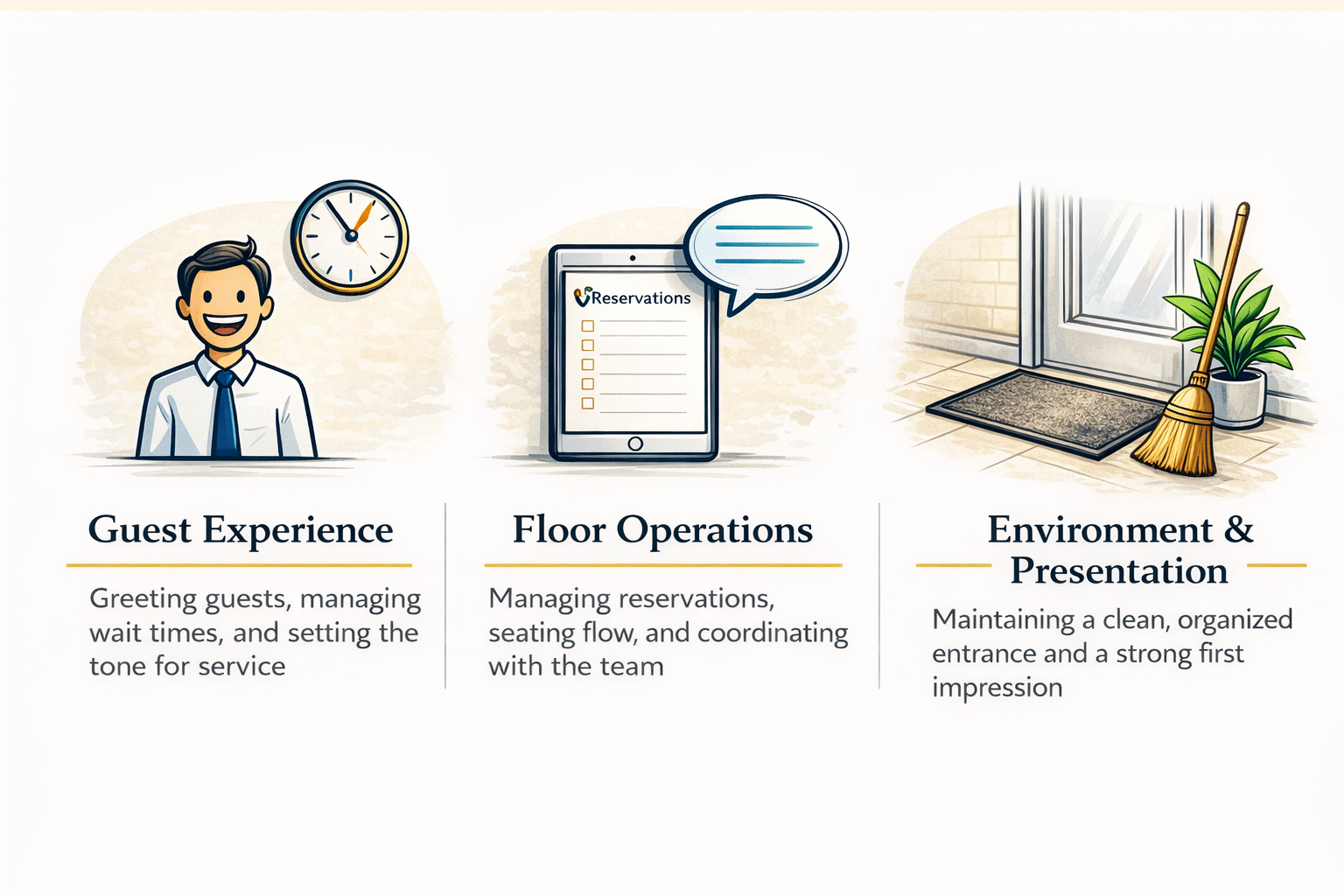
When you understand these different parts of the job, you can write better job descriptions, create training that actually sticks, and set clear expectations. It helps everyone, from managers to the hosts themselves, see just how critical the role is.
Guest-Facing Responsibilities
This is all about direct interaction. It is where the host sets the tone for the entire visit and makes people feel genuinely welcome, not just processed.
- Greeting and Welcoming Guests: This is not just a script. It is about making immediate eye contact, offering a real smile, and acknowledging every single person who walks in—even if you are on the phone. A quick nod lets a waiting guest know they have been seen, which makes all the difference.
- Managing Wait Times and Expectations: This is one of the toughest parts of the job. It demands giving honest wait-time estimates and clearly explaining how the waitlist works. When guests feel their time is respected, they are more patient. Offering alternatives, like a seat at the bar, can turn a potential negative into a great experience.
- Answering Phones and Inquiries: The host is the voice of your restaurant. They field calls for reservations, answer questions about the menu, and take messages for the management team. Every call is a chance to deliver hospitality.
Operational and Organizational Duties
These are the “air traffic control” tasks that keep the dining room from descending into chaos. A host who excels here coordinates all the moving parts to keep service smooth, maximize seating, and support the entire team.
They prevent servers from getting double-sat and overwhelmed, keep the kitchen from getting slammed with orders all at once, and ensure a steady, profitable flow of guests through the door. For instance, a sharp host knows which server just got a six-top and rotates the next party to another section to balance the workload. This kind of foresight is crucial for service quality and team morale. It is so vital, in fact, that it can make or break the efficiency of other roles, like your food runners. We dive deeper into that relationship in our guide on what a food runner does.
A great host’s work creates a domino effect of efficiency across the entire floor.
Key Operational Host Tasks
- Reservation and Waitlist Management: Whether using a digital system or an old-school chart, the host is in charge. They manage all the bookings, map out the seating for the night, and keep the waitlist organized and fair.
- Seating Guests Strategically: This is more than just walking people to an empty table. It is a constant mental calculation involving server rotation, table size, and guest requests. Smart seating directly impacts your table turnover rate and your servers’ income.
- Communication with Staff: The host stand is the central hub. They are the ones giving servers a heads-up on a new table, alerting a manager to a VIP or a guest issue, and checking in with bussers to know which tables will be ready next.
Environmental and Ambience Duties
Finally, the host is the gatekeeper of your restaurant’s atmosphere. They own the entrance and are responsible for making sure that the first physical impression is clean, organized, and inviting.
These might seem like small tasks, but they have a massive psychological impact. A tidy host stand, clean menus, and a clutter-free entryway tell guests that you care about the details. It signals that your entire operation is run with the same level of care, building trust from the second they step inside.
To give you a clearer picture, here is a quick breakdown of how these duties connect and what impact they have.
Key Host Responsibilities at a Glance
| Duty Category | Core Tasks | Impact on Restaurant |
|---|---|---|
| Guest-Facing | Greeting guests, managing wait times, and answering phones | Creates a positive first impression and sets the tone for the entire experience. |
| Operational | Managing reservations, strategic seating, and communicating with team | Maximizes revenue through efficient table turnover and prevents service bottlenecks. |
| Environmental | Maintaining a clean entryway, organizing the host stand, and ensuring menus are clean | Reinforces a perception of quality and care before the guest is even seated. |
This table shows how a host’s responsibilities are interconnected, each contributing to a smoother, more profitable, and more welcoming restaurant.
How to Hire an Exceptional Restaurant Host
Finding the right person for your host stand is more than just filling a spot on the schedule. You are hiring the face, the voice, and the first impression of your entire restaurant.
This role demands a unique blend of grace, organization, and split-second thinking. Hiring for personality and potential is the first step toward building a front-of-house team that keeps guests happy and the dining room running like a well-oiled machine. It starts with how you frame the job from the very beginning.
Writing a Job Description That Attracts Talent
A compelling job description is your best filter for finding great candidates. It needs to be clear, specific, and a genuine reflection of your restaurant’s culture. Do not just list tasks; paint a picture of what success looks like on your floor.
To get the right people to apply, your job description should detail:
- The Real Mission: Frame the role around its impact. Think “orchestrating a seamless guest experience from arrival to departure,” not just “greeting guests.”
- Key Responsibilities: Go beyond the obvious. Include strategic duties like “managing table turnover to support server success” and “communicating wait times with transparency and empathy.”
- Essential Soft Skills: List the traits that cannot be taught. “Poise under pressure,” “proactive problem-solving,” and “exceptional communication” are what separate the good from the great.
When you are clear about what you need, you attract candidates who are actually wired for the job’s demands. For more tips on where to get your job description seen, check out our guide on the best hospitality job boards.
Identifying the Right Skills and Personality
While anyone can learn to use a reservation system, the crucial soft skills of a host are much harder to train. Your goal during the interview is to uncover a candidate’s innate personality and how they think on their feet. Always hire for attitude and train for aptitude.
The demographic for hosts often skews young. Data from 2023 shows the median age for a host is just 22, and 82.7% of the workforce is made up of women. You can find more of these insights on Data USA’s host profile. This points to an energetic, often entry-level talent pool eager for experience. Your hiring process should appeal to this group by highlighting growth opportunities and the valuable skills the role offers.
To uncover these traits, you need to ask questions that get past the standard, rehearsed answers. This is where behavioral interview questions become your best tool for seeing how a candidate really thinks.
Behavioral Interview Questions for Hosts
These questions are designed to reveal a candidate’s true character and competence under pressure.
- Tell me about a time you had to manage a guest’s frustration over a long wait. How did you handle it? (Tests empathy and communication)
- Describe a busy shift where you had to juggle ringing phones, a line of guests, and requests from servers. How did you prioritize? (Tests multitasking and grace under pressure)
- Give an example of a time you noticed a potential problem before it happened and took steps to prevent it. (Tests proactive thinking)
- What would you do if a server complained they were being skipped in the seating rotation? (Tests teamwork and conflict resolution)
By focusing on these areas, you can pinpoint the candidates who have the core qualities of an exceptional host. They are the ones who will not just do the job—they will elevate the entire guest experience.
Training Your Host for a High-Performing Front Desk
Hiring a host with a great personality is a solid start, but it is only half the battle. The real work begins with training.
Building a Comprehensive Onboarding Program
Your goal is to give your host the tools and know-how to handle any curveball with grace.
Here are the absolute essentials:
- Technology Mastery: Your host needs to be fluent in your restaurant’s tech stack. This means hands-on practice with your reservation software and POS system until they can manage bookings, update table statuses, and pull up guest notes without even thinking about it.
- Communication Protocols: You have to define how the host communicates with every single person they interact with. This means crystal-clear guidelines for talking to guests, servers, bussers, and managers, ensuring information flows smoothly across the floor without a single dropped ball.
- Role-Playing Scenarios: Confidence is built through practice, not just by watching someone else do the job. For a host, role-playing is one of the most powerful training tools you have.
The Daily Host Checklist for Consistency
A daily host checklist ensures that all core restaurant host duties get done consistently every shift, no matter who is working.
A good checklist is broken down by shift:
- Opening Duties: Check the day’s reservations, review any special guest notes, make sure menus are clean and stocked, and confirm the host stand is tidy and ready for service.
- Mid-Shift Duties: Do regular bathroom checks, keep lines of communication open with servers about table status, and keep the entrance clean and uncluttered.
- Closing Duties: Tidy the host stand for the next shift, print any reports your manager requires, and pass on any important notes from the shift in a logbook or directly to the closing manager.
Answering Your Top Questions About Restaurant Host Duties
Here are some answers to the questions that always come up for operators and managers.
What is the most important skill for a restaurant host?
If you can only hire for one thing, hire for grace under pressure. Everything else can be taught. The host stand during a Saturday night rush is a pressure cooker of ringing phones, a line out the door, and servers firing off questions.
A great host juggles it all with a calm, welcoming vibe that tells every guest, “We have got this.” This ability to stay composed and prioritize on the fly directly shapes how guests feel about your entire restaurant before they even taste the food.
When you are interviewing, forget hypotheticals. Lean into behavioral questions. Ask them to tell you about a time they handled a truly high-stress situation. Their story will tell you more about their composure than anything else you could ask.
How can I motivate hosts in a lower-paying role?
You cannot just pay a host to care. While fair pay is the foundation, true motivation in this role comes from opportunity, empowerment, and feeling like a respected part of the team. An engaged host does not just greet people; they own the guest experience.
Here are four ways to keep your hosts genuinely motivated:
- Offer a Fair Tip-Out: Make your tip-sharing structure clear, fair, and consistent from day one.
- Create a Clear Path for Growth: Frame the host position as the first step on a career ladder, not a dead-end job.
- Empower Them with Ownership: Give your hosts real control over the door. Ask for their input on seating strategies, waitlist tech, and managing the flow of the floor.
- Recognize Excellent Performance: Never underestimate the power of saying “great job.” Publicly acknowledging a host for expertly handling a tough guest or for a positive mention in an online review is a massive morale booster.
What technology is essential for a modern host stand?
Pen and paper just cannot keep up anymore. The right tech turns your host from a reactive greeter into a proactive floor general, making the entire restaurant run smoother and smarter.
The single most critical tool is a digital reservation and table management system. Platforms like OpenTable, Resy, or Tock are game-changers. They automate waitlists, manage online bookings, track table status in real-time, and store guest notes that help your team deliver truly personal service.
Beyond that, here is what every modern host stand needs:
- A reliable cordless phone or headset so they can move and talk without being tethered to the desk.
- A tablet with a team communication app, for silent, instant communication with managers or the kitchen.
- An organized and fully stocked station with fresh menus, business cards, and any other materials guests might need. No frantic searching.
How should a host handle complaints about a long wait?
Handling a complaint about a long wait is a masterclass in empathy. The goal is not to win an argument; it is to make the guest feel heard, respected, and cared for, even when things are running behind.
Train your hosts on a simple, three-step model: Acknowledge, Apologize, and Act.
- Acknowledge Their Frustration: First, just listen. Let them vent without interrupting. A simple, “I completely understand. Waiting longer than you were told is really frustrating,” shows you are on their side.
- Offer a Sincere Apology: Next, give a real apology. No excuses. “I am so sorry we are running behind schedule tonight” shows accountability and diffuses tension immediately.
- Act to Make It Right: Finally, give them a solution. Provide a new, realistic wait time. If you can, offer a small gesture, like suggesting they grab a drink at the bar and assuring them you will personally come get them the second their table is free.
This approach turns a negative moment into a chance to prove that your team is committed to great hospitality, no matter what.
Building a high-performing front-of-house team starts with hiring the right people and giving them the systems to shine. At MAJC✨, we provide the resources, training, and community support to help you build a stronger, more skilled, and more engaged hospitality team. From expert-led workshops to comprehensive onboarding systems, we help you turn every role, from host to manager, into a powerhouse for your business. Learn more at majc.ai.