

A busy service exposes weak knife work fast. Uneven cuts lead to inconsistent cooking, sloppy presentation, and wasted product.
That’s why the different types of vegetable cuts matter. In a working kitchen, they define cooking time, consistency, and how easily one cook can match another across shifts.
They also impact labor and food cost. Poor knife work slows prep, reduces yield, and increases waste, especially in high-volume kitchens. That’s why cut standards belong in the same conversation as restaurant food waste reduction systems.
This guide breaks down 10 essential cuts every chef and prep team should standardize to improve consistency, speed, and overall kitchen performance
1. Paysanne Cut
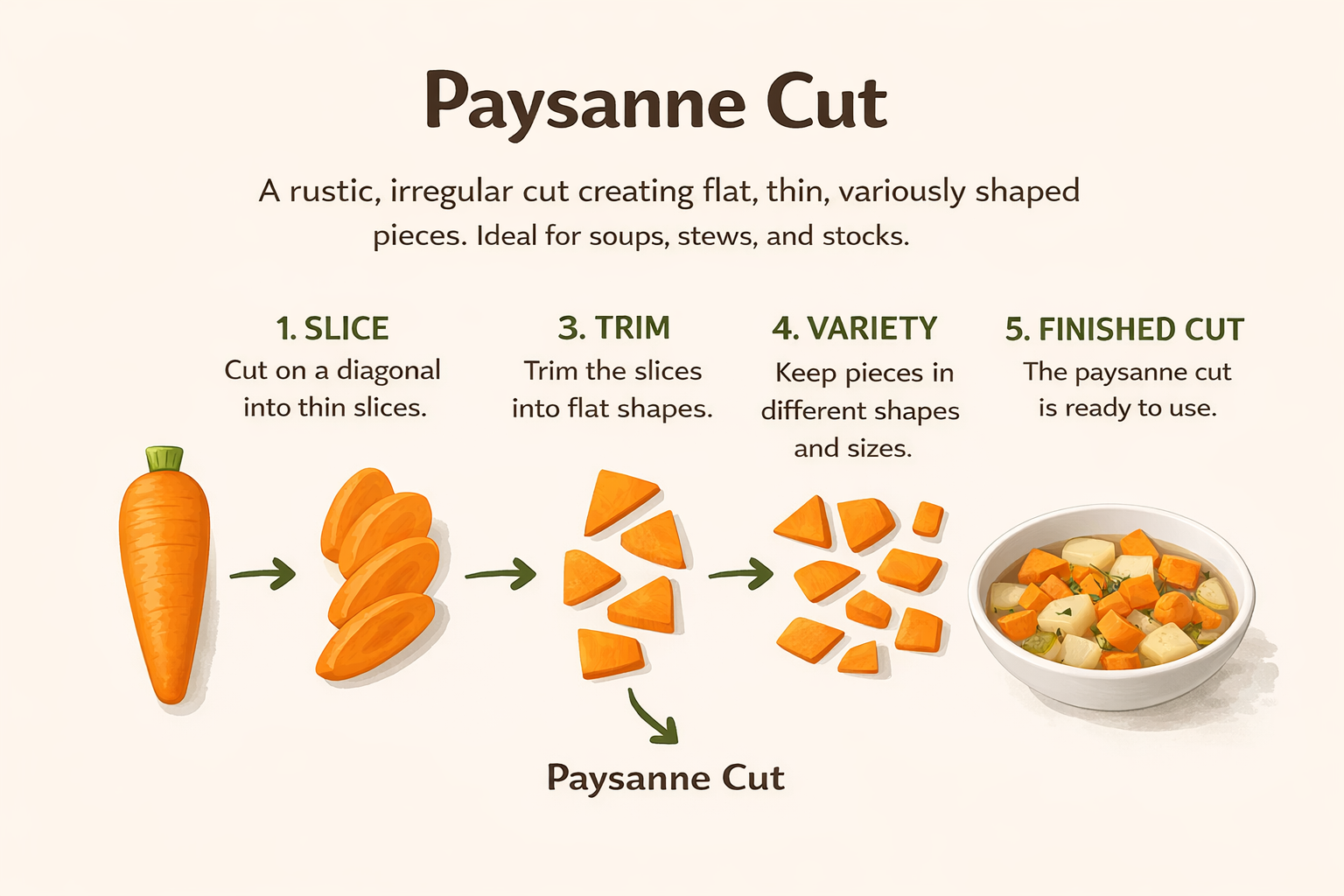
Paysanne is a thin, flat cut, usually square, round, or triangular, depending on the vegetable. It’s considered rustic, but it still needs to be consistent enough to cook evenly.
That distinction matters. “Rustic” doesn’t mean careless. The pieces don’t need to be identical, but they should be uniform in thickness so they cook at the same rate.
Where it works best
Paysanne is commonly used for soups, braises, and casual vegetable sides where you want a natural look without sacrificing consistency. It’s especially useful for high-volume prep where speed and control matter more than precision cuts.
Practical rule:
Paysanne should look rustic on purpose, not rough by accident.
2. Batonnet Cut
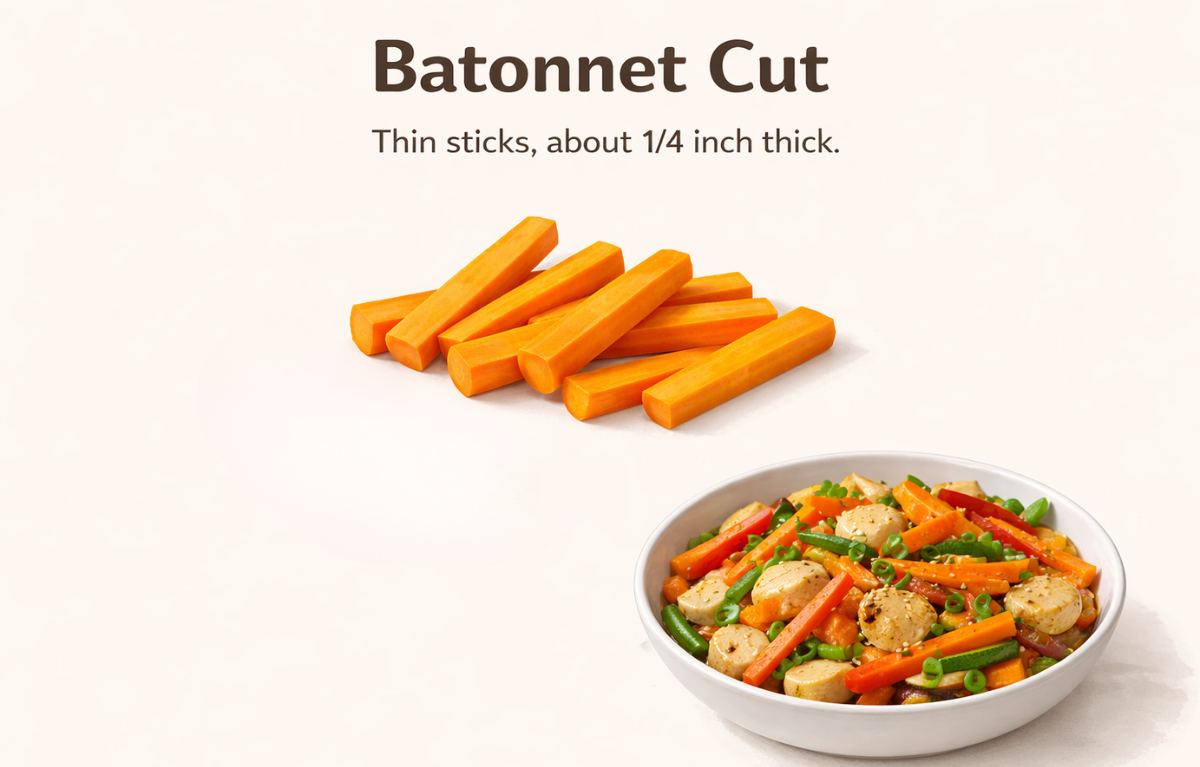
Batonnet is a medium-sized stick cut, thicker than julienne but still clean and structured. It’s commonly used for fries, vegetable sides, and garnishes where both presentation and even cooking matter.
The value of batonnet is consistency under heat. When pieces are uniform, they cook at the same pace, whether you’re roasting, frying, or glazing. When they’re not, service slows down as cooks compensate with longer holds or sorting.
To get clean batonnet cuts, start with proper setup: trim a flat side, square the vegetable, cut even planks, then turn those into sticks. Skipping this sequence usually leads to uneven pieces and unnecessary waste.
Where it works best
Batonnet is ideal for potatoes, carrots, zucchini, and other vegetables that need a defined shape without the precision of finer cuts.
Practical rule:
Uniform sticks = consistent cooking. If the first cuts are off, the whole batch will be.
3. Small, Medium, and Large Dice
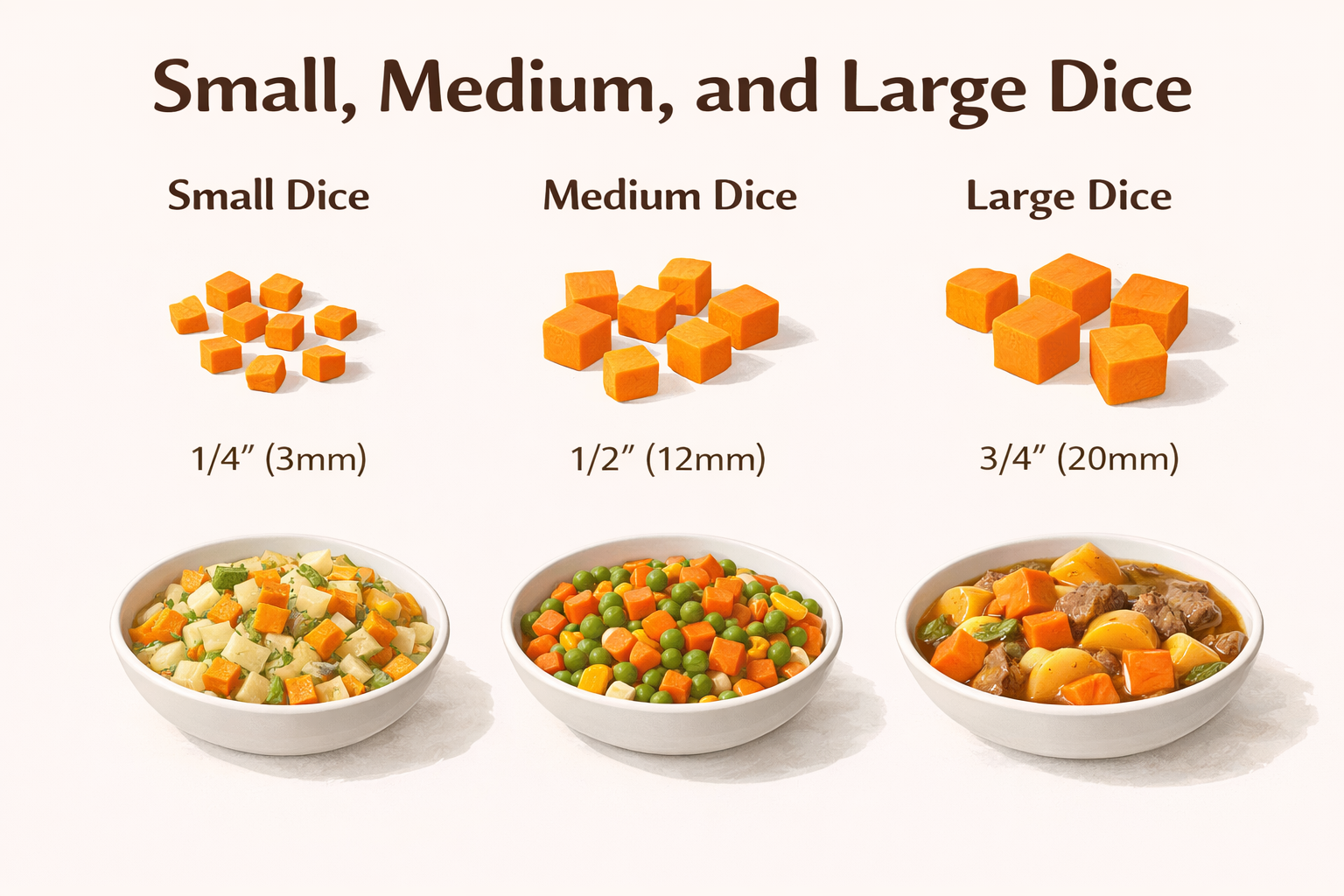
Dice cuts are all about size and purpose. Small, medium, and large dice each serve a different role depending on how the vegetable should cook and appear in the final dish.
Consistency is what makes these cuts work. When the size matches the application, cooking time stays predictable and textures stay balanced. When it doesn’t, dishes become uneven and harder to control during service.
To get clean dice cuts, start by squaring the product, then cut even planks, sticks, and finally cubes. Skipping that sequence usually leads to uneven pieces and extra rework.
Where it works best
- Small dice: fillings, relishes, condiments, and fast-cooking applications
- Medium dice: soups, sautéed vegetables, and everyday prep
- Large dice: roasting, stews, and dishes where the vegetable should hold its shape
Practical rule:
Match the dice size to the dish. Smaller for speed and integration, larger for structure and presentation.
4. Julienne Cut
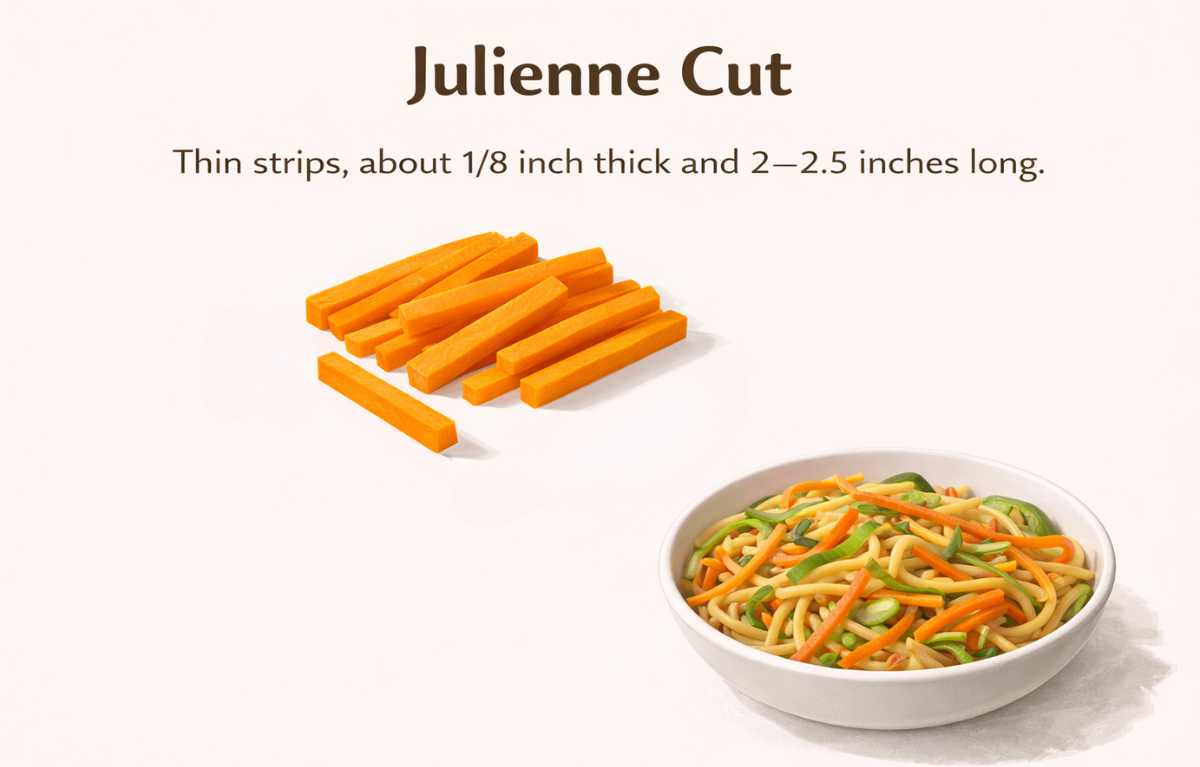
Julienne is a thin, matchstick-style cut. The strips are long, fine, and uniform, designed to cook quickly while maintaining a clean, precise look.
This cut is highly sensitive to consistency. If the pieces vary too much, thinner strips will overcook before thicker ones are ready, affecting both texture and presentation.
To achieve a clean julienne, start by trimming and squaring the vegetable, then cut even planks and slice them into thin, consistent strips. Skipping this setup usually results in uneven cuts that behave more like a rough shred.
Where it works best
Julienne is commonly used for salads, slaws, stir-fries, quick sautés, and garnishes where fast cooking and visual precision matter.
Practical rule:
Thin and uniform. If the cuts are inconsistent, the dish will show it immediately.
5. Brunoise Cut
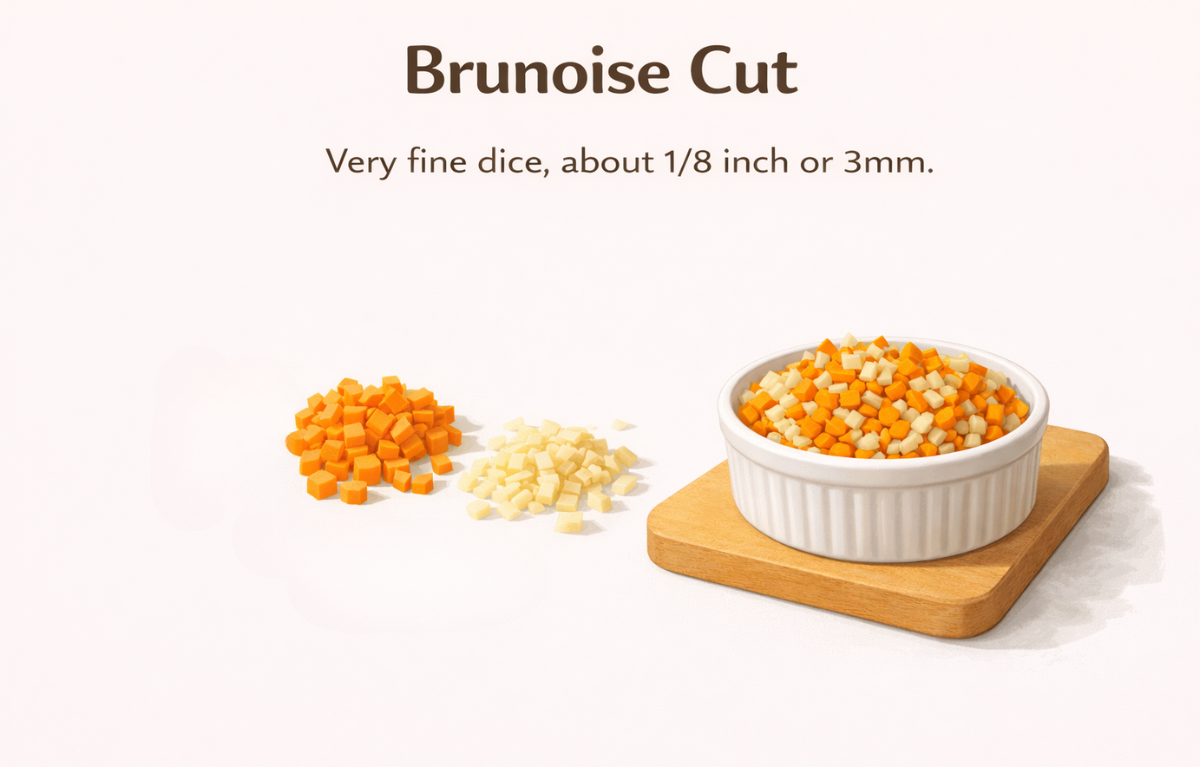
Brunoise is a very fine dice made from uniform julienne. The goal is small, even cubes that cook quickly and create a clean, precise finish on the plate.
This cut demands consistency. If the size varies, smaller pieces overcook while larger ones stand out, affecting both texture and presentation.
To achieve a proper brunoise, start with a clean julienne, then cut it into even cubes. Skipping that foundation leads to uneven results and extra rework.
Where it works best
Brunoise is used for refined garnishes, relishes, and sauces where small, uniform pieces improve texture and presentation. It’s especially effective in clear soups, composed plating, and finishing elements where precision is visible.
Practical rule:
Use brunoise when precision shows on the plate. If the cut won’t be seen or felt, the extra labor usually isn’t worth it.
6. Mincing
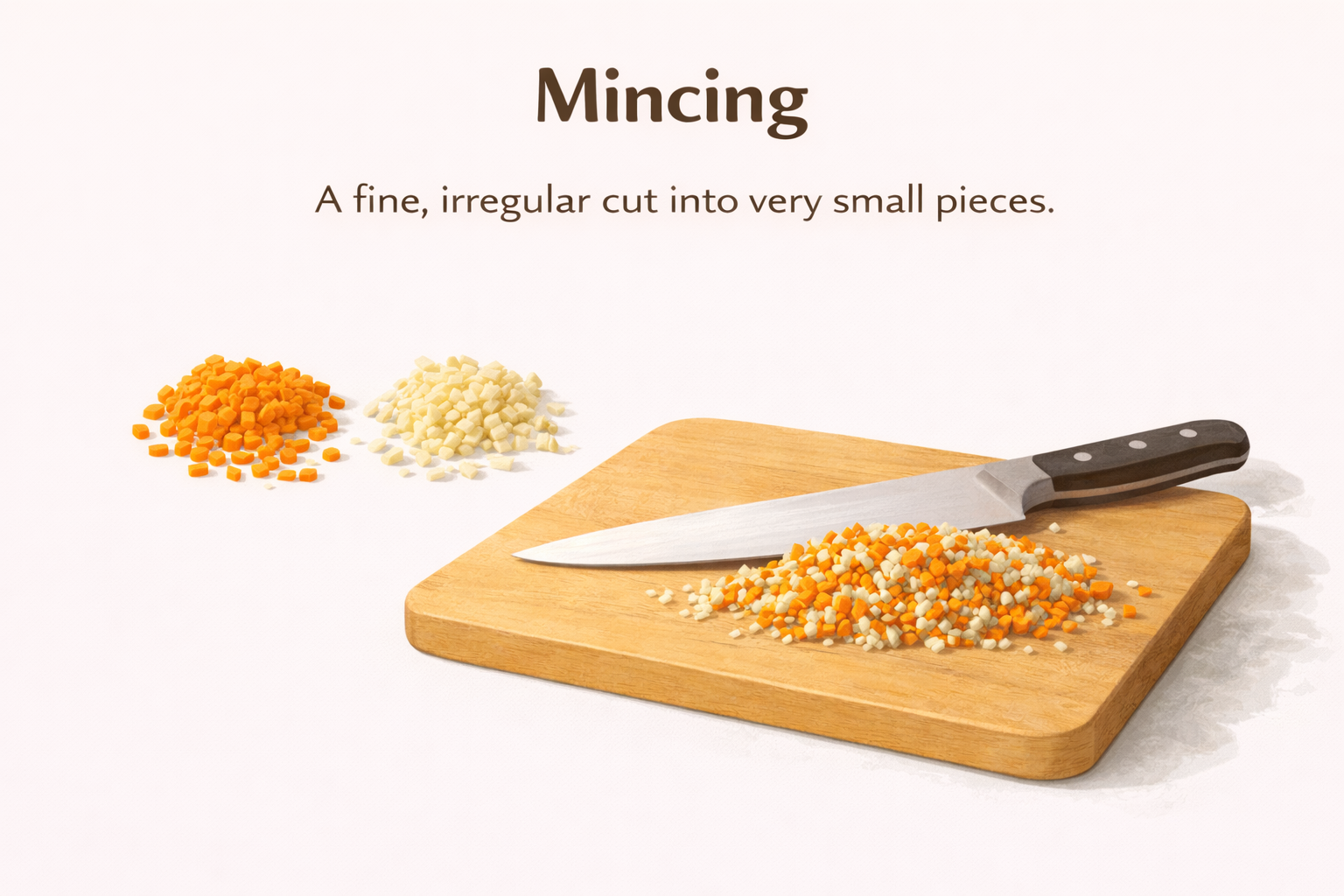
Mincing is a fine cut used to release flavor quickly and evenly. The goal is small, consistent pieces that blend into a dish without leaving noticeable chunks.
This cut needs to match the ingredient and the application. Garlic for sautéing can be slightly larger so it doesn’t burn immediately. Shallots for sauces and vinaigrettes should be finer so they melt into the liquid. Ginger should be cut across the fiber before mincing to avoid a rough texture.
Consistency matters. If the mince is uneven, some pieces will overcook while others remain too sharp, creating an unbalanced result.
Where it works best
Mincing is used for garlic, shallots, ginger, and herbs in sautés, dressings, marinades, sauces, and finishing oils where fast, even flavor distribution is essential.
Practical rule:
Match the fineness of the mince to the cooking time. Faster cooking needs finer cuts, longer cooking allows for slightly larger pieces.
7. Chiffonade Cut
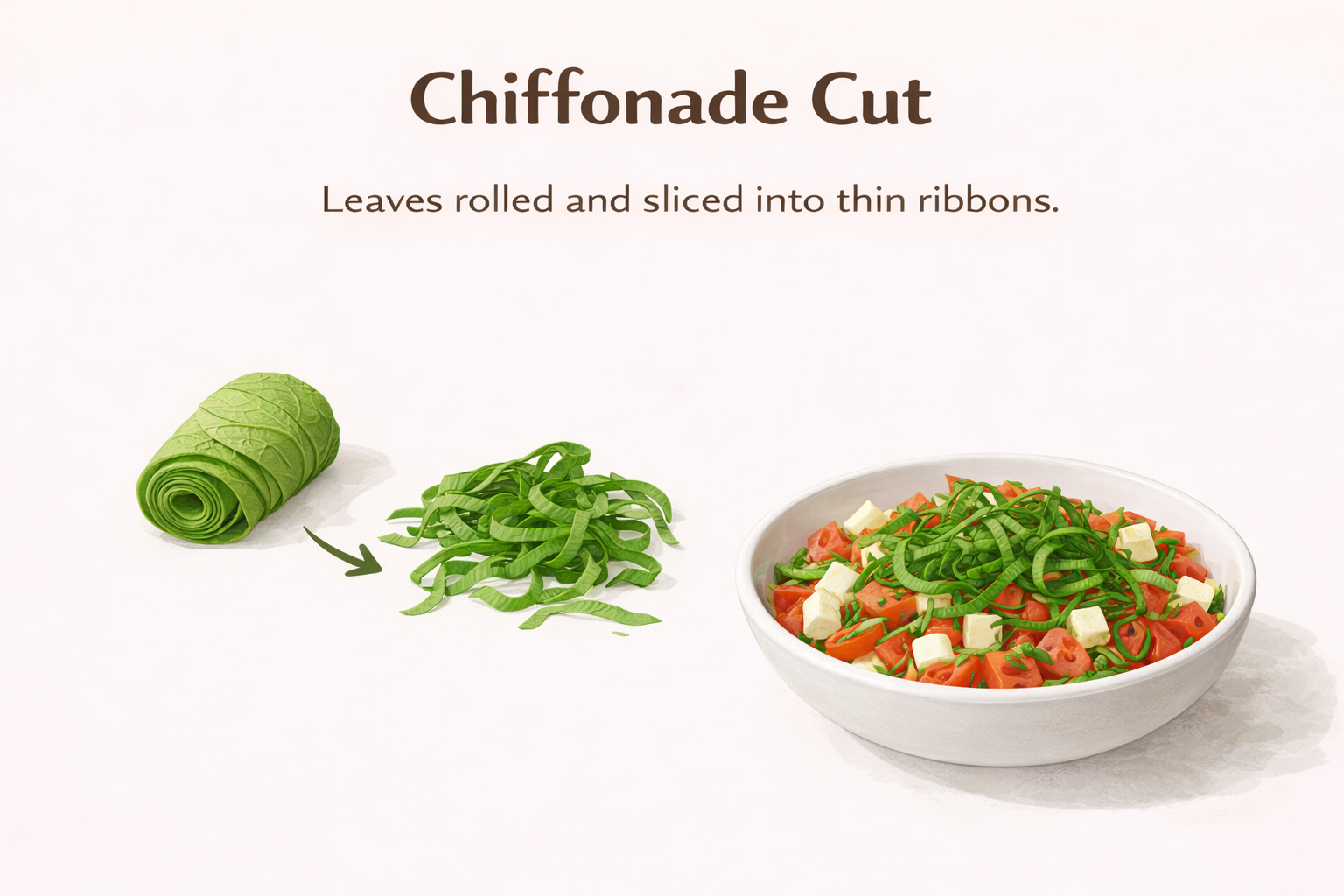
Chiffonade is a thin ribbon cut used for leafy herbs and greens like basil, mint, and spinach. The leaves are stacked, rolled lightly, and sliced into fine strips.
This cut is less about difficulty and more about timing and product handling. Delicate herbs bruise and oxidize quickly, so chiffonade should be done as close to service as possible.
To get clean ribbons, use dry leaves, a sharp knife, and light pressure when rolling. Too much moisture or a dull blade will crush the leaves instead of cutting them cleanly.
Where it works best
Chiffonade is used for herbs and greens in salads, garnishes, pasta, and finishing touches where color, aroma, and visual consistency matter.
Practical rule:
Cut chiffonade as late as possible. If it sits too long, it loses color, texture, and impact on the plate.
8. Bias or Slant Cut
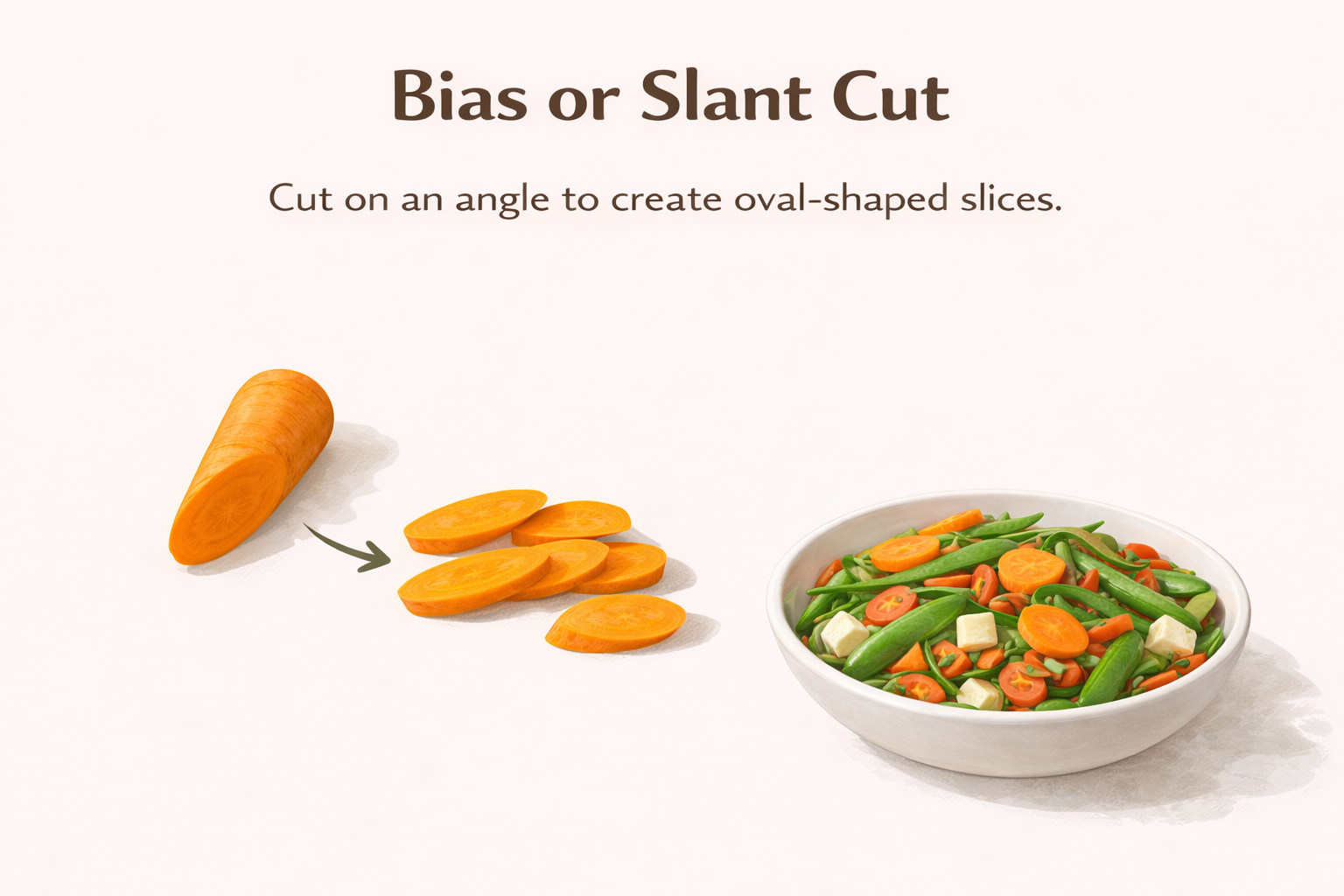
The bias cut is made by slicing a vegetable on an angle instead of straight across. This creates longer, wider pieces that look more polished on the plate.
The angled cut also increases surface area, which helps vegetables cook faster and absorb more flavor from sauces.
Consistency is key. If the angle or thickness changes from slice to slice, the pieces will cook unevenly and lose their visual impact.
Where it works best
Bias cuts are commonly used for stir-fries, sautéed vegetables, blanched greens, and garnishes where shape and presentation matter without adding extra prep time.
Practical rule:
Keep the angle and thickness consistent. The visual impact comes from uniformity, not complexity.
9. Oblique Cut Roll Cut
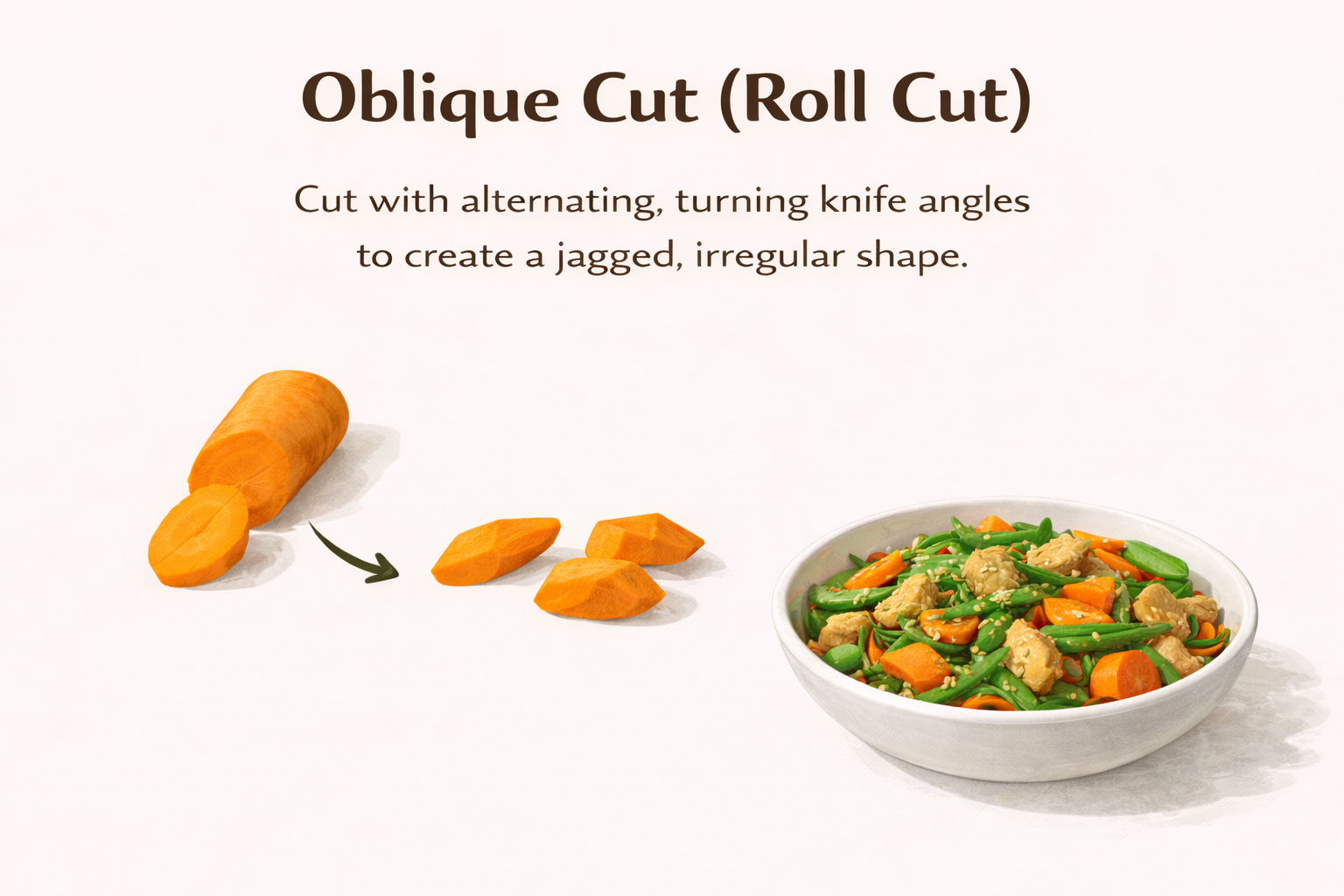
The oblique, or roll cut, is made by cutting a vegetable on an angle, then rotating it slightly between each slice. This creates irregular but consistent pieces with more surface area than straight cuts.
This cut is useful because it balances consistency with a more natural look. The angled faces help vegetables brown evenly, absorb sauces, and hold glaze better during cooking.
Control is key. If the angle or the rotation changes too much, the pieces will vary in size and cook unevenly.
Where it works best
Oblique cuts are commonly used for carrots, zucchini, daikon, and other long vegetables in stir-fries, braises, roasted vegetable dishes, and salads where both texture and presentation matter.
Practical rule:
Keep a steady angle and rotation. Consistency in movement creates consistency on the plate.
Turning Knife Skills into Consistency
Knife skills don’t just affect prep. They shape cooking time, consistency, and how reliably a kitchen performs under pressure.
When cuts are standardized, everything improves. Vegetables cook evenly, sauces develop more predictably, and service runs smoother because cooks aren’t compensating for inconsistent prep.
Consistency also impacts cost. Uneven cuts lead to overtrimming, waste, and inconsistent yields, especially with high-sensitivity products like herbs, greens, and root vegetables.
The goal is simple: define clear standards for each cut and make them repeatable across the team. When everyone is working toward the same target, prep becomes faster, easier to manage, and far more consistent from shift to shift.
MAJC✨ helps operators turn skills like these into repeatable systems. If you want practical training, certification pathways, operator-tested templates, and a community built by people who’ve run hospitality businesses, explore MAJC.AI. It’s a smart place to sharpen your team, strengthen your hiring, and build a kitchen that performs consistently under pressure.