


A food runner is the person who makes sure the perfect dish a chef just plated gets to the guest’s table exactly how it was meant to be. This job is so much more than just carrying plates; it is about quality control, tight communication, and keeping the entire service running on beat.
The Unsung Hero of the Dining Experience
Before we get into the nitty-gritty of daily tasks, let’s be clear: Every great restaurant has an unsung hero working behind the scenes. In the dining room, that person is very often the food runner. They are the central nervous system connecting the kitchen (Back of House) to the dining room team (Front of House).
That connection is what keeps a service from falling apart. A sharp food runner controls the rhythm of the night, catching mistakes before they happen and making sure two high-pressure environments work together as one.
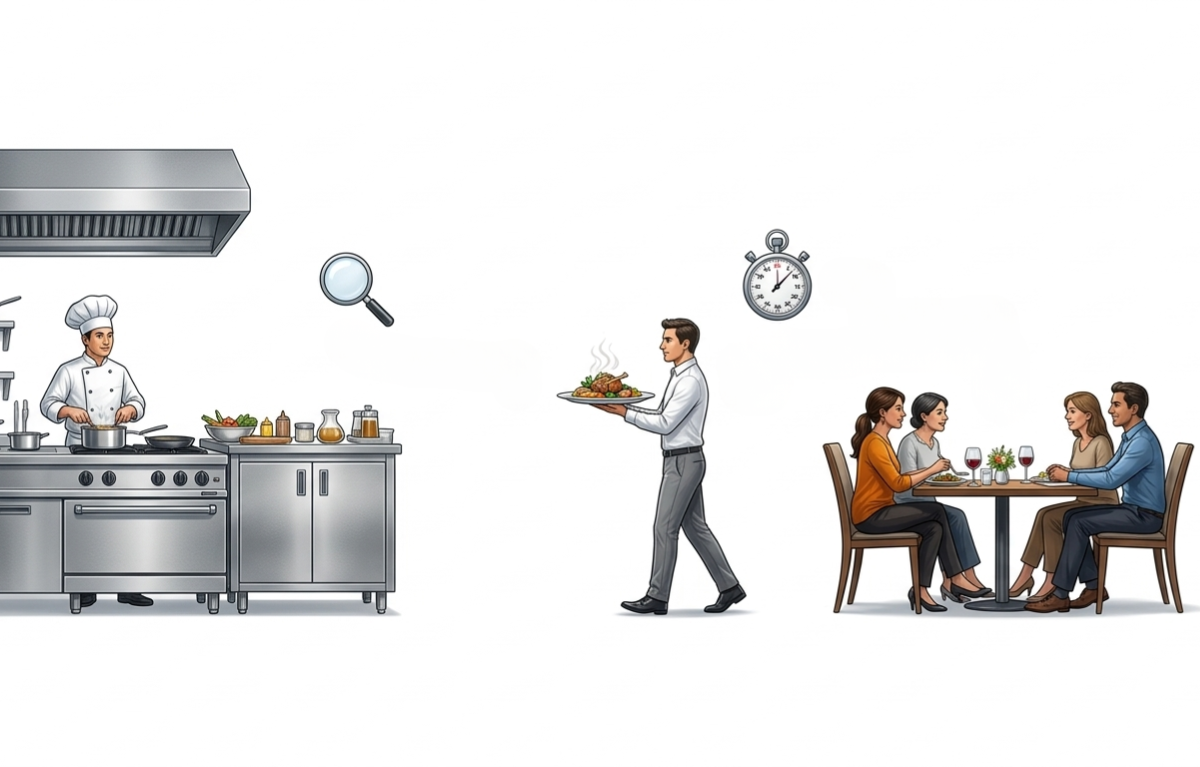
The Final Quality Checkpoint
Think of the food runner as the last line of defense for every single plate leaving the kitchen. They have a trained eye for spotting imperfections, double-checking order accuracy, and ensuring the presentation is up to your standards. This final check has a direct impact on the entire guest experience:
- Food Quality: By hustling dishes out immediately, runners make sure hot food arrives hot, cold food stays cold, and every bite is fresh. No more sad, lukewarm fries.
- Service Speed: When runners are on their game, servers can spend more time with guests instead of getting stuck waiting at the pass. This means faster table turns and a smoother flow for everyone.
- Guest Satisfaction: Accurate orders delivered on time make for happy guests. It’s that simple. This role is all about preventing the little errors that lead to big complaints.
To put it in perspective, let’s look at how a food runner’s duties directly shape the flow of service.
The Food Runner Role at a Glance
| Core Responsibility | Key Action | Impact on Operations |
|---|---|---|
| Food Delivery & Quality | Delivers dishes promptly from the kitchen to the correct table and guest. | Ensures food arrives at the ideal temperature, improving guest satisfaction and meal quality. |
| Order Accuracy | Verifies each plate against the ticket for accuracy and special modifications. | Dramatically reduces order errors, preventing recooks and comps that hurt the bottom line. |
| Kitchen-Server Liaison | Communicates kitchen updates (like an “86’d” item) to the FOH team. | Keeps servers informed, preventing them from selling items that are not available. |
| Table & Guest Support | Assists with clearing plates, refilling drinks, and answering basic guest questions. | Frees up servers to focus on taking orders and building guest relationships, increasing check averages. |
A Role with Massive Impact
The need for skilled support staff is a cornerstone of the modern restaurant. According to research from Zippia updated in early 2025, there were over 1,500,469 food runners employed across the United States. This massive workforce confirms that the position is not just a temporary fix, but a crucial link in the chain of professional hospitality.
With such high demand across the country, particularly in major hubs like New York and Miami, the food runner’s true value is clear.
A Day in the Life of a Food Runner
To understand the role, you have to look past the job description and step onto the floor during a rush. A runner’s world is a blur of speed and precision, acting as the final guardian of the kitchen’s hard work before it reaches the guest.
The Foundation: Pre-Shift Prep
Efficiency starts before the first ticket prints. This phase isn’t just busywork; it’s the groundwork for a seamless service. Key duties include:
-
Stocking & Polishing: Ensuring stations are “locked and loaded” with polished silverware, napkins, and condiments so the presentation is flawless.
-
Finalizing Garnishes: Organizing finishing touches with the kitchen to ensure plates are completed and sent out in seconds.
-
Menu Intelligence: Attending the pre-shift meeting to track daily specials, menu changes, and “86’d” items.
Navigating the Rush: The “Pass” and Beyond
Once service hits full throttle, the runner becomes the critical link between the kitchen’s heat and the dining room’s calm. Their command center is the pass, where attention to detail prevents costly errors.
-
Proactive Quality Control: Before a plate moves, the runner confirms the cook on a steak, verifies sides, and ensures special requests (like “no butter”) are honored. Spotting an error here saves a guest complaint later.
-
Masters of Logistics: For large parties, runners don’t grab plates at random. They organize trays by mapping dishes to seat numbers, ensuring a swift, silent, and effortless delivery.
-
The Final Touch: At the table, they announce each dish clearly, “Here is the pan-seared salmon”, confirming the guest’s choice and adding a final layer of hospitality to the chef’s hard work.

How to Hire and Train an Exceptional Food Runner
Finding the right food runner is not about scanning for a long list of restaurant jobs on a resume. This role is a fantastic entry point into hospitality, so what you’re really looking for is raw talent, attitude, and aptitude. The best candidates have a natural sense of urgency, an almost obsessive attention to detail, and a knack for proactive communication.
Think of it this way: a great food runner is always one step ahead. They are the person who spots a wobbly table while delivering an appetizer or notices a four-top needs water refills before the server even has a chance to ask.
Crafting the Right Job Description
Your job description is your first filter. Do not just list tasks; describe the impact you want the person to have. This simple shift frames the role as a vital part of the team’s success, not just a pair of hands to carry plates.
For example, instead of “Carries food to tables,” try something like, “Ensures every dish arrives at the guest’s table upholding the chef’s presentation standards and ideal temperature.” This language attracts people who take genuine pride in their work. If you need more tips, check out our guide on how to write a job description that pulls in top-tier candidates.
A well-crafted job description helps you find candidates who understand that what a food runner does is about quality and precision, not just speed.
Once you have a few promising candidates, focus the interview on situational questions. Ask how they would handle a crazy rush when multiple orders are up at once. Or what they would do if they noticed a mistake on a plate just as they were leaving the kitchen. Their answers will tell you everything you need to know about their problem-solving skills and ability to stay cool under pressure.
The Skills That Separate Good from Great
A successful food runner needs a blend of technical know-how and natural people skills. The hard skills can be taught, but the soft skills are often what make someone a true asset to your team.
Here’s a quick checklist of what to look for:
Essential Food Runner Skills Checklist
| Skill Category | Essential Skill | Example in Action |
|---|---|---|
| Hard Skills | Menu Knowledge | Instantly identifying the Seared Scallops vs. the Pan-Fried Halibut by sight, including garnishes. |
| Hard Skills | Plate Carrying/Balance | Confidently carrying three or four hot plates through a crowded dining room without a single spill. |
| Hard Skills | Table & Seat Numbers | Knowing exactly where seat three at table 42 is without hesitating, even during a slammed Saturday night service. |
| Soft Skills | Attention to Detail | Noticing a smudge on a plate rim before leaving the pass and wiping it clean. |
| Soft Skills | Communication | Clearly and concisely announcing each dish to the guest (“Here is your medium-rare filet mignon…”). |
| Soft Skills | Sense of Urgency | Moving with purpose and efficiency, understanding that a 30-second delay can turn a hot dish into a lukewarm one. |
| Soft Skills | Teamwork | Asking a server, “What can I help you clear?” during a moment of downtime instead of waiting to be told. |
Finding someone with a good mix of these skills is the goal. Remember, you can teach someone table numbers, but you cannot easily teach them to have a sense of urgency.
Structuring a Winning Onboarding Program
High turnover is the industry’s biggest headache. A structured onboarding program is your best defense, transforming a new hire into a long-term asset from day one.
Your Onboarding Checklist: To build a high-performing runner, break training into these focused, actionable pillars:
-
Spatial Mastery: Conduct a full tour focused on table numbers, seat positions, and optimized routes from the kitchen pass. A runner should never have to ask where a table is.
-
Menu & Presentation Deep Dive: Beyond reading a menu, have them shadow the chef. They must identify plates by sight and know every key allergen and presentation standard.
-
Communication Drills: Role-play specific kitchen lingo (e.g., “hands,” “all-day” counts) to ensure they can communicate effectively under pressure.
-
Service Protocols: Standardize how they approach tables and announce dishes. Clear communication with guests and the FOH team prevents service bottlenecks.
-
The Shadowing Flip: Move from shadowing a top performer to “reverse shadowing,” where the trainee leads the service while a trainer provides real-time feedback.
The Result: This structured approach replaces first-week overwhelm with empowerment, signaling to your team that you are invested in their professional growth.
Chart a Path for Growth, Not Just a Paycheck
Hiring a food runner to simply “fill a hole” in the schedule is a band-aid solution. To build a team that sticks, you must show them a future. Transforming this entry-level role into a deliberate stepping stone creates an internal talent pipeline that saves you thousands in recruiting costs.
Measure What Matters (KPIs)
Vague instructions like “be faster” don’t work. Use specific metrics to track performance and reward excellence:
-
Ticket-to-Table Time: The ultimate measure of speed. Tracking how long a dish sits at the pass ensures food arrives hot.
-
Order Accuracy Rate: Minimizing missing sides or incorrect modifications directly reduces food waste and comps.
-
Internal Feedback: A runner’s value is often reflected in how much they ease the workload for servers and chefs.
Build a Career Ladder, Not a Dead End
The food runner role is the best training ground in the building. They master the menu, the floor plan, and the kitchen’s pace, knowledge that is pure gold for future leaders.
A Sample Progression Path:
-
Food Runner to Server: Their product knowledge makes them more effective than any outside hire.
-
Server to Lead or Bartender: Developing leadership skills through increased responsibility.
-
Lead to Management: Promoting from within creates leaders who understand the restaurant’s DNA.
Investing in these paths builds a culture where hard work is rewarded, giving you a massive edge in a competitive hiring market.
The Financial Impact of a Great Food Runner
It is surprisingly easy to connect the dots between a skilled food runner and your restaurant’s bottom line. While the role comes with an hourly wage and a piece of the tip pool, a great runner is not just another line item on your P&L. They are a high-return investment in service quality, operational speed, and ultimately, profitability.
Boosting Revenue One Table at a Time
Think of an exceptional food runner as a force multiplier for your servers. By owning that final, critical step of getting food to the table, they free up servers to do what actually generates revenue: connecting with guests, taking more orders, and upselling.
The financial benefits are direct and measurable:
- Faster Table Turns: A quick, efficient runner shaves precious minutes off every table’s dining time. Just one extra table turn per night in a single server’s section can add thousands of dollars in revenue over the course of a year.
- Increased Server Capacity: When servers are not stuck waiting at the pass for plates to come up, they can comfortably handle an additional table. This gives them the bandwidth to focus on suggestive selling, recommending that second bottle of wine or a round of signature desserts, which directly drives up your average check size.
Reducing Costs by Preventing Mistakes
Every mistake that leaves the kitchen costs money. It might be a comped meal, wasted ingredients from a recook, or the lingering damage of a negative online review. A food runner with a sharp eye for detail is your last line of defense against these costly, preventable errors.
Let’s run the numbers. Imagine a runner catches just three order mistakes a week, a wrong side, a missing modifier, or an incorrect temperature on a steak. If the average cost of recooking and comping that dish is $15, those catches save the restaurant $45 a week.
Over a year, that single, detail-oriented runner saves the restaurant over $2,300 just by catching simple mistakes before they ever reach the guest. That figure does not even account for the invaluable goodwill they preserve by making sure guests get exactly what they ordered, hot and fresh, every single time. Their diligence directly protects both your profit margins and your reputation. This is why knowing what a food runner does is so critical for a healthy business.
A Few Common Questions
If you are still figuring out where a food runner fits into your operation, you are not alone. Here are a few of the most common questions operators and managers ask about this role.
How Should Food Runners Be Compensated and Tipped Out?
Most restaurants pay food runners a base hourly wage and a cut of the tip pool. A pretty standard model is to give the runner 1% to 3% of total food sales or 5% to 10% of the servers’ total tips for the shift.
There is no single right answer, though. The best structure really depends on your service style and volume. The goal is to build a system that feels fair and recognizes their contribution to the team; that is what keeps everyone motivated and working together.
How Long Does It Take to Properly Train a New Food Runner?
You can get a new food runner comfortable with their core duties in about one to two weeks. That initial period is all about focused, on-the-job training: learning the restaurant layout, table numbers, menu inside and out, and how to communicate clearly with the kitchen and servers.
But true mastery? That takes a little longer. Getting to the point where they can anticipate the kitchen’s rhythm and handle a chaotic rush without breaking a sweat usually takes one to three months. A solid onboarding plan is the best way to speed this up and boost their confidence for the long haul.
A structured training plan shows new hires you are invested in their success from day one. That alone can make a huge difference in retention and performance.
Is a Food Runner Necessary for a Small Restaurant?
For a high-volume spot, a food runner is a no-brainer. But for smaller or fast-casual restaurants, it really depends on your service flow. If your servers are constantly falling behind because they are stuck shuttling plates, leading to delays and lukewarm food, then a runner is a smart investment.
Some smaller places find success with a “hybrid” role, where a support staff member jumps in to run food only during the busiest hours. It is a cost-effective solution. The key is to watch for your bottlenecks. If food delivery is a recurring headache, a runner will almost always improve guest satisfaction and make your whole operation smoother.
Building a team of exceptional professionals is the fastest way to create a thriving restaurant. At MAJC✨, we provide the tools and community to help you grow. Whether you’re looking for your next Food Runner role or need to hire one, visit MAJC Jobs to connect with the right opportunities today.