

The food truck industry is more vibrant and competitive than ever, evolving from a novelty into a significant part of the hospitality landscape. For aspiring operators and established restaurateurs alike, launching a mobile kitchen offers a dynamic way to test new concepts, build a brand, and connect directly with customers. The global food truck industry was valued at around USD 5.8 billion and is projected to reach USD 10.9 billion by 2035, according to Future Market Insights. The opportunity for success is substantial, but so is the competition.
Choosing the right concept is the single most critical decision you will make. A well-defined niche not only sets you apart but also dictates your equipment needs, target audience, and ultimately, your profitability. With endless culinary possibilities, how do you select an idea with the best chance for success? This roundup cuts through the noise to provide a clear, actionable guide.
We are detailing 10 of the best food truck ideas. This guide is built for hospitality operators, offering a practical roadmap rather than just a list of cuisines. For each concept, we break down:
- Sample Menus: Concrete examples to inspire your own culinary direction.
- Startup Costs and Equipment: A realistic look at the initial investment required.
- Staffing and Operations: Practical advice on team size and scheduling.
- Pricing and Profitability: Notes on how to price for success.
- Marketing Tactics: Actionable strategies to launch your truck effectively.
This collection provides the foundational details you need to move from concept to reality. Let’s dive into the concepts poised to thrive on the streets today.
1. Gourmet Fusion Tacos
Gourmet fusion tacos represent one of the most dynamic and enduringly popular food truck ideas. This concept moves beyond traditional Mexican street food by blending the familiar, handheld format of a taco with bold, international flavors. From Korean BBQ to Indian curry, this approach transforms a simple staple into a culinary adventure, attracting diners who crave innovative, high-quality, and convenient meals.
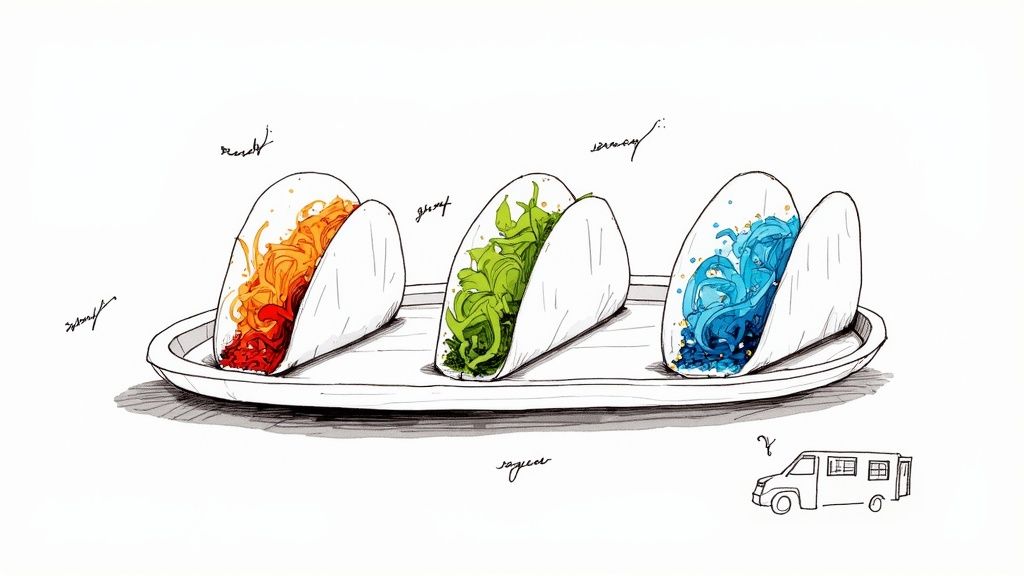
The success of this concept lies in its endless creativity and broad appeal. Pioneers like Chef Roy Choi’s Kogi BBQ truck in Los Angeles demonstrated the massive potential of Korean-Mexican fusion, creating a nationwide trend. This model proves that a food truck can be a platform for serious culinary innovation, not just a place for simple fare.
Why This Concept Works
The fusion taco model is profitable because it combines low-cost core ingredients (tortillas, proteins, and fresh toppings) with a high perceived value. Customers are willing to pay a premium for unique flavor combinations they cannot find elsewhere. The format is inherently mobile, shareable, and visually appealing, making it perfect for social media marketing and catering to the “Instagrammable food” trend.
Sample Menu Items
- Korean Bulgogi Beef Taco: Marinated ribeye, kimchi slaw, gochujang aioli, and sesame seeds on a corn tortilla.
- Thai Peanut Chicken Taco: Grilled chicken satay, spicy peanut sauce, pickled cucumber, and crushed peanuts on a flour tortilla.
- Indian Tikka Masala Taco: Tandoori chicken, creamy tikka masala sauce, cilantro-mint chutney, and pickled red onions on naan bread.
- Mediterranean Falafel Taco: Crispy falafel, hummus, tzatziki, and a cucumber-tomato relish on a warm pita.
Target Audience and Locations
Your ideal customer is an adventurous foodie, often a millennial or Gen Z professional, who values unique experiences and is active on social media. Prime locations include:
- Business Districts: Catch the lunch rush from office workers seeking a quick, exciting meal.
- Breweries and Wineries: Partner with local establishments that do not serve food.
- Food Truck Parks and Festivals: Benefit from high foot traffic and a customer base actively seeking new food experiences.
- College Campuses: Appeal to students looking for affordable, flavorful, and trendy dining options.
2. Gourmet Grilled Cheese and Soup
A gourmet grilled cheese and soup truck elevates one of America’s most beloved comfort food pairings into a modern culinary experience. This concept takes the nostalgic, simple joy of a grilled cheese sandwich and artisanal soup and enhances it with high-quality ingredients, creative combinations, and sophisticated flavor profiles. It appeals to a broad demographic looking for a satisfying, familiar, yet upscale meal on the go.
The enduring appeal of this concept is rooted in its universal comfort and accessibility. Successful operations like Seattle’s Cheese Please truck and various vendors at events like the Grilled Cheese Invitational demonstrate how a simple idea, when executed with quality and creativity, can become a highly sought-after food destination. This is one of the best food truck ideas because it combines low operational complexity with high customer demand.
Why This Concept Works
The gourmet grilled cheese model succeeds because it blends strong margins with operational ease. Its core ingredients, bread, cheese, and soups, are affordable and consistent, but the gourmet angle comes from thoughtful upgrades: signature sauces, premium add-ons, creative fillings, and flavor combinations that elevate a simple classic into something memorable. The menu is easy to execute quickly, which is critical for serving long lines during peak hours. Offering seasonal soup rotations keeps the menu fresh and encourages repeat business.
Sample Menu Items
- The Classic Tomato: Sharp cheddar and provolone on artisan sourdough, served with a classic creamy tomato bisque for dipping.
- Brie and Apple Melt: Creamy brie, thinly sliced Granny Smith apples, and a fig jam spread on multigrain bread.
- Buffalo Chicken Grilled Cheese: Shredded buffalo chicken, blue cheese crumbles, and mozzarella on thick-cut Texas toast.
- The Pesto Caprese: Fresh mozzarella, roasted tomatoes, and basil pesto on rustic ciabatta bread.
Target Audience and Locations
This concept attracts a wide audience, from college students and families to corporate professionals seeking a quick and comforting lunch. Prime locations for a gourmet grilled cheese and soup truck include:
- Office Parks and Business Districts: Capture the weekday lunch crowd with a reliable and delicious option.
- Breweries and Outdoor Markets: The hearty, comforting nature of grilled cheese pairs perfectly with craft beer and casual community settings.
- Suburban Neighborhoods and Parks: Appeal to families looking for an easy and kid-friendly meal.
- College Campuses: Offer an affordable, upgraded version of a student staple.
3. Asian Ramen and Noodle Bar
The Asian ramen and noodle bar concept brings the soul-warming comfort of authentic noodle dishes to a mobile format. This idea taps into the immense and growing popularity of Asian cuisine, from savory Japanese ramen to zesty Thai pad thai. By focusing on high-quality broths, fresh ingredients, and perfectly cooked noodles, this truck can deliver a deeply satisfying and restaurant-quality experience on the go, making it one of the more sophisticated food truck ideas.
The appeal of this concept is rooted in its ability to serve complex, flavorful meals that are both comforting and convenient. A noodle bar on wheels can become a destination for diners seeking a hearty, authentic meal that is quick and easy to enjoy.
Why This Concept Works
An Asian noodle bar works because it offers substantial, high-value meals from a relatively streamlined ingredient list. The heart of the menu, the broth, can be prepared in large batches at a commissary kitchen, making service on the truck fast and efficient. The dishes are also inherently aromatic and visually appealing, which naturally generates buzz.
Sample Menu Items
- Tonkotsu Ramen: Rich, creamy pork bone broth with chashu pork belly, a soft-boiled egg, menma (bamboo shoots), and scallions.
- Spicy Miso Ramen: Savory miso-based broth with a kick of chili oil, topped with ground pork, corn, and nori.
- Vegetable Pho: Aromatic star anise and ginger-infused vegetable broth with rice noodles, tofu, mushrooms, bean sprouts, and fresh basil.
- Chicken Pad Thai: Stir-fried rice noodles with chicken, tofu, egg, bean sprouts, and a tamarind-peanut sauce, topped with crushed peanuts and lime.
Target Audience and Locations
The target audience includes office workers, students, and foodies who appreciate authentic international cuisine. These customers are looking for a filling, high-quality meal that is a step above typical fast food. To ensure success, you will need well-documented operational guides. For a complete overview, check out these restaurant standard operating procedures examples to streamline your processes.
Prime locations include:
- Financial and Business Districts: Offer a satisfying lunch alternative for professionals.
- College Campuses: Serve as a go-to spot for students seeking warm, comforting, and affordable meals.
- Busy Urban Neighborhoods: Attract evening crowds and weekend foot traffic in residential areas.
- Breweries and Outdoor Markets: Partner with venues where customers are looking for a substantial meal to pair with their drinks or shopping.
4. Artisanal Coffee and Breakfast Pastries
An artisanal coffee and breakfast pastry truck is one of the most reliable and scalable food truck ideas, tapping into the powerful daily ritual of the morning commute. This concept shifts the focus from a simple caffeine fix to a premium café experience on wheels, combining high-quality, third-wave coffee with fresh-baked or locally sourced pastries. It caters to discerning customers who appreciate craftsmanship, convenience, and a great start to their day.

The success of this model is demonstrated by brands like Blue Bottle Coffee, which began with a simple cart and grew into a premium global brand. The key is focusing on quality over quantity. By emphasizing the story behind the beans, offering expertly prepared espresso drinks, and providing delightful pastries, a coffee truck can build a loyal following that rivals established brick-and-mortar cafés.
Why This Concept Works
The coffee truck model thrives on routine and repeat business. With relatively low ingredient costs and high profit margins on specialty drinks, it’s a financially sound venture. The morning focus allows for predictable revenue streams and operational hours, often concluding by early afternoon. This efficiency, combined with the premium pricing that high-quality coffee commands, makes it a highly profitable niche.
Sample Menu Items
- Signature Honey Lavender Latte: Espresso with steamed milk and a house-made honey-lavender syrup.
- Single-Origin Pour-Over: A rotating selection of ethically sourced beans, brewed to order.
- Classic Croissant and Pain au Chocolat: Sourced daily from a high-quality local bakery partner.
- Savory Ham and Gruyère Croissant: A quick, satisfying breakfast option for commuters.
Target Audience and Locations
Your core customer is the daily commuter, from office professionals to students, who values quality and is willing to pay for a superior coffee experience. Weekend brunch-goers and event attendees are also key demographics. Prime locations include:
- Transit Hubs: Position near train stations, bus stops, or ferry terminals to catch commuters.
- Business and Office Parks: Serve the morning rush and midday coffee break crowd.
- Farmers Markets and Community Events: Capitalize on weekend foot traffic from customers who appreciate local and artisanal products.
- College Campuses: Offer students a high-quality alternative to campus dining hall coffee.
5. Farm-to-Table Fresh Bowls
The farm-to-table fresh bowl concept capitalizes on the growing consumer demand for healthy, sustainable, and transparent food sources. This idea centers on serving customizable grain or salad bowls made with seasonal, locally-sourced ingredients. By emphasizing freshness and a direct connection to local agriculture, this truck appeals to health-conscious professionals, fitness enthusiasts, and environmentally-aware consumers looking for nutritious, high-quality meals on the go.
This model builds a powerful brand story rooted in community and sustainability. Successful fast-casual chains like Sweetgreen and Flower Child have demonstrated the massive market for this concept. A food truck can execute this idea on a smaller, more agile scale, building direct relationships with local farmers and creating a truly unique menu that changes with the seasons.
Why This Concept Works
The farm-to-table bowl concept works because it aligns perfectly with modern dining trends: health, customization, and ethical sourcing. Customers are often willing to pay a premium for food they perceive as healthier and more sustainable. Highlighting your farm partners on your truck and social media builds authenticity and brand loyalty. The operational model is efficient, relying on a streamlined assembly line format that allows for high-volume service during peak hours. You can also dive into a restaurant profit margin calculator to precisely forecast your earnings with this premium pricing strategy.
Sample Menu Items
- The Farmer’s Harvest Bowl: Roasted seasonal vegetables, grilled chicken from a local farm, quinoa, kale, and a lemon-tahini vinaigrette.
- Autumn Roots Bowl: Roasted sweet potatoes, beets, goat cheese, toasted pecans, and mixed greens with a maple-balsamic dressing.
- Summer Berry Salad: Fresh strawberries and blueberries, feta cheese, spiced almonds, and spinach with a poppy seed dressing.
- Spicy Southwest Bowl: Black beans, corn salsa, avocado, shredded romaine, brown rice, and a cilantro-lime crema.
Target Audience and Locations
Your core customers are health-conscious individuals, including young professionals, fitness enthusiasts, and families who value nutritious meals. They are typically well-informed about food trends and appreciate transparency in sourcing.
- Farmers Markets: Sell directly to an audience that already values local produce.
- Corporate Parks and Office Buildings: Serve the weekday lunch crowd seeking a healthy alternative to fast food.
- Gyms and Yoga Studios: Partner with fitness centers to cater to their clientele post-workout.
- Suburban Town Centers: Attract families and professionals in community-focused areas.
6. Authentic Indian Street Food
Authentic Indian street food offers a vibrant and deeply flavorful food truck concept that taps into a rich culinary tradition. This idea moves beyond standard restaurant curries to highlight the diverse, quick, and savory snacks known as chaat, along with regional specialties like dosas and tandoori bites. It brings the bustling energy and complex spice profiles of Indian street markets to a mobile format, attracting both a large diaspora community and adventurous foodies eager for genuine global cuisine.
The appeal of this concept is its authenticity and sensory richness. Successful operations like Dhaba by Inder in California have demonstrated how regional Indian flavors can thrive in a food truck setting. By focusing on high-quality, fresh ingredients and proprietary spice blends, a truck can deliver an experience that stands out dramatically from the typical food court or fast-casual Indian restaurant.
Why This Concept Works
Indian street food is one of the best food truck ideas because it is inherently designed for quick service and portability. Items like samosas and pani puri are naturally handheld. The concept balances affordable core ingredients (chickpeas, potatoes, flour, and lentils) with high-value, complex flavors from spices and chutneys, allowing for strong profit margins. Its colorful and aromatic nature also makes it highly shareable on social media.
Sample Menu Items
- Pani Puri (Golgappe): Crispy hollow shells filled with spiced potatoes, chickpeas, and tamarind chutney, served with tangy mint-cilantro water.
- Samosa Chaat: Crushed vegetable samosas topped with yogurt, tamarind and mint chutneys, chopped onions, and crunchy sev.
- Masala Dosa: A thin, crispy rice and lentil crepe filled with a spiced potato mixture, served with sambar and coconut chutney.
- Chicken Tikka Skewers: Tandoori-marinated chicken pieces grilled until charred and tender, served with a side of naan bread and raita.
Target Audience and Locations
Your primary customers include the Indian diaspora community seeking familiar tastes of home, as well as curious food enthusiasts and families. You can also create an approachable menu to introduce newcomers to Indian flavors.
- Cultural Festivals and Community Events: Target events like Diwali or Holi for a built-in, enthusiastic customer base.
- Suburban Office Parks: Offer a unique and exciting lunch alternative in areas with less diverse food options.
- Farmers Markets: Attract shoppers looking for fresh, authentic, and globally inspired meals.
- Near Temples or Community Centers: Position your truck near hubs for the local Indian American community.
7. Gourmet Sliders and Craft Beer Pairings
Gourmet sliders paired with craft beer suggestions offer a sophisticated yet approachable food truck concept that taps into the booming craft beverage market. This idea elevates the humble mini-burger by using premium ingredients, creative flavor profiles, and thoughtful pairings that appeal to a discerning palate. By transforming a simple, shareable food into an elevated experience, this concept attracts customers seeking high-quality casual dining.
The success of this model is built on synergy, particularly through partnerships with local breweries. Successful vendors like The Sliders Bar have demonstrated how a focused menu of creative, small-format burgers can build a loyal following. The key is to create a memorable brand that stands for both quality food and a deep appreciation for the craft beer scene, turning your truck into a destination for flavor enthusiasts.
Why This Concept Works
The gourmet slider concept is highly profitable due to its use of manageable portion sizes, which allows for premium pricing on unique ingredients without intimidating customers. Offering sliders in pairs or trios encourages upselling and sampling.
Sample Menu Items
- The Classic: Wagyu beef patty, aged cheddar, caramelized onions, and secret sauce on a brioche bun. (Pairs with an Amber Ale)
- Spicy BBQ Bacon: Ground chuck patty, thick-cut bacon, pepper jack cheese, crispy fried onions, and a smoky chipotle BBQ sauce. (Pairs with an IPA)
- The Mediterranean Lamb: Seasoned ground lamb, feta cheese, arugula, and tzatziki sauce on a potato bun. (Pairs with a light Pilsner)
- Mushroom and Swiss: Beef patty, sautéed cremini mushrooms, melted Swiss cheese, and a garlic aioli. (Pairs with a Stout or Porter)
Target Audience and Locations
The ideal customer is a craft beer enthusiast, often a millennial or Gen X professional, who enjoys social dining and exploring local flavors. Prime locations are essential for reaching this audience:
- Craft Breweries and Taprooms: The number one location for direct access to your target demographic.
- Music Festivals and Concerts: High-traffic events where attendees seek quick, high-quality food.
- Sporting Events: Capture pre-game and post-game crowds looking for a satisfying meal.
- Suburban Community Gatherings: Farmers markets and local events attract families and foodies.
8. Vegan and Plant-Based Comfort Food
Vegan and plant-based comfort food is one of the most compelling and rapidly growing food truck ideas available today. This concept taps into the rising demand for sustainable, ethical, and health-conscious dining by offering plant-based versions of beloved classics. From creamy mac and cheese to juicy burgers, this approach makes vegan eating accessible and appealing to everyone, not just committed vegans.
The success of this concept is rooted in its ability to deliver nostalgic satisfaction without compromise. By focusing on familiar formats, it lowers the barrier to entry for flexitarians and curious omnivores. Brands like The Vurger Co. in the UK have demonstrated how a dedicated vegan burger business can build a massive following, proving that plant-based options can compete directly with their traditional counterparts in flavor and appeal.
Why This Concept Works
The plant-based comfort food model is highly profitable due to its premium positioning and broad market appeal. Customers are often willing to pay more for high-quality, ethically sourced, and innovative vegan products. Efficiently managing your supplies is key, and understanding your inventory days on hand formula can prevent waste of fresh produce and specialty ingredients. This niche is also perfectly suited for social media, where vibrant, hearty-looking vegan dishes can attract significant attention and build a loyal community.
Sample Menu Items
- Classic “Cheeseburger”: A Beyond Meat or house-made veggie patty, vegan cheddar, lettuce, tomato, pickles, and special sauce on a brioche-style vegan bun.
- Buffalo Cauliflower “Wings”: Crispy fried cauliflower florets tossed in spicy buffalo sauce, served with a side of vegan ranch dressing.
- Loaded Mac and “Cheese”: Creamy cashew-based cheese sauce over elbow macaroni, topped with BBQ jackfruit and crispy onions.
- “Fish” Tacos: Battered and fried banana blossoms or hearts of palm, chipotle aioli, slaw, and cilantro on a corn tortilla.
Target Audience and Locations
Your ideal customer includes vegans, vegetarians, flexitarians, and health-conscious consumers aged 18 to 45. They are often environmentally aware and active in online communities. Prime locations include:
- Farmers Markets: Connect directly with consumers seeking fresh, local, and sustainable food.
- Health and Wellness Festivals: Align your brand with events that attract a health-focused demographic.
- College Campuses: Cater to a younger, more environmentally and ethically conscious student body.
- Tech Parks and Creative Hubs: Attract professionals who are often early adopters of food trends and dietary lifestyles.
9. Gourmet Hot Dogs and Sausages
Elevating a classic American comfort food, the gourmet hot dog and sausage truck is one of the most reliable and beloved food truck ideas. This concept takes the humble hot dog and transforms it into a culinary experience by using high-quality, artisanal sausages, creative toppings, and house-made condiments. It appeals to a broad demographic, from families seeking a quick meal to foodies searching for a nostalgic yet sophisticated bite.
The enduring success of this concept is proven by iconic mainstays like Pink’s Hot Dogs in Los Angeles, which built an empire on creative hot dog combinations. This model demonstrates that specializing in a familiar product and executing it exceptionally well can build a loyal following and a powerful brand identity.
Why This Concept Works
The gourmet hot dog model is highly profitable due to its low-cost core ingredients and high potential for upselling with premium toppings. The concept is easy to execute quickly, which is crucial for managing long lines during peak hours. Furthermore, the strong nostalgic connection people have with hot dogs makes it an easy sell, while the “gourmet” angle justifies a higher price point and attracts a more discerning customer base.
Sample Menu Items
- The Chicago Classic: All-beef frankfurter, yellow mustard, chopped white onions, bright green sweet pickle relish, a dill pickle spear, tomato slices, and sport peppers on a poppy seed bun.
- The Bavarian Brat: Grilled bratwurst, spicy brown mustard, sauerkraut, and caramelized onions on a pretzel roll.
- The Spicy Chorizo Dog: Smoked chorizo sausage, cotija cheese, avocado-lime crema, pickled jalapeños, and fresh cilantro on a toasted bolillo roll.
- The Southern Slaw Dog: Classic beef hot dog topped with pimento cheese, savory chili, and creamy coleslaw on a soft potato bun.
Target Audience and Locations
Your ideal customers are diverse, including families, students, and professionals looking for a quick, satisfying, and high-quality meal. Prime locations are those with high foot traffic and a relaxed atmosphere.
- Sporting Events and Arenas: Capture fans before and after games.
- Breweries and Outdoor Beer Gardens: Offer the perfect food pairing for craft beer.
- Parks and Public Squares: Serve families and individuals during weekend outings and community events.
- Late-Night Entertainment Districts: Cater to the post-bar crowd looking for a delicious and easy-to-eat snack.
10. Mediterranean and Middle Eastern Kebab and Mezze
A food truck specializing in Mediterranean and Middle Eastern cuisine is one of the best food truck ideas for operators targeting the growing demand for healthy, flavorful, and fast-casual options. This concept centers on grilled kebabs, fresh mezze platters, and savory wraps, offering a menu that is both satisfying and aligned with modern dietary preferences. By focusing on authentic spice blends and fresh ingredients, you can attract a wide audience seeking a delicious alternative to typical street food.
The appeal of this concept is rooted in its balance of bold flavors, lean proteins, and vibrant vegetables. The visual and aromatic experience of grilling kebabs to order creates an enticing atmosphere that draws in customers from a distance, making it a powerful marketing tool in itself.
Why This Concept Works
The Mediterranean and Middle Eastern model is highly profitable due to its use of cost-effective yet high-quality ingredients like chicken, legumes, and seasonal vegetables. The perceived health benefits allow for premium pricing, especially for well-executed dishes with house-made sauces and marinades. The menu is versatile, easily catering to individual diners with wraps or serving larger groups with shareable mezze platters, which boosts the average check size.
Sample Menu Items
- Chicken Shawarma Wrap: Vertically roasted, thinly sliced marinated chicken with garlic sauce, pickles, and fries wrapped in a warm pita.
- Lamb Kebab Platter: Skewers of marinated and grilled lamb served with saffron rice, grilled tomato, and a side of tzatziki.
- Falafel Mezze Box: Crispy chickpea falafel served with hummus, baba ghanoush, tabbouleh salad, and fresh pita bread.
- Beef Kofta Kebab: Spiced ground beef skewers grilled over an open flame, served with a side of sumac-dusted onions and parsley.
Target Audience and Locations
Your ideal customer is health-conscious, often a professional, student, or family looking for a fresh and flavorful meal. This concept appeals to those familiar with Mediterranean flavors as well as adventurous eaters. Prime locations include:
- Corporate Parks and Office Buildings: Serve the lunch crowd seeking a quick, healthy, and satisfying meal.
- Farmers Markets and Health-Focused Events: Align your brand with fresh produce and wellness-oriented customers.
- Suburban Neighborhoods: Cater to families looking for convenient and wholesome dinner options.
- University Campuses: Offer a flavorful and protein-rich alternative to standard campus fare.
Driving Your Concept Forward
You have explored a curated collection of some of the best food truck ideas, from Gourmet Fusion Tacos to a Mediterranean Kebab and Mezze truck. Each concept offers a unique blueprint for success, a distinct flavor profile, and a specific target audience. The journey from a compelling idea to a thriving mobile business, however, is paved with strategic decisions and meticulous execution. The core lesson is clear: A fantastic menu is only the starting point.
The true differentiators in the competitive food truck landscape are operational excellence, a powerful brand story, and an unwavering commitment to quality. Whether you choose to serve artisanal coffee or authentic Indian street food, your success will hinge on your ability to translate that concept into a consistent, memorable customer experience every single day. This means mastering your supply chain, optimizing your kitchen workflow for speed and quality, and creating a brand that resonates with customers long after they have finished their meal.
From Blueprint to Business: Your Actionable Next Steps
Moving forward requires a shift from conceptual planning to concrete action. The most successful operators treat their food truck not just as a passion project but as a lean, agile, and serious business venture. Here is a focused checklist to guide your next moves:
- Finalize Your Niche and Business Plan: Select the one concept that aligns most with your passion, expertise, and local market demand. Draft a comprehensive business plan that details your mission, financial projections, operational strategy, and marketing roadmap. This document will be your north star.
- Secure Your Funding and Legal Structure: Determine your total startup costs, accounting for the truck, permits, initial inventory, and a cash reserve for the first few months. As you plan to launch your food truck, acquiring the right equipment is paramount, and exploring options for restaurant equipment financing can help manage upfront costs. Simultaneously, establish your legal business entity, such as an LLC, to protect your personal assets.
- Build Your Brand and Marketing Engine: Develop a compelling brand name, logo, and truck wrap design. Secure your social media handles and start building an online presence before you launch. Tease your menu, share your story, and create a buzz around your future opening. A strong pre-launch campaign can ensure you have a line of customers on day one.
- Assemble Your A-Team: A food truck is a tight space, and your team’s synergy is critical. Hire for both skill and attitude. A small, dedicated crew that communicates well and works efficiently under pressure is more valuable than anything else. Your team is the face of your brand, and their performance directly impacts your bottom line.
Ultimately, the best food truck ideas are the ones brought to life by dedicated, well-prepared, and passionate entrepreneurs. The concepts we have detailed provide a strong foundation, but your unique vision, operational discipline, and leadership will determine your trajectory. Embrace the challenge, stay agile, and focus on creating an experience that turns first-time customers into loyal fans. Your journey on the open road of culinary enterprise starts now.
Ready to build the expert team that will drive your food truck concept to success? MAJC provides the essential tools for hospitality leaders to hire smarter, train effectively, and retain top talent in a competitive market. Explore MAJC to see how our platform can help you build a profitable, sustainable, and thriving business on wheels.
