

In any restaurant, hotel, or event, the front of house team member is your guest’s first, and last, impression. They are the face of your business, the person responsible for setting the tone and making sure the entire experience unfolds smoothly from the moment a guest arrives until they walk out the door. It’s a role that’s part customer service expert, part operational quarterback, and part brand ambassador, all rolled into one.
The Heart of the Hospitality Experience
Think of a great guest experience like a perfectly directed stage play. The chefs and kitchen crew are working their magic behind the scenes. But it’s the front of house team member who steps into the spotlight, guiding the audience, your guests, through the entire show. They are the directors, actors, and stage managers of your dining room or lobby.
From the second a guest walks in, the front of house (FOH) team orchestrates their entire journey. A host’s genuine welcome sets the stage. A server’s thoughtful attention builds the connection. A manager’s calm problem-solving ensures every scene plays out just right. This performance isn’t just nice to have; it’s what shapes how people see your brand, builds loyalty, and ultimately decides your reputation.
More Than Just a Role
You really can’t overstate the impact of a strong FOH team. They are the engine driving guest satisfaction and repeat business. A great front-of-house team member has to master the art of service and truly understand how to create the best guest service experience. When they get it right, a simple meal becomes a memorable event, turning first-time visitors into regulars who leave great reviews and tell their friends.
But building and keeping this team is one of the toughest parts of the job. Staff turnover in the accommodation and food-service sector remains among the highest in hospitality, often forcing businesses into a continuous hiring and training cycle. For that reason, having a smart, effective plan to attract and retain good people is more important than ever.
The front of house isn’t just one job, of course. It’s a whole ecosystem of roles working together.
Common Front-of-House Roles and Their Core Functions
To understand how a great experience comes together, it helps to see how the different FOH positions fit. Each role has a specific job, but they all share the goal of making the guest feel taken care of.
| Role | Primary Responsibility | Key Skills |
|---|---|---|
| Host or Greeter | Manages reservations, controls the flow of guests, and sets the first and last impression. | Organization, communication, and grace under pressure. |
| Server | Guides the guest through the menu, takes orders, and serves as the main point of contact. | Menu knowledge, salesmanship, and attentiveness. |
| Bartender | Crafts drinks, manages the bar, and creates a welcoming social atmosphere. | Mixology, speed, and engaging personality. |
| Busser / Server Assistant | Supports servers by clearing tables, refilling drinks, and keeping the dining area clean. | Speed, awareness, and teamwork. |
Each of these roles is a critical piece of the puzzle. When they all work in sync, the guest experience feels effortless and exceptional.
A Day in the Life of a FOH Professional
If you want to understand what makes a front-of-house team member so valuable, it helps to walk a mile in their shoes. Their day isn’t just a series of tasks; it’s a performance with three distinct acts: the pre-shift setup, the high-energy service, and the post-shift breakdown. Each phase is critical for creating the kind of seamless experience that keeps guests coming back.
The day doesn’t kick off when the first guest walks in. It starts long before the doors ever open, with a period of intense preparation that sets the whole team up for success.
Pre-Shift Preparations
Before the first reservation is seated, the FOH team is already in motion. This time is all about meticulous preparation, anticipating needs, and stamping out potential problems before they can ever impact service.
A typical pre-shift is a flurry of focused activity:
- Team Briefings: The manager pulls the team together to run through the day’s reservations, flag any VIPs, and cover menu specials or 86’d items. This huddle gets everyone on the same page, working from the same script.
- Station Checks: Servers and hosts comb through their assigned sections. They’re checking table settings, restocking salt and pepper shakers, polishing glassware until it gleams, and making sure every menu is clean and presentable.
- System Checks: The team makes sure the reservation software and point-of-sale (POS) systems are up and running smoothly. The last thing anyone wants is a tech meltdown during the dinner rush.
This groundwork is what allows the team to look cool, calm, and collected, even when the floor is buzzing.
The Energy of Service
Once the doors swing open, the whole vibe changes. The energy ramps up, and every front-of-house team member dives into their role, all focused on orchestrating a memorable guest experience. This is where their training really shines.
A server might be walking a table through a complex menu, offering recommendations that feel personal and insightful. At the same time, a host is managing the flow of guests at the door, expertly juggling a growing waitlist while still making everyone feel welcome. Every single interaction is a chance to make an impression.
The heart of great service is proactive problem-solving. A seasoned FOH pro doesn’t just react to issues; they see them coming. Noticing a family with small kids and bringing over a high chair before they even have to ask? That’s a small gesture that says, “We’ve got you.”
The infographic below breaks down the three main stages of the guest journey, which the FOH team manages from the moment they arrive to their final farewell.
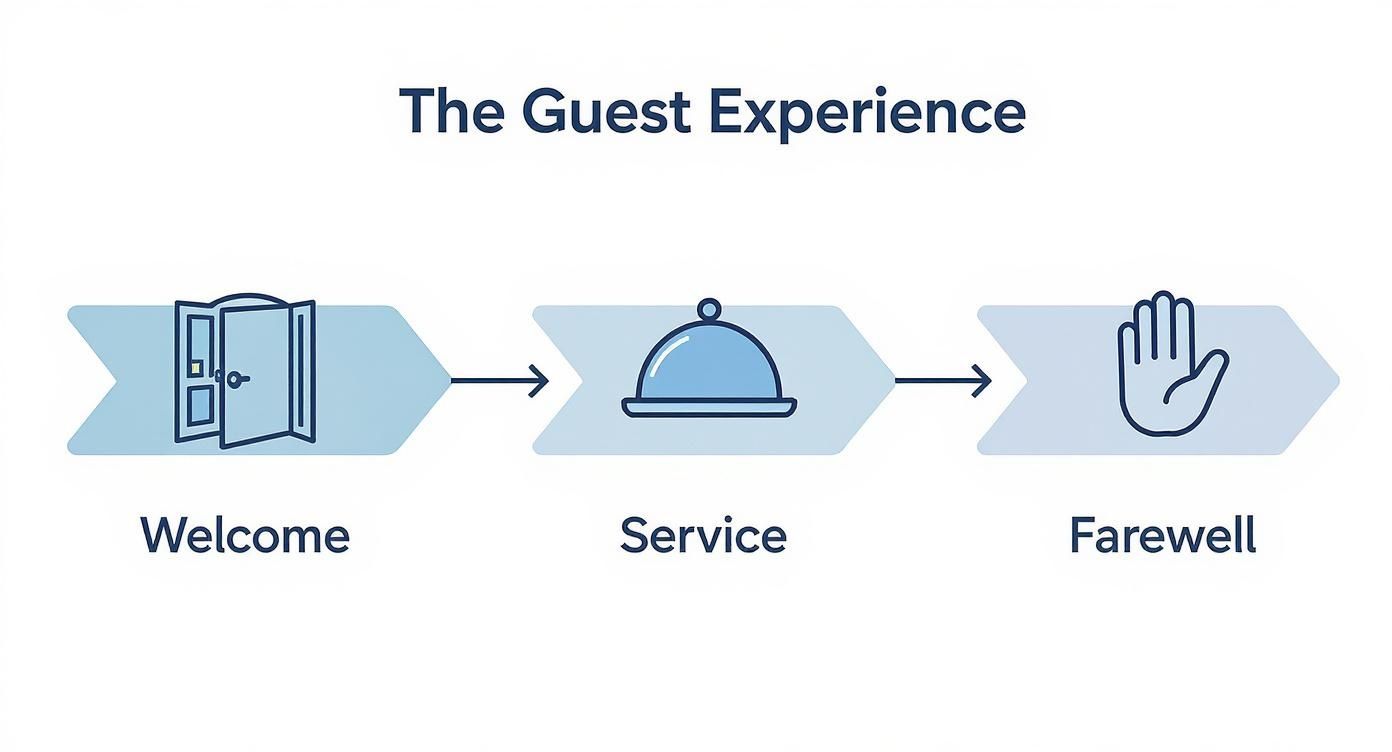
This simple flow shows how every touchpoint, from the initial greeting to the last “goodnight,” shapes how a guest feels about your business.
Think about a common scenario: a dish comes out that isn’t quite right. A great server sees this not as a crisis, but as an opportunity. They listen with empathy, apologize sincerely, and work with the kitchen to get it fixed, fast. By handling the hiccup with grace, they can turn a negative moment into a surprisingly positive one, often making that guest even more loyal in the process.
Post-Shift Duties
The work isn’t over just because the last guest has paid their check. The post-shift phase is just as vital as the pre-shift, because it resets the stage for the next service. A strong finish makes sure the next day’s team can walk in and hit the ground running.
Here’s what typically happens after close:
- Closing Out Finances: Servers and bartenders reconcile their sales, run their reports, and make sure every dollar is accounted for.
- Restocking and Cleaning: The team restocks everything from napkins to wine glasses, breaks down service areas, and cleans their stations thoroughly.
- Final Team Huddle: Often, there’s a quick debrief to talk about what went well, what could have been better, and any important notes to pass along to the next shift.
This disciplined routine is what builds consistency and sets the whole operation up for success, day after day. It’s this powerful combination of preparation, performance, and professionalism that truly defines a day in the life of a FOH professional.
The Skills That Define FOH Excellence
A great front-of-house team member isn’t just someone with a nice smile. Their success comes from a delicate balance of personal strengths and learned abilities, a unique mix of soft and hard skills that, when woven together, create the kind of experience guests remember.
Mastering this blend is what separates a good FOH pro from a great one.
These skills aren’t just nice to have; they’re the foundation of your restaurant’s reputation and bottom line. The ripple effect of a professional FOH team is huge, directly influencing guest satisfaction scores, online reviews, and overall revenue.
The Power of Soft Skills
Soft skills are the personality-driven traits that dictate how a person connects with others. For anyone in FOH, these are non-negotiable. They form the emotional core of every single guest interaction and set the tone from the moment someone walks in the door.
Think of these skills as the artistry of hospitality:
- Active Listening: This is more than just hearing words; it’s about picking up on what’s not being said. It’s noticing the slight hesitation when a guest orders or catching the nonverbal cues that signal they need something before they even have to ask.
- Empathy: The ability to put yourself in a guest’s shoes is what turns a potential complaint into a moment of connection. When a guest is frustrated, a simple, “I can see why that’s upsetting, let’s get this sorted out for you,” immediately de-escalates things and shows you’re on their side.
- Composure Under Pressure: A slammed service can feel like chaos, but a top-tier FOH professional is a beacon of calm. They handle a sudden rush, a kitchen delay, or an unexpected problem with grace, reassuring both guests and coworkers that everything is under control.
A server who actively listens might overhear a guest mentioning a birthday and surprise them with a small dessert. That simple, empathetic act, born from soft skills, transforms a standard dinner into a cherished memory. It’s those small moments that build loyalty.
Building these abilities is an ongoing process. They are the invisible tools that build rapport, solve problems on the fly, and make every guest feel genuinely seen and valued.
Essential Hard Skills for FOH Operations
While soft skills shape the emotional side of the experience, hard skills are the technical abilities that keep service running like a well-oiled machine. These are the teachable, measurable skills that form the operational backbone of any FOH team.
They are the science to the art of hospitality.
- POS System Mastery: Your point-of-sale system is the command center for orders, payments, and kitchen communication. Real proficiency means more than just punching in an order; it’s knowing how to split checks three ways without breaking a sweat, modify orders accurately, and troubleshoot minor glitches on the fly.
- Reservation Software Management: For hosts and managers, mastering platforms like OpenTable or Resy is crucial. This skill allows them to manage the waitlist, optimize table turnover, and communicate with guests about their booking, ensuring a smooth flow from the door to the table.
- Health and Safety Protocols: A rock-solid understanding of food safety, allergy awareness, and emergency procedures is absolutely critical. This knowledge protects your guests and your business, creating a safe and trustworthy environment for everyone. Following these guidelines is a core part of the job, which is why having clear restaurant standard operating procedures is so important.
Ultimately, FOH excellence happens when these two skill sets work in perfect harmony. A server uses their POS mastery (hard skill) to quickly place a complex order while using empathy (soft skill) to accommodate a guest’s dietary needs. It’s this powerful combination that defines a truly outstanding front-of-house team member and delivers an unforgettable experience, every single time.
How to Hire Your FOH Dream Team
Building a knockout front-of-house team doesn’t start with the first interview. It starts way before that, with a clear vision of the role and a job post that attracts people who get what real hospitality is all about. For any hiring manager, getting the right people in the door is the whole game.
A great job post is more than a list of duties; it’s a sales pitch for the opportunity. It needs to paint a picture of your culture, spell out what the job actually entails, and be upfront about the skills someone needs to crush it. This first step is your best filter, pulling in applicants who are already a great fit.
Crafting a Job Description That Attracts Top Talent
Think of your job description as your restaurant’s first handshake. It needs to be clear, concise, and sound like you. A well-written post helps people see exactly what you’re looking for in a front-of-house team member and gets them genuinely excited about the idea of joining your crew.
Here’s a simple framework to get you started:
- Job Title: Specify the position clearly, Host, Server, etc.
- About Us: A short, punchy paragraph about your restaurant’s vibe and why it’s a great place to work.
- The Role: Explain the core mission of the job. Focus on their impact on the guest experience, not just the tasks.
- Responsibilities: Use a bulleted list for the day-to-day stuff, like greeting guests, managing the floor, taking orders, and keeping the dining room sharp.
- What We’re Looking For: Be specific about the skills you need, both the soft skills (empathy, communication) and the hard skills (POS experience).
- Benefits: List the good stuff. Competitive pay, team meals, and real chances to grow are huge selling points.
This structure gets all the key info across without being a wall of text. It sets clear expectations right from the jump.
Uncovering Potential with Behavioral Interview Questions
Once you’ve got a stack of promising résumés, the interview is where you find out who people really are. Anyone can give a rehearsed answer to a standard question. But behavioral questions force candidates to dig into their actual past experiences, giving you a much clearer window into their skills and personality.
These questions are designed to see how someone handles pressure, works with a team, and solves problems on the fly. Instead of asking, “Are you a team player?” you ask, “Tell me about a time you had a conflict with a coworker during a slammed service. How did you resolve it?” Their story tells you everything.
To give you a head start, here are a few sample questions broken down by the skills they test. For a deeper dive, check out our guide to restaurant interview questions for servers.
Sample Behavioral Interview Questions for FOH Roles
| Question Category | Sample Question | What to Look For in the Answer |
|---|---|---|
| Problem-Solving | “Tell me about a time a guest had a complaint. What were the steps you took to resolve it?” | Look for active listening, empathy, a sense of ownership, and the ability to find a positive solution. |
| Teamwork | “Describe a situation where you had to support a struggling teammate during a busy service.” | A great answer will show initiative, a collaborative spirit, and a focus on the team’s success over individual tasks. |
| Initiative | “Can you share an example of a time you anticipated a guest’s needs before they asked for anything?” | This reveals attentiveness, proactive thinking, and a genuine desire to elevate the guest experience. |
| Adaptability | “How have you handled an unexpected change during a shift, like a sudden rush or a system failure?” | Listen for signs of composure, quick thinking, and the ability to stay focused and positive under pressure. |
Using behavioral questions flips the script from hypotheticals to real-world performance. This gives you a much more reliable gut check on how a candidate will actually perform as a front-of-house team member. It helps you build a team that isn’t just skilled, but truly wired for hospitality.
Training and Empowering Your Top FOH Talent
Getting a great front-of-house team member to sign an offer letter isn’t the finish line. It’s the starting line. The real work begins on day one. Finding talent is one thing; nurturing, training, and empowering them to build a career with you is another thing entirely. A rock-solid onboarding process and a real commitment to their growth are your best defenses against the churn-and-burn cycle.
This isn’t just a “nice-to-have.” Investing in your team pays you back in lower turnover costs and a better guest experience. When your people feel like you’ve got their back and can see a path forward, they show up differently. They’re more engaged, sharper on the floor, and genuinely invested in making the restaurant succeed.
Building a Strong Foundation with a Solid Onboarding Plan
Great onboarding is more than just a POS tutorial and a uniform handout. It’s about immersing a new hire in your restaurant’s culture, setting crystal-clear expectations, and making them feel like they belong from the very first shift. A rushed, disorganized welcome just leaves them feeling lost, overwhelmed, and disconnected.
Your onboarding program is your first, best chance to prove that you are invested in your team’s success. It should be a structured journey, not a frantic checklist, that builds confidence and reinforces the core values of your hospitality brand.
To really set your FOH team up for success, your onboarding needs to cover a few key bases. A solid plan makes sure nothing gets missed and helps your new hire hit the floor feeling prepared, not panicked.
A Complete FOH Onboarding Checklist:
- Culture Immersion: Start with the “why.” Share the story behind your restaurant, what your mission is, and what makes your brand of hospitality special. Introduce them to key players in both the front and back of house to start building those crucial relationships early.
- Administrative Essentials: Get all the paperwork squared away, hand out uniforms, and give them a full tour of the entire space, not just the dining room. They need to know where the break room, the first-aid kit, and everything in between is located.
- Systems and Technology Training: This needs to be dedicated, hands-on time. Train them on your POS, reservation software, and any other tech they’ll be using daily. Don’t just show them once and walk away; let them practice in a low-pressure setting.
- Hands-On Shadowing: Pair the newbie with one of your seasoned pros or a top-performing mentor. This is where the real learning happens. It lets them see your standards in action, ask questions on the fly, and slowly start taking on tasks themselves.
Fostering Growth Through Continuous Development
Onboarding is just the beginning. The operators who build lasting teams treat training like an ongoing conversation, not a one-and-done event. Continuous development keeps skills from getting stale, introduces fresh techniques, and shows your team that you’re serious about their professional growth.
To truly empower your FOH team, you have to get serious about creating effective training programs that deliver real value. This means going beyond the basics to offer learning opportunities that are targeted and engaging.
Strategies for Ongoing FOH Development:
- Skill-Specific Workshops: Hold regular, short workshops on specific topics. Think upselling wine, navigating tricky guest complaints, or a deep dive into new menu items. Role-playing is an absolute game-changer here; it builds the muscle memory they need for tough conversations.
- Support for Certifications: Encourage and back team members who want to pursue industry certifications, like a sommelier course or a food handler manager certification. Offering to split or cover the cost is a powerful way to show you’re investing in their career, not just their job.
- Cross-Training Opportunities: Give interested staff the chance to learn other roles. A server who gets how the host stand works or a host who learns a few bar basics becomes a more valuable and empathetic part of the whole operation.
Proven Tactics for Retaining Your Best People
At the end of the day, training and development are critical pieces of your retention strategy. High turnover is a massive drain on your time, money, and morale. Building a supportive environment where people want to stay is everything. For a deeper dive, check out our full guide on how to reduce staff turnover and build a team that lasts.
Start by mapping out clear career paths. Show your team that being a front-of-house team member can be more than just a job; it can be the first step in a real career. And finally, don’t forget meaningful recognition. Celebrating big wins is great, but calling out the small, daily efforts is just as important. A simple, public “thank you” for handling a tough table well can make an employee feel truly seen and valued.
Measuring the Impact of Your FOH Team
How do you really know if your front-of-house team is crushing it? A great vibe and happy guests are a good start, but hard numbers are what prove their value and show you where to coach them up.
When you move beyond gut feelings to key performance indicators (KPIs), you can measure the direct financial impact your FOH team has on the business. This turns management from guesswork into a clear, actionable strategy. It gives you the power to offer specific, effective feedback and show exactly how a skilled front-of-house team member drives the bottom line.
Guest-Focused Metrics
The first and most obvious measure of FOH success is guest happiness. These metrics capture what customers think about their experience, and that perception is shaped almost entirely by the service they get from the moment they walk in.
A couple of guest-focused KPIs to watch:
- Customer Satisfaction Scores (CSAT): Usually gathered from post-visit surveys, these scores are a direct reflection of a team that’s on point, attentive, friendly, and efficient.
- Online Review Ratings: Let’s face it, platforms like Yelp, Google, and TripAdvisor are the new word-of-mouth. Tracking your star rating and actually reading the comments gives you raw, unfiltered feedback on everything from the host’s welcome to the server’s timing. According to a Tripadvisor survey, 70% of diners say reviews are ‘extremely or very important’ when deciding where to eat, so this isn’t a vanity metric; it’s a real driver. To see how these numbers fit into the bigger picture, you can learn more about what is restaurant workforce management.
Operational and Financial KPIs
Beyond making people happy, you can measure the FOH team’s direct influence on the restaurant’s financial health. These numbers connect their daily actions to real business outcomes.
Tracking operational KPIs tells the story behind your revenue. It shows how a server’s skill in guiding guests through the menu or a host’s ability to manage the floor efficiently translates directly into increased profitability.
Consider tracking these financial and operational metrics:
- Average Check Size: This one’s simple: total revenue divided by the number of guests. A well-trained front-of-house team member knows how to bump this number up with smart, non-pushy suggestions, like recommending a great appetizer or a specific wine pairing.
- Table Turnover Rate: This KPI is all about efficiency, how quickly tables are seated, served, and reset for the next party. A great FOH team works like a well-oiled machine to maximize covers during a shift without ever making a guest feel rushed.
- Upselling and Cross-selling Conversions: This gets specific. Track how often your team successfully sells higher-margin items or add-ons. You can monitor the percentage of tables that order the daily special, add dessert, or go for the premium cocktail when their server recommends it. This gives you direct insight into your team’s salesmanship and menu knowledge.
Still Have Questions?
Whether you’re looking to land your first FOH gig or hire your next star, a few questions always seem to pop up. Here are some straight answers.
What’s the single most important skill for a FOH role?
Technical skills like mastering a POS are important, but they can be taught. The one nonnegotiable skill is empathy. It’s the ability to truly connect with a guest, to anticipate what they need before they ask, and to handle a tough situation with grace. Every other skill is built on that foundation. Without it, you’re just delivering plates; with it, you’re delivering an experience.
Can you really start a hospitality career with zero experience?
Absolutely. Plenty of great FOH careers start with a busser or host position. These roles are the perfect training ground. You’ll learn the rhythm of a restaurant, how to manage guest flow, and what real teamwork looks like. Most operators will take a great attitude and a willingness to learn over a thin resume any day of the week.
What are the toughest parts of a front-of-house job?
The real challenge is staying cool under pressure. One minute it’s quiet, the next you’re triple-sat with a dinner rush that came out of nowhere. You’re juggling orders, handling a guest complaint, and keeping an eye on three other tables that need you. Thriving in that controlled chaos is the name of the game. It’s about keeping your head clear and your energy up, even at the end of a long, demanding shift.
The best part of the job is often turning a challenge into a win. When a front-of-house team member successfully turns a frustrated guest into a loyal regular, it’s a powerful reminder of the impact they have on the business and the people they serve.
At MAJC, we build the tools, training, and community that help you build and empower a top-tier hospitality team. From hiring resources to leadership development, our platform is designed by operators for operators. Join our community and see how to hire better, retain longer, and run smarter at majc.ai.