
Hiring a chef for your restaurant is one of the most important decisions you’ll ever make. You’re not just filling a spot on the line; you’re choosing the person who will shape your menu, lead your kitchen team, control key costs, and ultimately define the guest experience.
Get this hire right, and you gain a creative partner who can elevate your entire operation. Get it wrong, and you’ll feel the impact everywhere: morale, consistency, finances, and reputation.
The Foundation of a Great Hire
Before you even think about writing a job post, you need to look inward and define exactly what you are looking for. This initial planning phase is nonnegotiable. It sets the stage for a successful search and stops you from wasting time on candidates who just do not fit.
Pinpointing Your Culinary Needs
Start by getting specific about the role. Understanding the different chef positions in a modern kitchen helps you target the right level of talent. Do you need an Executive Chef to oversee multiple outlets, or a hands-on Chef de Cuisine to execute your vision with precision?
Use these questions to build a clear profile of your ideal candidate:
- Cuisine Style: What defines your restaurant’s identity? A farm-to-table concept requires a chef skilled in seasonal sourcing. A high-volume bistro needs someone who can deliver consistency and speed. Be honest about the techniques, flavors, and standards that set your brand apart.
- Leadership and Mentorship: How large is the team this chef will manage? Great chefs are great leaders; they motivate, train, and retain talent. This isn’t optional; it’s the foundation of a healthy kitchen culture.
- Business Acumen: A chef’s responsibilities don’t end at the pass. They must understand food costing, inventory, waste control, and labor. Strong financial awareness is often what separates a good cook from a true culinary leader.
Getting a handle on the hierarchy of all back-of-the-house positions can also help you clarify the exact scope of the role you need to fill.
The good news is that the industry is humming. According to a recent analysis by the Auguste Escoffier School of Culinary Arts, based on the latest U.S. Bureau of Labor Statistics data, employment for chefs is projected to grow about 7% over the next decade, with around 24,000 openings expected each year. While that means there is a deep pool of talent out there, it also makes a strategic approach to hiring more important than ever. You are not just competing for staff; you are competing for the right staff.
How to Write a Job Post That Attracts Top Chefs
Your job description is more than a list of duties; it is the first handshake with your future culinary leader. It is your best tool for filtering candidates and attracting people who have the right skills and the right mindset for your restaurant.
A generic posting gets you generic applicants. A thoughtful, compelling description acts like a magnet for top-tier talent. This is your chance to sell your vision. It needs to tell a story about your brand, your team, and the opportunity you are offering.
Go Beyond a Simple Job Title
The title of your job post is the headline. It is what makes someone stop scrolling. While it needs to be accurate, it also needs to communicate the weight of the role. A title like “Executive Chef” implies a higher level of strategic leadership than a more generic “Kitchen Manager.”
Think about the seniority you defined earlier. The title should immediately signal the responsibilities and where the position sits in your kitchen hierarchy. Ask yourself: How will a candidate perceive this? Does it sound like a career-defining opportunity or just another job?
For example:
- “Executive Chef: Farm-to-Table Concept” immediately signals your culinary philosophy and the level of leadership you need.
- “Chef de Cuisine: High-Volume Italian Bistro” sets clear expectations about the food and the pace of the kitchen.
These titles are specific. They help candidates self-select, which means you get applications from people who are genuinely interested in what you are building.
Weave Your Restaurant’s Story into the Description
Top chefs are not just looking for a paycheck. They are looking for a place where they can make an impact and connect with a mission they believe in. Your job description needs to paint a vivid picture of your restaurant’s culture, brand, and culinary philosophy. This is your chance to stand out.
Start with a compelling opening paragraph that introduces your restaurant. Are you a family-owned spot with deep community roots? A bustling downtown place known for its innovative cocktails? Tell that story.
Detailing your culinary approach is crucial. If you are committed to sustainable sourcing, say so. This context helps attract candidates who share your values and are excited by your vision, leading to a much better cultural fit. To see how other businesses craft compelling narratives, it can be helpful to review a variety of advertisements for employment examples for inspiration.
Detail Responsibilities and Qualifications Clearly
While storytelling is important, clarity is king. A great job description gives an honest, clear breakdown of the role’s day-to-day realities. Vague language just leads to confusion and a pile of unqualified applicants.
Use bullet points to make the responsibilities and qualifications scannable and easy to digest.
Key Responsibilities Might Include:
- Menu development, costing, and seasonal execution.
- Leading, training, and mentoring a kitchen team of 15 cooks and porters.
- Managing inventory, ordering, and supplier relationships to control food costs.
- Ensuring impeccable standards of food safety, sanitation, and kitchen organization.
Essential Qualifications Should Be Specific:
- A minimum of three years of experience in a Sous Chef or similar leadership role.
- Proven experience with inventory management software and POS systems.
- A culinary degree or equivalent professional certification is preferred.
Being transparent about expectations from the start saves everyone time. It also shows candidates that you are professional and have a clear understanding of what it takes to succeed in the role.
Finding and Screening Your Ideal Candidates
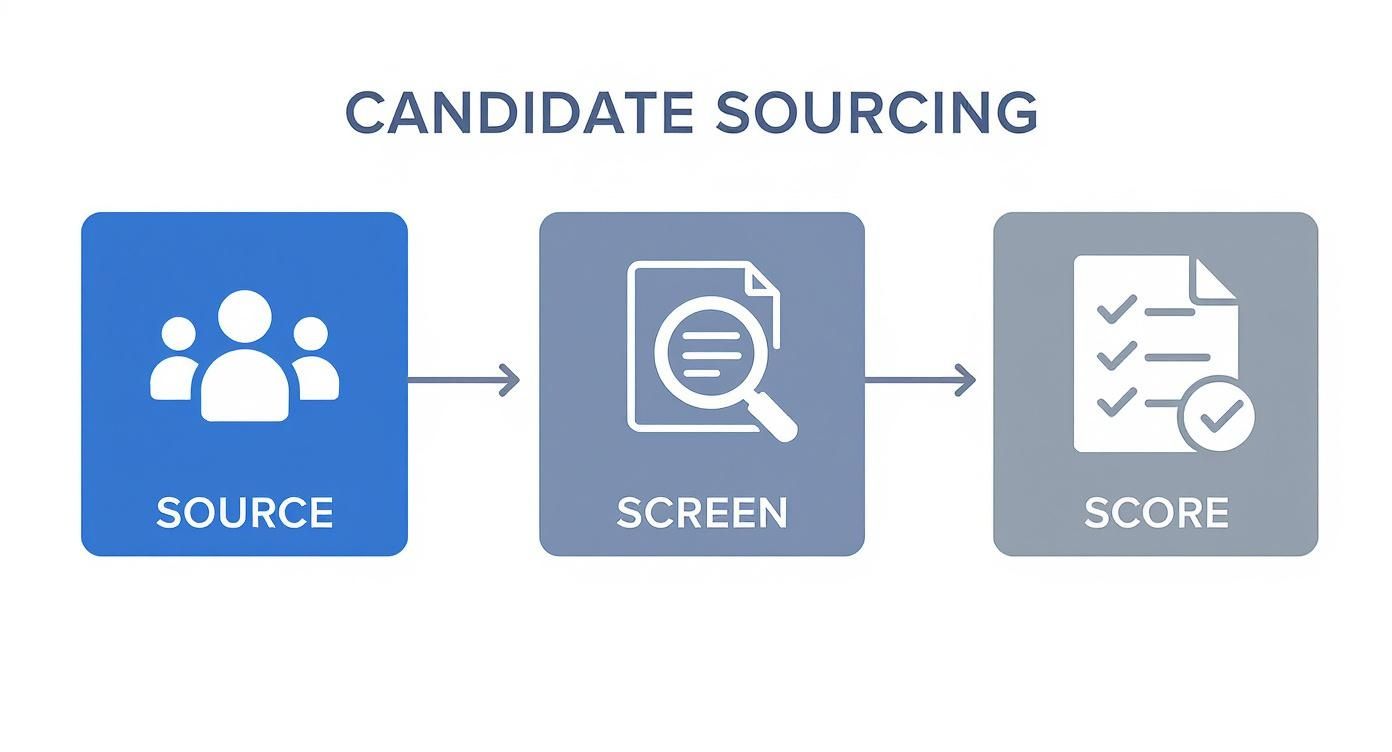
While you will get a decent flow of applicants from the usual job boards, the truth is, the best culinary talent often is not actively looking. They are busy running someone else’s kitchen. This means you have to be proactive.
Relying only on who applies is like fishing with a single line and hoping for the best. You might get a bite, but casting a wider net is how you land the big one. The goal is to meet great candidates where they are, whether that is on niche industry sites, at local food events, or even scrolling through Instagram.
Go Beyond the Job Boards
Job boards, especially those built for hospitality, are one of the strongest tools you can use when hiring a chef for your restaurant. They give you access to candidates who already understand the industry and are actively exploring new opportunities.
But job boards are only one part of a successful strategy. To find a chef who truly fits your culture and culinary vision, you also need to think like a headhunter. That means going beyond the active job seekers and tapping into the “passive candidates”, the highly skilled professionals who may not be applying anywhere yet, but could be the perfect match for your restaurant.
Here are a few channels that consistently deliver results:
- Get Out There and Network: The hospitality world is tight-knit. Go to local food festivals, charity cook-offs, and industry meetups. These events are goldmines for seeing who the rising stars are and hearing about talent looking for a new challenge.
- LinkedIn and Instagram: A chef’s social media is their modern-day portfolio. Use LinkedIn to find people with specific backgrounds and see who is endorsing their skills. On Instagram, you can get a real feel for a chef’s culinary style and plating artistry just by searching local food hashtags or seeing who your favorite restaurants are tagging.
- Ask Your Own Team: Your staff can be your best recruiters. They know your kitchen’s vibe better than anyone and probably know other talented cooks. Offer a solid referral bonus for anyone they recommend who you end up hiring. It is a win-win.
How to Actually Read a Chef’s Resume
When resumes start rolling in, don’t get distracted by titles alone. A strong chef’s resume tells a clear story of growth, stability, and business-minded leadership.
- Look for real progression. A steady climb from Line Cook to Sous Chef to leadership shows ambition and reliability. Constant job-hopping every few months is a red flag; consistency matters as much as skill.
- Check their culinary point of view. A chef’s portfolio is as important as their resume. High-quality food photos reveal technique, creativity, and style. Make sure their cooking aligns with your concept; beautiful avant-garde plates won’t help in a rustic, family-style kitchen.
- Scan for business acumen. The best chefs understand numbers. Look for mentions of food cost management, inventory control, training junior cooks, or menu engineering. These aren’t extras, they’re essential. A chef who can’t talk about operational performance isn’t ready to lead a kitchen.
Use a Scorecard to Keep Yourself Honest
To keep the screening process fair and focused, a simple scorecard is your best friend. It forces you to evaluate every single candidate on the same criteria, stripping out unconscious bias and making sure you are focused on what the job actually requires. It is a straightforward way to guarantee you only spend your precious interview time on the most qualified people.
Just create a basic spreadsheet with your must-haves. This helps you compare applicants at a glance and build a strong shortlist.
Sample Resume Screening Scorecard
| Criteria | Candidate A | Candidate B | Candidate C |
|---|---|---|---|
| Relevant Cuisine Experience | 4/5 | 5/5 | 3/5 |
| Leadership Experience | 5/5 | 3/5 | 4/5 |
| Job Stability/Progression | 5/5 | 4/5 | 3/5 |
| Financial Acumen Mentioned | 4/5 | 2/5 | 5/5 |
| Portfolio Quality/Alignment | 3/5 | 5/5 | 4/5 |
| Total Score | 21/25 | 19/25 | 19/25 |
Using a system like this moves you beyond “gut feelings” and gives you a clear, data-driven reason for your decisions. It helps you find the candidates who are truly a match on paper, setting you up for a much smarter and more effective interview process.
Conducting Interviews and Trials That Reveal True Talent
A resume tells you what a chef has done. The interview and cooking trial show you who they are. This is where you get off the paper and into the kitchen, seeing firsthand how a candidate thinks, leads, and handles the heat. It is a multi-stage process, and each step is designed to uncover the skills a CV just cannot capture.
The whole thing usually kicks off with a quick phone or video screening. This is a gut check. You are looking for basic professionalism, solid communication, and a general vibe that matches the role. Think of it as a quick confirmation that the person who looks great on paper is just as compelling in a conversation.
Digging Deeper with In-Person Interviews
Once a candidate passes that first screen, the in-person interview is your chance to get into their philosophy on leadership, their financial acumen, and how they would fit into your culture. This is not the time for tired questions like, “What is your greatest weakness?” We are going deeper.
Focus on behavioral and situational questions. These force candidates to tell real stories instead of giving rehearsed answers, opening a window into how they actually solve problems.
- Behavioral Questions (Past Actions): “Tell me about a time you had to manage a difficult cook. What happened, and what did you do?” This reveals their real-world conflict-resolution style.
- Situational Questions (Future Scenarios): “Picture this: Our food costs just jumped 15% out of nowhere. What are the first three things you would do to figure it out and fix it?” This tests their financial instincts right on the spot.
Having a strong set of questions is also key, and though it is for a different role, our guide to restaurant interview questions for servers has some great examples of how to frame powerful questions.
The Main Event: The Working Trial
To get the most out of it, you need to be crystal clear with your expectations beforehand. Let the candidate know the plan. Are they making a signature dish, or are you giving them a “mystery basket” of ingredients? Will they be working solo or directing one of your line cooks? Setting the stage properly prevents confusion and lets them put their best foot forward.
Evaluating More Than Just the Final Plate
During the trial, be an active observer. Do not just sit in your office waiting for the final plate. Watch their every move and look for the details that signal true professionalism.
Cooking Trial Evaluation Checklist
Use this checklist to objectively assess candidates during their trial shift, focusing on key areas beyond just the taste of the food.
| Evaluation Area | Key Indicators to Observe | Scoring (1-5) |
|---|---|---|
| Cleanliness & Organization | Works clean, maintains an organized station, proper sanitation practices, and efficient mise en place. A chaotic station is a red flag. | |
| Kitchen Etiquette & Communication | Interacts respectfully with your team, asks questions clearly, treats junior cooks with patience, and fits into the kitchen flow. | |
| Technique & Efficiency | Demonstrates sharp knife skills, proper cooking methods, moves with purpose, shows confidence, and economy of motion. | |
| Problem-Solving & Adaptability | How do they react to a missing ingredient or equipment issue? Stays calm, finds a solution, adapts without panic. | |
| Creativity & Flavor Profile | The dish is balanced, well-seasoned, and aligns with your restaurant’s concept. Does it show a clear culinary point of view? |
A simple scoring system like this removes bias and helps you compare candidates on the things that truly matter for long-term success.
By pairing smart, insightful interview questions with a well-structured cooking trial, you get past the resume and find a culinary leader with the talent, temperament, and vision your restaurant deserves.
Making an Offer and Finalizing the Hire
You’ve done the search, run the interviews, and completed the cooking trial. Now comes the moment that seals the entire process: making the offer. A rushed or unclear proposal can derail even the strongest candidate experience, so this stage requires care.
A winning offer shows your top choice that you’re serious about building a long-term partnership. Start with a competitive compensation package grounded in market reality.
According to the U.S. Bureau of Labor Statistics, the median annual salary for chefs and head cooks was $60,990 in 2024. Actual earnings vary widely based on location, experience level, and restaurant type, so it’s essential to benchmark carefully before finalizing your offer.
When hiring a chef for your restaurant, think beyond base pay. Benefits, work-life balance, growth opportunities, and creative input all play a major role in attracting top culinary talent. A thoughtful, transparent offer sets the tone for a strong, lasting relationship.
Structuring a Competitive Offer
As we mentioned before, a great offer is more than a salary; it shows your chef candidate that you value them as a long-term partner. Base pay gets their attention, but the full package is what truly attracts and retains top talent.
Consider strengthening your offer with:
- Performance bonuses: Tie incentives to clear targets like food cost, labor control, or sales growth. This rewards strong leadership and aligns everyone around the same goals.
- Health and wellness benefits: Robust medical, dental, and vision coverage is no longer optional. It signals that you support your team’s well-being.
- Paid time off: PTO is essential in an industry prone to burnout. Outline exactly how vacation, sick days, and personal time work.
- Professional development: Covering conferences, workshops, or certifications shows you’re invested in their growth, and your restaurant’s evolution.
When you’re ready to extend the offer, start with a verbal conversation. A quick call lets you express enthusiasm and address questions on the spot. Then follow with a written offer letter outlining compensation, benefits, start date, and title.
Navigating Negotiations and Compliance
Be ready to negotiate. A confident, experienced candidate will likely have questions or want to discuss parts of the offer. Treat this as a conversation, not a confrontation. Be clear about what is flexible and what is not, and really listen to their priorities. You can explore our detailed guide on how much a chef gets paid to better understand the factors driving these conversations.
Once you have a verbal agreement, it is time to button up the legal and administrative steps. This part is critical for protecting your business and ensuring a smooth start.
Here is your final checklist:
- Background Check: Run a thorough background check, consistent with your company policy and all local laws.
- Reference Checks: Even if you did preliminary checks, now is the time for a final, in-depth conversation with their most relevant professional references.
- Certification Verification: Confirm that all required certifications, like a food handler’s manager card, are valid and current.
- Employment Paperwork: Get all the necessary hiring documents ready, including tax forms, an employment agreement, and your employee handbook for them to review and sign.
Handling these final steps with professionalism and efficiency just reinforces their decision to join your team. It shows them they made the right choice.
Building a Partnership for Long-Term Success
Hiring a great chef is the first step. Creating an environment where they can truly thrive is what builds a culinary legacy, and that begins with a structured, supportive onboarding process.

The first 90 days are everything. This period sets the tone for the entire relationship. A well-designed onboarding plan helps your new chef get plugged into the team, understand your culture, and master the operational workflows without feeling like they have been thrown into the deep end.
Crafting a Strong 90-Day Onboarding Plan
Think of your onboarding plan as a roadmap, not a rigid checklist. It needs to provide structure while still allowing for the natural process of learning and relationship-building to happen.
Your plan should have clear milestones for their first week, month, and quarter:
- Week One: This is all about introductions. Make sure the chef meets key FOH and BOH staff, your main suppliers, and any administrative contacts. It is also the time for a deep dive into your systems, from inventory software to scheduling protocols.
- First 30 Days: The focus shifts to immersion. The chef should be fully engaged in daily operations, watching service, and getting a feel for the existing menu’s execution. Schedule weekly check-ins to talk about what they are seeing and answer questions.
- Days 31 to 90: Now it is about collaboration. Empower the chef to start pinpointing areas for improvement, experimenting with specials, and contributing to menu development. This is where they begin to truly take ownership of the kitchen.
Strategies for Long-Term Chef Retention
Start by giving your chef meaningful, creative freedom. The best culinary leaders are artists as much as operators. While they should work within your brand framework, they still need room to innovate, test ideas, and leave their signature on the menu.
Next, invest in professional development. Sponsor industry conferences, advanced certifications, or research trips. These opportunities reinforce that you’re committed to their growth, and their growth fuels your restaurant’s evolution.
Finally, establish regular, collaborative performance reviews. Skip the top-down critiques. Instead, create open conversations around goals, challenges, and opportunities. When communication is consistent, and culture is supportive, you build a true long-term partnership, the kind that drives stability, innovation, and sustained restaurant success.
Common Questions When Hiring a Chef
When you are searching for a new chef, a few questions always seem to come up. Let us get right to them with some straight-up answers based on what we see operators wrestling with every day.
How long does this whole process take?
Look, hiring a key leader like a chef is not something you can rush. If you are doing it right, you should plan for the search to take anywhere from four to eight weeks.
That timeline gives you enough room for everything that matters: posting the job, actually reading through the applications, holding a few rounds of interviews, running a proper trial in the kitchen, and then handling the offer. Trying to fast-track it is usually a recipe for a bad hire, and nobody has time for that. Patience here will pay off for years to come.
Besides cooking, what should I really be looking for?
Beyond the obvious, can they cook? You are looking for two huge things: strong leadership and a solid grip on the numbers. A great chef knows their food costs, manages inventory like a hawk, and can actually lead a team.
Think of it this way: You are hiring a manager who happens to be a brilliant cook, not just a cook who can manage. They need to be a mentor who can grow your kitchen staff, keep the culture positive when the pressure is on, and work hand-in-glove with your front-of-house manager. The ability to stay creative and cool under fire is nonnegotiable.
Finding the right culinary leader is a defining moment for any restaurant. At MAJC, we provide the tools, community, and expert guidance to help you hire smarter and build a team that lasts. From job description templates to interview scorecards, we support you at every step. Join MAJC and build your dream team today.
