


Your restaurant employee handbook is not just a document; it’s your playbook. It’s the single source of truth that outlines expectations, policies, and procedures, guiding every team member from their first day on the floor.
Why Your Restaurant Handbook Is a Critical Tool
In the chaos of a busy service, it’s easy to dismiss the employee handbook as just another piece of paperwork. But what if it were your secret weapon against high turnover and operational headaches? A well-crafted handbook is more than a legal document; it’s the foundation of a strong restaurant culture.
This guide does more than list rules. It’s your chance to communicate your restaurant’s mission, values, and vision directly to the team. When you set clear expectations from the start, you reduce confusion, minimize conflict, and give your staff the confidence to make decisions that align with your brand. Whether you run a bustling cafe or a fine-dining spot, that alignment is everything for a consistent guest experience.
Setting the Standard From Day One
A strong handbook is your first real shot at defining what success looks like in your restaurant. It standardizes the critical information, making sure every employee, from the new host to the veteran line cook, gets the same message about how you operate and what you stand for.
This consistency pays off in a few huge ways:
- It reduces onboarding confusion. New hires know exactly what their role is, what’s expected of them, and which procedures to follow from day one.
- It ensures fair and equal treatment. When policies are in writing and applied to everyone, it prevents any talk of favoritism or unfairness.
- It protects your business. Having clear, documented policies on everything from safety protocols to a code of conduct adds a crucial layer of legal protection.
Think of it as the playbook for your team. When everyone knows the plays, the whole operation runs smoother, from the pass to the front door.
A quick look at the essentials shows just how comprehensive a good handbook needs to be.
Core Components of an Effective Restaurant Handbook
A quick overview of the essential sections every restaurant employee handbook should include to ensure clarity and compliance.
| Section Category | Key Topics to Cover | Why It’s Important |
|---|---|---|
| Introduction & Culture | Welcome message, mission, vision, values, and at-will employment statement. | Sets the tone, communicates your brand’s “why,” and establishes the employment relationship. |
| Employment Policies | Equal opportunity, anti-harassment, job classifications, scheduling, and attendance. | Ensures legal compliance and sets clear expectations for day-to-day work life. |
| Compensation & Benefits | Pay schedules, overtime, tip-pooling, meal policies, and benefits overview. | Clarifies how and when employees are paid, preventing misunderstandings and disputes. |
| Conduct & Professionalism | Dress code, cell phone use, substance abuse, and customer interaction standards. | Defines professional behavior and protects the guest experience and brand reputation. |
| Health & Safety | Food safety, accident reporting, emergency procedures, and sanitation standards. | Protects both your employees and your guests while ensuring regulatory compliance. |
| Performance & Growth | Performance reviews, disciplinary process, promotion opportunities, and training. | Outlines pathways for development and provides a fair process for addressing issues. |
| Acknowledgement | A final page for employees to sign, confirming they’ve read and understood the handbook. | Creates a documented record that the employee has received and acknowledged the policies. |
Putting these pieces together turns a simple document into a powerful operational tool.
Tackling the Industry’s Toughest Challenges
Let’s be honest: the restaurant industry is facing some serious workforce challenges. According to the National Restaurant Association, while the overall number of restaurant jobs in 2025 has rebounded to near pre-pandemic levels, full-service restaurants still report a shortfall of some positions compared with February 2020, a clear sign the labor shortage hasn’t fully recovered in that segment.
Some industry reports, including data published by Paytronix, estimate that turnover rates in full-service restaurants can reach around 75% annually. With numbers this high, having a clear, well-structured employee handbook becomes a critical tool for creating much-needed stability on your team.
A solid handbook addresses these issues head-on by creating a more structured and supportive workplace. It gives clear answers to common questions about schedules, pay, and time-off requests, reducing the daily friction that leads to burnout.
By outlining paths for growth, training opportunities, and performance expectations, the handbook also shows employees you’re invested in them. That commitment is a powerful motivator and a key part of building a high-performing restaurant team culture that lasts. It shifts the handbook from a rulebook to a roadmap, encouraging your best people to stick around and grow with you.
Ultimately, this document is less about enforcing rules and more about building a team that’s confident, capable, and committed to your restaurant’s success.
Crafting Your Handbook Section by Section
Building your restaurant employee handbook is a lot like assembling a signature dish. Every single ingredient, or in this case, every section, is crucial. Get it right, and you create a guide that’s effective, balanced, and a true reflection of your brand. Get it wrong, and it’s just another binder collecting dust.
The goal is to create something your team will use and respect.
This means moving beyond generic templates. You need to tailor each policy to the unique rhythm and reality of your restaurant. Let’s break down the essential sections and look at some real-world language you can adapt to make your handbook a practical tool for success.
Your Welcome Message and Mission
Your introduction is the first impression. This is your chance to set the tone, and it’s not the place for dry, legal jargon. Think of it as your first real conversation with a new hire, where you welcome them to the team and share the “why” behind your restaurant. A warm, personal letter from the owner or GM is the perfect way to start.
This section should clearly communicate:
- Your Restaurant’s Story: How did this place come to be? Was it a family dream, a passion for farm-to-table cooking, or a desire to build a neighborhood hub? A little backstory goes a long way.
- Mission and Values: What do you stand for? Exceptional hospitality? Culinary innovation? Community engagement? Get specific.
- A Glimpse of the Culture: Describe the work environment you’re trying to build—one that’s respectful, collaborative, and focused on growth.
Example Welcome Snippet:
“Welcome to The Corner Bistro! We’re so glad you’re here. We started this restaurant with a simple idea: to create a place where our neighbors could enjoy incredible food in a warm, welcoming space. We believe that great service starts with a great team, and we’re committed to building a culture of respect, collaboration, and passion for hospitality.”
This kind of intro frames the handbook not as a list of rules but as a guide to being a successful part of the team. As you start outlining your own, check out this comprehensive guide on how to create an employee handbook for more best practices.
Defining Your Code of Conduct
The code of conduct is the heart of your handbook. It’s where you translate your values into actual, on-the-floor behaviors. This section defines what professionalism looks like in your specific environment, covering the fundamentals while also addressing situations unique to the restaurant industry.
Go beyond a simple dress code. A strong code of conduct provides clear guidance on everything from guest interactions and inter-staff communication to how your team represents the brand online. This prevents misunderstandings and ensures everyone is on the same page.
Consider including specific policies for:
- Guest Interaction Standards: Give clear examples of how to handle common scenarios, like a customer complaint or a request for a menu modification. This empowers staff to solve problems confidently.
- Social Media Policy: Outline what is and isn’t okay to post about the restaurant, coworkers, or guests online. This protects your brand’s reputation and your team’s privacy.
- Cell Phone Usage: Let’s be realistic. A total no-phone policy is probably impossible. Instead, define when and where phone use is appropriate to minimize distractions during service.
- Employee Meals and Breaks: Clearly state your policies on staff meals, discounts, and break times. Consistency and fairness are key here.
For instance, your social media policy could say something like: “We love when you share your passion for our food, but please do not post photos from back-of-house areas or discuss internal team matters online. Always be respectful and professional.” It sets a clear boundary while still encouraging positive engagement.
Health and Safety Protocols
In a restaurant, nothing is more important than the health and safety of your team and guests. This section of your handbook must be detailed, clear, and completely non-negotiable. It’s both a training tool and a critical legal safeguard for your business.
This is where you formalize your commitment to a safe workplace. Your policies should align with guidelines from organizations like OSHA and your local health department. It’s essential these protocols are not just written down but are baked into your daily operations.
Your health and safety section must cover:
- Food Safety and Handling: Detail your standards for temperature control, preventing cross-contamination, and personal hygiene. Reference specific procedures like handwashing frequency and proper glove use.
- Accident Reporting: Create a simple, step-by-step process for what an employee should do if they get hurt on the job. Who do they notify immediately? What forms need to be filled out?
- Emergency Procedures: Outline clear plans for fires, medical emergencies, or robberies. Everyone needs to know their role and where to find safety equipment like fire extinguishers.
- Sanitation and Cleaning: Connect these policies directly to your opening and closing checklists. This ensures cleaning standards are met consistently, every single day.
A well-defined set of health and safety rules builds a culture of responsibility. When your team sees you prioritize their well-being, they’re more likely to be engaged and take ownership of their work environment.
These policies are often tied directly to your day-to-day work. To make sure they’re followed consistently, you can learn more by reviewing examples of restaurant standard operating procedures.
Outlining Compensation and Performance
Clarity around pay and performance is non-negotiable for building trust and keeping your best people. This section needs to eliminate any confusion about compensation, benefits, and how to move up in the company. Being transparent here shows you respect your team’s hard work.
Misunderstandings about pay are one of the fastest ways to kill morale. Your handbook needs to provide straightforward answers to the most common financial questions your staff will have.
Be sure to clearly define policies on:
- Pay Schedule and Overtime: Specify when payday is and how overtime is calculated, ensuring you’re compliant with the Fair Labor Standards Act (FLSA) and any state laws.
- Tipping Policy: Whether you have a tip-pooling arrangement or employees keep their own, this policy must be explicitly stated in writing. This is a major source of conflict if left ambiguous.
- Performance Reviews: Explain how and when performance will be evaluated. This sets the stage for constructive feedback and shows people what it takes to get promoted.
- Disciplinary Procedures: Detail your process for addressing policy violations. A progressive system, like a verbal warning, then a written one, then a final warning, ensures fairness and consistency.
By crafting each section with this level of care, you transform a generic document into a powerful tool that truly reflects your restaurant’s identity. It becomes the definitive guide for your team, helping you build a professional, safe, and respectful workplace for everyone.
Navigating Critical Legal and Compliance Issues
A well-written restaurant employee handbook does more than set the cultural tone—it’s one of your most important legal shields. Let’s be honest, navigating the web of federal, state, and local employment laws is a headache. But getting your policies right from the start protects your business from the kind of fines and disputes that can sink an operation.
Think of this section as the legal foundation of your entire handbook.

These policies are the guardrails that keep your restaurant running safely and fairly. When your team understands their rights and your legal obligations from day one, it builds trust and stops small misunderstandings from blowing up into serious problems. It’s always better to be proactive here than to react after a legal issue lands on your desk.
Wages, Overtime, and Breaks
Few things are more sensitive, or more regulated, than how and when people get paid. The federal Fair Labor Standards Act (FLSA) sets the baseline for minimum wage, overtime, and recordkeeping. Your handbook has to reflect these rules clearly to keep you out of hot water.
Your policies here need to be crystal clear, leaving zero room for interpretation. Make sure you cover:
- Pay Schedules: State exactly when paychecks are issued (e.g., bi-weekly on Fridays).
- Overtime: Explain that non-exempt employees will be paid 1.5 times their regular rate for hours worked over 40 in a workweek, or whatever your state law requires.
- Tip Pooling: If you have a tip-sharing agreement, spell it out in detail. Who’s in the pool? How are the tips split? Put it in writing.
- Breaks and Meal Periods: Outline your break policies, making sure they line up perfectly with your state’s specific mandates.
Ambiguity is your enemy here. Simple, direct language prevents confusion and shows your team you’re committed to fair and transparent pay.
Anti-Discrimination and At-Will Employment
Building a safe and respectful workplace is not just good for morale; it’s a legal must. Your handbook needs a strong Equal Employment Opportunity (EEO) policy that prohibits discrimination and harassment based on protected classes like race, religion, gender, age, or disability.
Just as important, this policy needs to outline a clear, confidential process for employees to report concerns without any fear of retaliation. This protects your people and your business by proving you take these issues seriously and have a system to handle them.
You’ll also want to include a clear at-will employment statement. This standard legal protection clarifies that either the restaurant or the employee can end the employment relationship at any time, for any legal reason, with or without notice. It’s a crucial clause in most states.
When to Call in the Experts
Look, a great template is a fantastic start, but employment law is not a DIY project. Laws are constantly changing, and what’s compliant in one city might not fly in the next. Getting familiar with specific legislation like the Parental Leave and Employment Protection Act 1987 is essential, but it’s just one piece of a much larger puzzle.
It is always a smart investment to have a qualified employment attorney review your finished handbook.
An attorney can spot potential landmines specific to your state or city, ensuring your policies are not just thorough but fully compliant. Think of it as a final quality check that buys you invaluable peace of mind. A quick annual review with legal counsel will keep your handbook a living, protective document for your business.
Integrating the Handbook into Onboarding and Training
A great restaurant employee handbook is more than a stack of papers you hand over on day one. It’s a living guide. But even the best handbook is useless if it just collects dust in a locker.
To get real value out of it, you have to weave it into the fabric of your onboarding and daily training.
Instead of presenting it as a list of rules, frame it as a roadmap for success. During orientation, don’t just hand it over. Walk new hires through the key sections, highlighting your mission, values, and how you plan to support their growth. This small shift changes the handbook from a legal chore into a tool designed to help them win.
When the handbook is a central part of their first few days, you’re sending a clear message: these are not just suggestions. This is how we operate, every single shift.
Making the Handbook a Living Document
The real magic happens when the handbook moves from a one-time read to a go-to reference in your daily training. Do not just tell a new line cook about food safety protocols; pull out the handbook and review the specific steps together. When you’re training a new server, reference the guest service standards section to show them your restaurant’s unique approach to hospitality.
This method does a few really important things:
- It reinforces what matters. Repetition is how people learn. Referencing the handbook constantly makes sure the critical stuff sticks.
- It proves you’re consistent. It shows that the standards apply to everyone, from the dishwasher who started yesterday to your most senior manager.
- It empowers your staff. You’re not just telling them what to do; you’re showing them where to find the answers themselves. This builds confidence and encourages people to solve problems on their own.
By tying your handbook directly to real-world tasks and situations, you turn it from a passive document into an active training partner. It becomes the official guide for “the way we do things here.”
This practical integration is everything. According to one survey, ongoing training can improve employee motivation and confidence. When you make your handbook a practical, everyday tool, you gain a serious edge.
Scenarios for Handbook Integration
Think about all the common training moments that pop up every day. A well-designed handbook gives you the perfect script for these teachable moments.
Here are a few real-world examples:
- Handling a Customer Complaint: Instead of just role-playing, walk the server through the “Guest Interaction Standards” section. Point out the exact steps for de-escalating the situation and exactly when they need to grab a manager.
- End-of-Shift Cleaning: When a new kitchen porter is learning closing duties, use the “Health and Safety” section as their checklist. This ensures they understand not just what to do but why your sanitation standards are so important.
- Requesting Time Off: Show new hires the exact procedure outlined in the “Scheduling and Attendance” policy. This proactive step saves everyone a ton of confusion and back-and-forth later.
Embedding the handbook into these routine interactions builds a culture of clarity and accountability from the ground up. This approach ensures your handbook actively supports your team’s performance, starting from their very first shift.
Successfully Rolling Out and Maintaining Your Handbook
Building a great restaurant employee handbook is a huge step, but the real test comes when you roll it out to your team. A thoughtful launch is what turns that document from a binder on a shelf into a living, breathing tool for your restaurant’s success. The goal here is to make the introduction feel supportive and clear, not like you’re just dropping a heavy rulebook on everyone.
A Practical Approach to Implementation
Your launch does not need to be some massive, all-day affair. Just focus on clear communication and simple steps to get everyone on the same page. It’s best to schedule brief, dedicated team meetings, maybe split between FOH and BOH, to walk through the most important policies or changes.
This is your chance to shine a light on key areas, field questions, and reinforce what your restaurant is all about. Keep the sessions short, focused, and interactive. Nobody wants to sit through a lecture.
The whole idea is to get the handbook integrated smoothly, which comes down to three key phases.
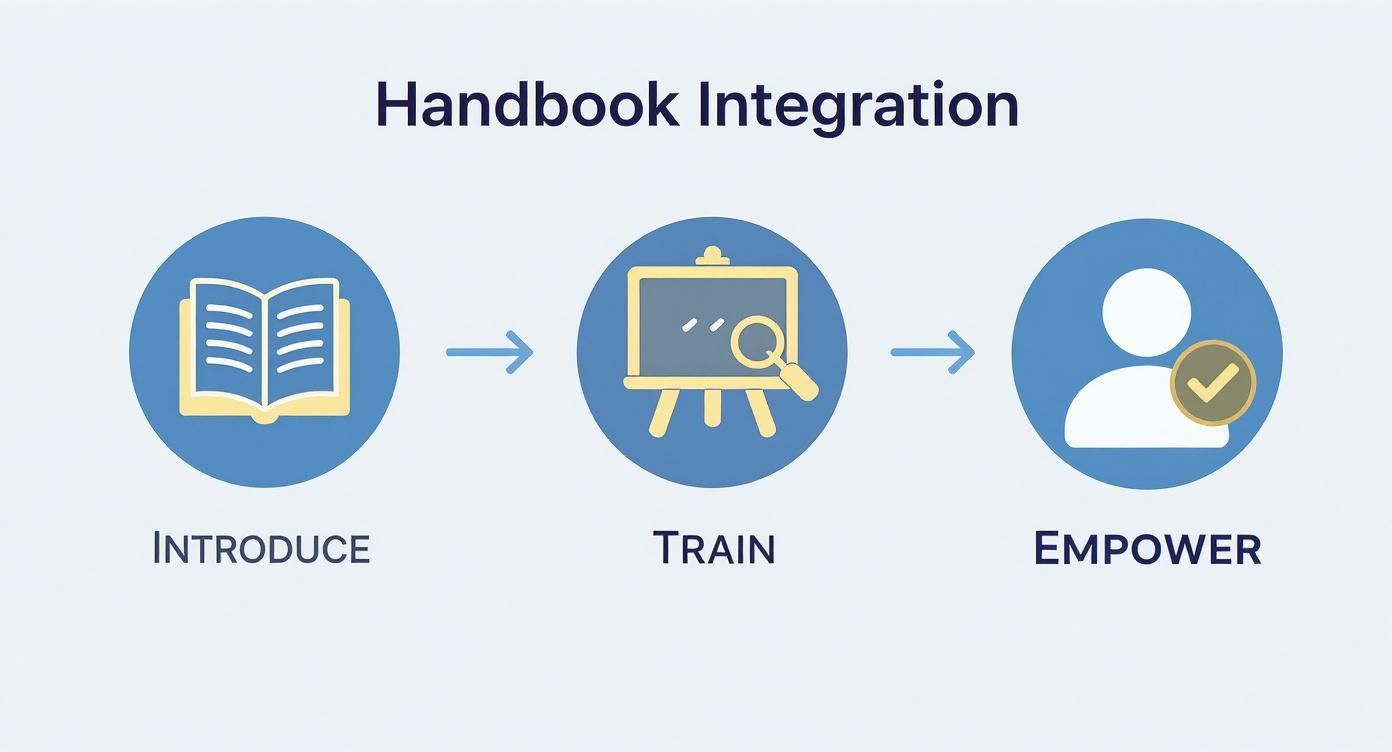
This simple flow—introduce, train, and empower—is a foolproof way to make sure the handbook actually sticks.
Keeping Your Handbook Current and Accessible
Once the handbook is out there, the next challenge is keeping it from getting stale. Restaurants are constantly changing, and your policies have to keep up with new laws, new procedures, or even shifts in your team’s structure. This is where a digital handbook completely changes the game.
The most effective handbooks are living documents. A quick review and refresh at least once a year, or whenever major labor laws change, keeps your guide accurate, compliant, and genuinely useful for your team.
This simple habit keeps your policies relevant and reinforces the handbook as the single source of truth for your operation.
Setting a Schedule for Review
To make sure your handbook never gets dusty, put a recurring review date on your calendar. An annual check-in is a good place to start. When that time comes, get feedback from your managers and think about any common questions or problems that came up over the last year.
For your annual review, zero in on these key areas:
- Legal Compliance: Have any federal, state, or local labor laws changed? This is nonnegotiable.
- Operational Changes: Did you roll out new tech, like a different POS or online ordering system? For example, if you adopted one of the best restaurant scheduling software platforms, your time-off request policy probably needs an update.
- Policy Effectiveness: Are your policies on things like cell phone use or social media still practical and effective?
- Team Feedback: What are the most common points of confusion for your staff? Answering these in the handbook saves everyone time.
Regular upkeep ensures your handbook grows with your business, solidifying its place as a cornerstone of your success and a key tool for building a strong, aligned team.
Common Questions About Restaurant Handbooks
To help you nail those final details, here are some quick answers to the questions restaurant owners and managers most often ask.
How often should I update my handbook?
At an absolute minimum, you should review your restaurant employee handbook once a year. But the real answer? You update it whenever the law changes. Federal, state, and local labor laws are constantly shifting, and your handbook needs to keep up.
Does every single employee need a copy?
Yes. 100%. Every person on your payroll, from the new part-time host to your head chef, needs their own copy the day they’re hired.
And here’s the crucial part: have every single team member sign an acknowledgment form. This form simply states they’ve received, read, and understood the handbook. It’s a simple step, but it’s massive for protecting your restaurant. It creates a clear record that everyone was made aware of your policies from day one, which removes all ambiguity later on.
Can a small cafe use the same template as a large restaurant?
Absolutely. A well-designed handbook template is built to scale. The core stuff, food safety, wage laws, and anti-harassment policies, applies to almost any food service business, no matter the size.
A small cafe can trim down or remove sections that do not apply. You probably do not need complex tip-pooling policies or multi-level management structures. The key is customization. You can streamline the document to fit your operation perfectly while keeping all the essential policies that protect your business and guide your team.
Is a digital handbook better than a physical one?
For most modern restaurants, going digital is way more practical. It’s so much easier to update and distribute, which means every employee always has access to the most current version. No more hunting down old, outdated printouts.
Plus, digital copies are right there on your staff’s phones or tablets, which is a huge win. That said, you should always be ready to provide a printed copy if an employee asks for one. It’s all about making sure the information is accessible to your entire team, whatever their needs are.
Ready to build a stronger team and a more profitable restaurant? The MAJC platform provides the tools, training, and community support you need to succeed. Join today and access expert-led workshops, proven templates, and a network of fellow operators. Learn more at majc.ai.